12 min read Men's sewing Why sew
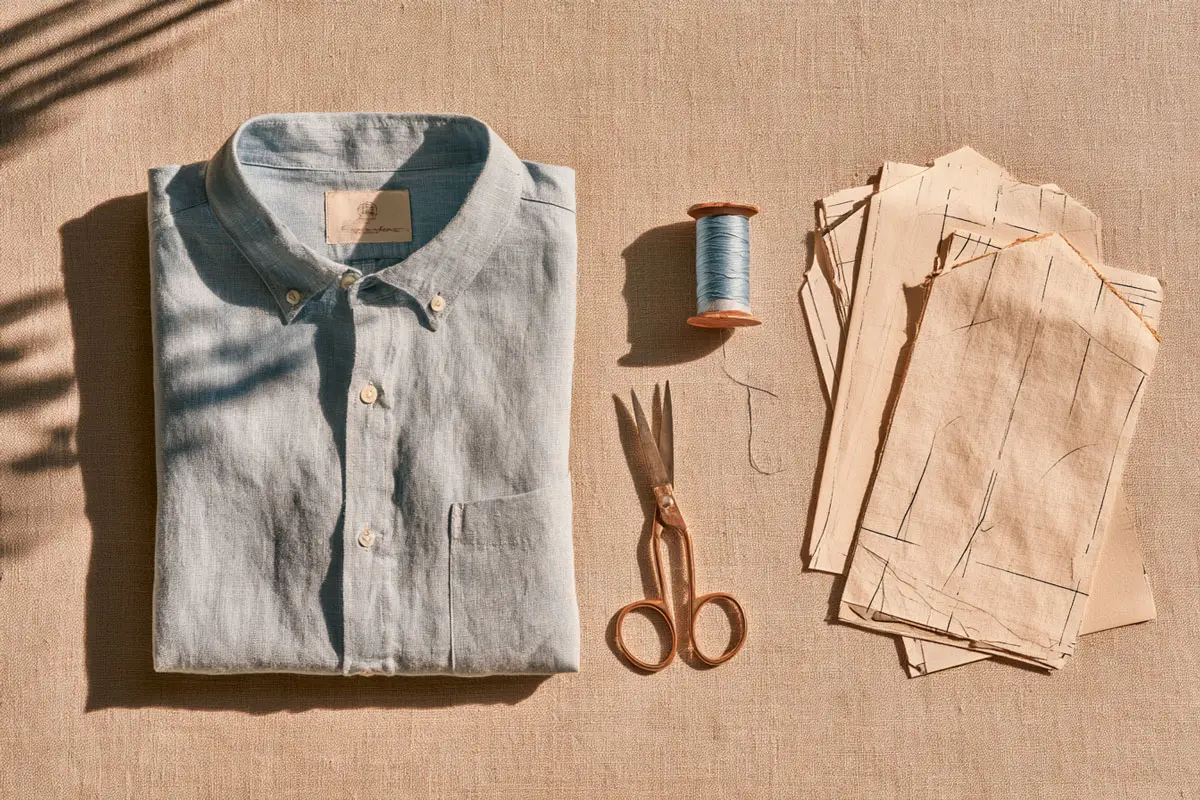
The image of sewing as a feminine hobby is deeply embedded in Western culture — reinforced by decades of home economics classes designed for girls, sewing magazines marketed exclusively to women, and a general cultural assumption that the needle and thread belong on one side of a particular imaginary line. This image is increasingly out of date.
Men are picking up sewing in growing numbers, and the reasons why are genuinely interesting — they say something not just about sewing but about how younger generations think about clothes, consumption, sustainability, and the nature of skill itself.
The Quick TakeMen are taking up sewing for four practical reasons: the fit problem (ready-to-wear is cut for a statistical average that most men do not match), cost (a home-sewn linen shirt costs €30–50 vs €80–150 in a shop), sustainability (choosing fabric and making things that last), and creative freedom (making exactly what you want in exactly the fabric you choose). The cultural barrier is a 20th-century construction — men have always sewn.
The Numbers
30M
people sew as a hobby in the US alone
+25%
online pattern sales 2019–2024
×2
search interest in sewing tutorials 2020–2023
What is less visible in headline statistics, but increasingly apparent in online sewing communities, fabric shops, and on social media, is that the gender composition of the sewing community is shifting. Men in their twenties and thirties are appearing in sewing forums, sharing projects on TikTok and Instagram, joining community sewing spaces, and buying patterns and fabric in quantities that fabric retailers are increasingly noticing and catering to.
Research into this trend — including a study examining men who took up sewing during and after the pandemic, particularly in Australia — found that this is not performative or temporary. It reveals a genuine subculture of men who are fashion enthusiasts taking up the skill. Men's sewing groups have been established globally as a way to foster community and improve mental health. The trend connects to something real.
Reason 1
The Fit Problem That Ready-to-Wear Has Never Solved
The most immediate practical argument for any man to start sewing is the fit problem — and it is a problem that is genuinely significant, poorly acknowledged, and almost entirely unaddressed by the fashion industry.
Ready-to-wear men's clothing is cut for a statistical average body that a relatively small percentage of actual men resemble. The industry uses a small number of standard body proportions — a specific relationship between shoulder width, chest circumference, waist, sleeve length, torso length — and cuts every garment to those proportions.
The shirt that fits across the chest but whose sleeves end several centimetres above the wrist; the trousers that fit the waist but require hemming and letting out at the thigh — these are not problems of the wrong size. They are problems of the wrong set of proportions.
A garment sewn to your own measurements is simply better-fitting than a garment cut to an industry average. This is true for women — it is the most consistently cited reason why women sew — and it is equally true for men, even if the cultural permission to care about clothing fit has historically been more readily granted to women.
Men's patterns at Fabrico
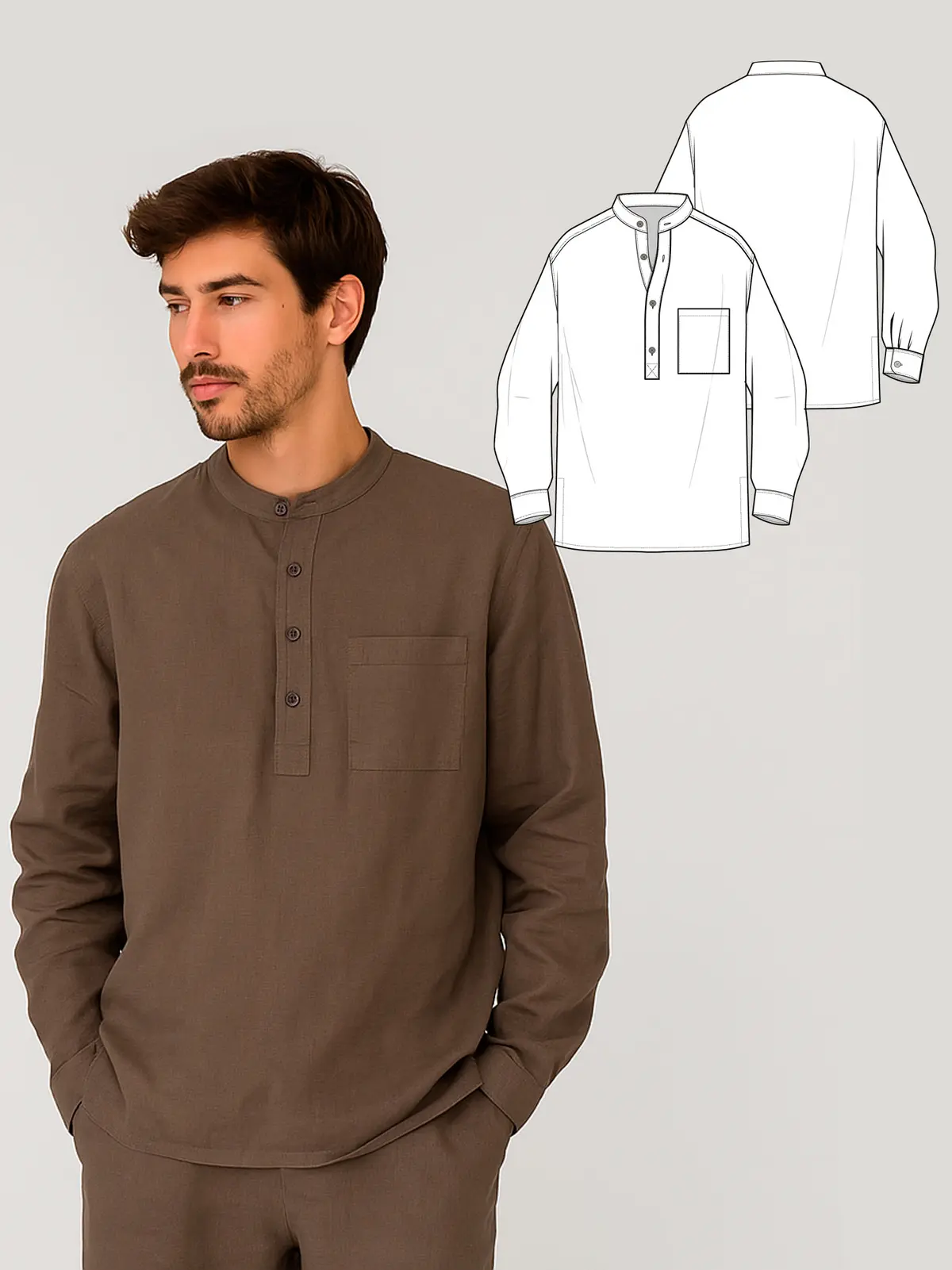 Best first project
 Vicenza men's shirt
PDF pattern · Video tutorial
from 3,99 €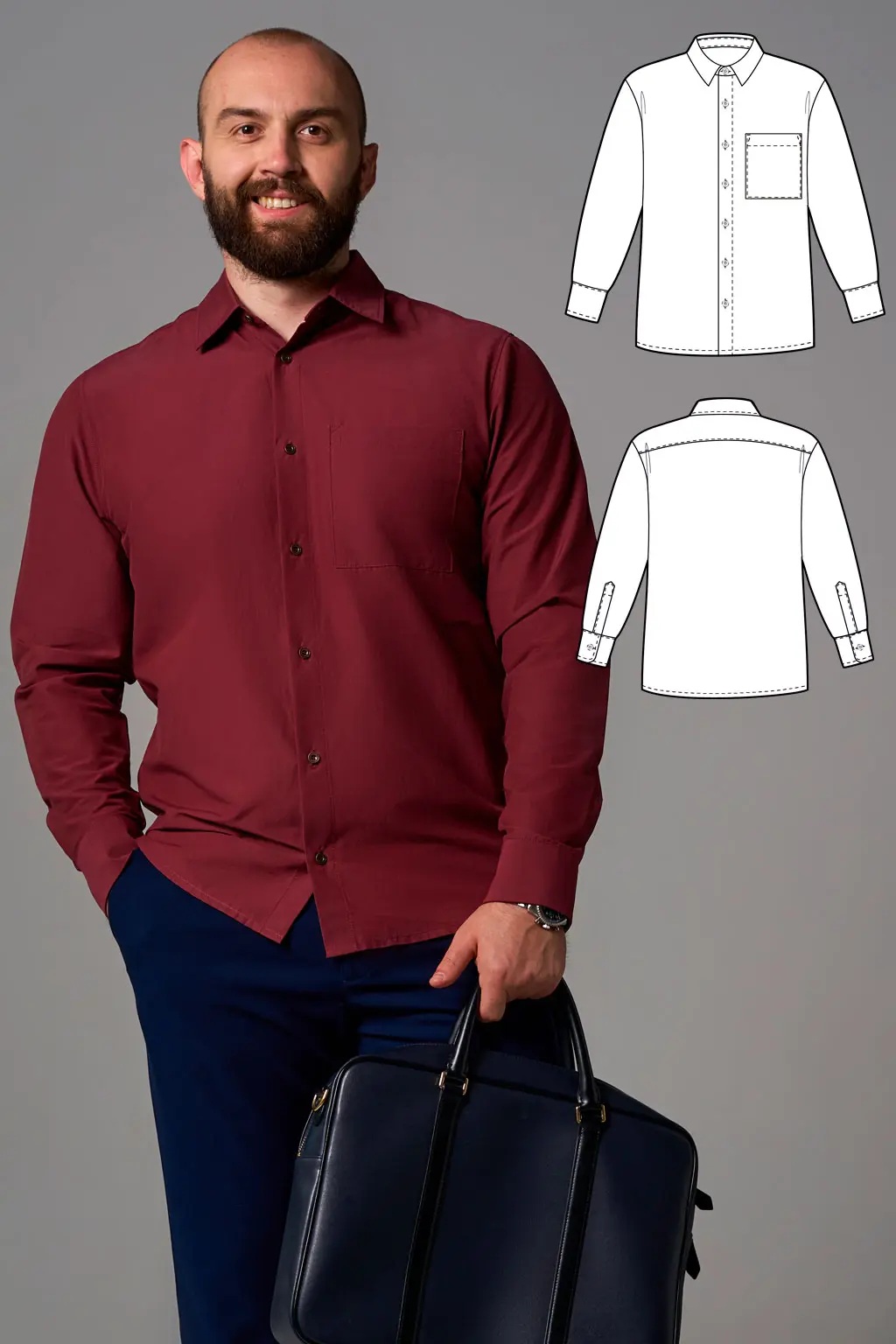 Classic collar
 Portland men's shirt
PDF pattern · Video tutorial
from 3,99 €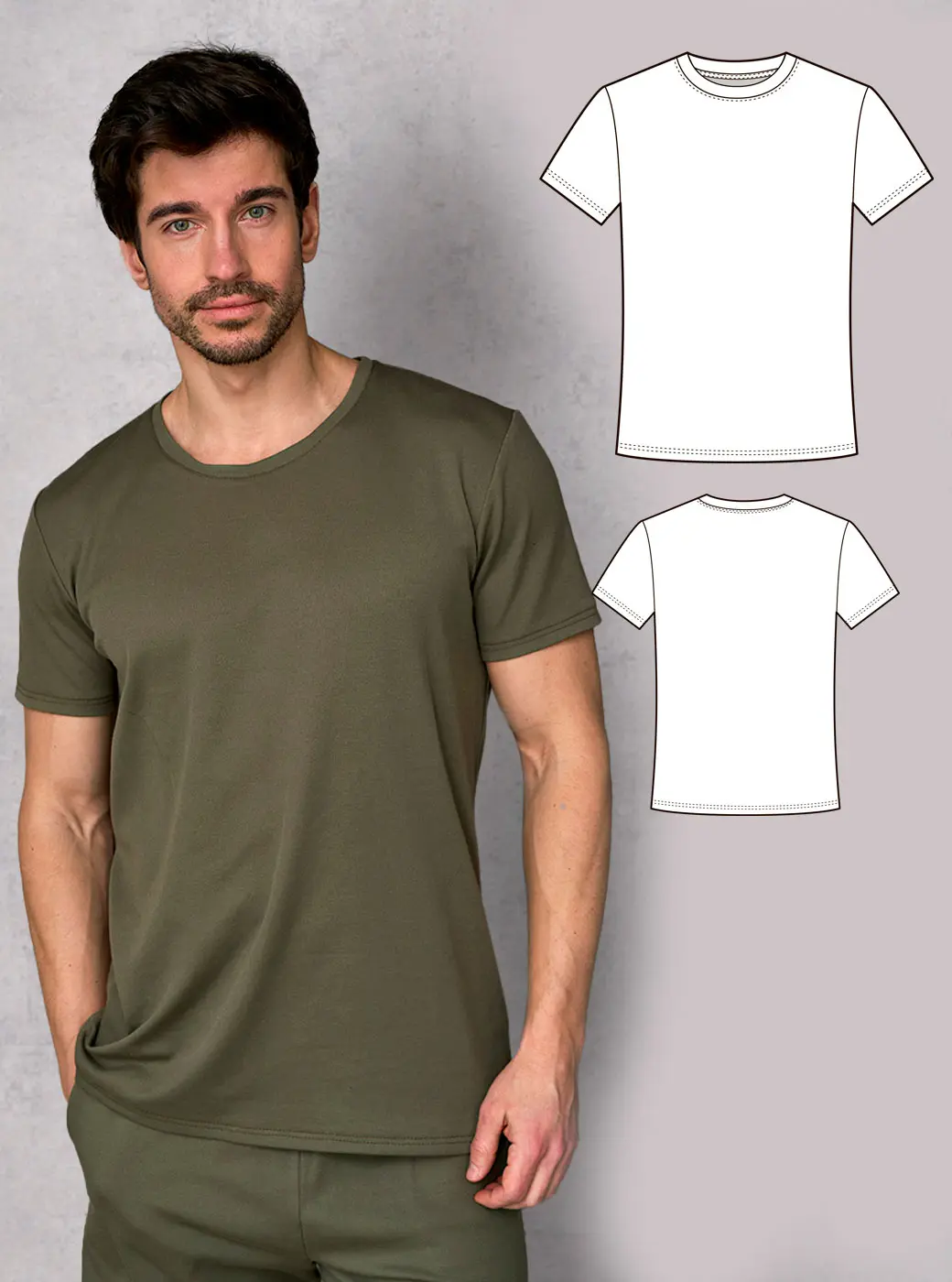 Great first project
 Dallas men's T-shirt
PDF pattern · Video tutorial
from 2,99 €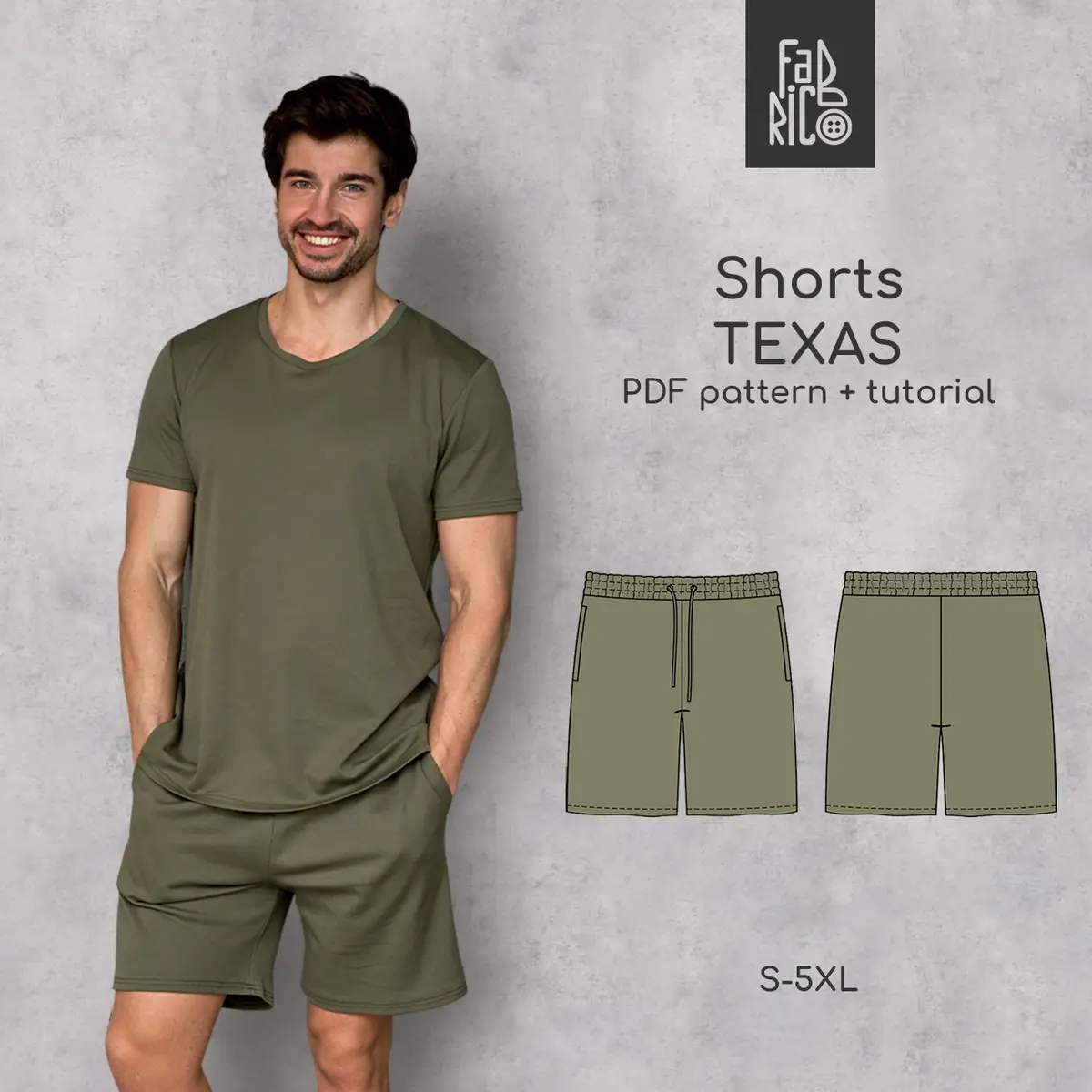 Summer essential
 Texas men's shorts
PDF pattern · Video tutorial
from 3,99 €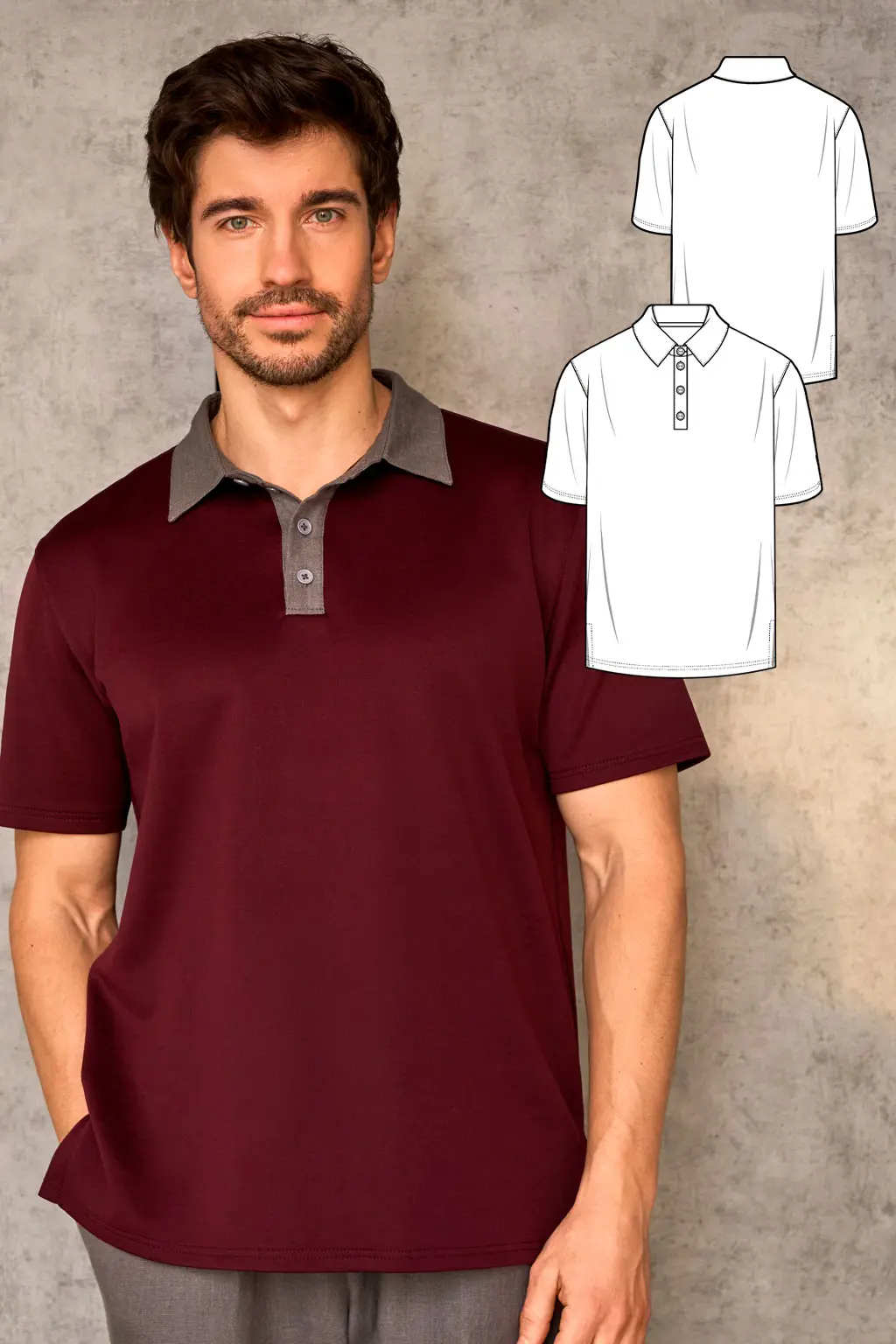 Polo shirt
 Sorrento polo shirt
PDF pattern · Video tutorial
from 3,99 €→ Browse all men's patterns
Reason 2The Cost Argument: Better Fabric, More Shirts
The cost argument for sewing your own clothes is commonly made and sometimes overstated. It is true that sewing your own garments is not always cheaper than buying equivalent ready-to-wear — if you compare a home-sewn linen shirt to a fast-fashion shirt, the fabric alone will cost more. But this is comparing the wrong things.
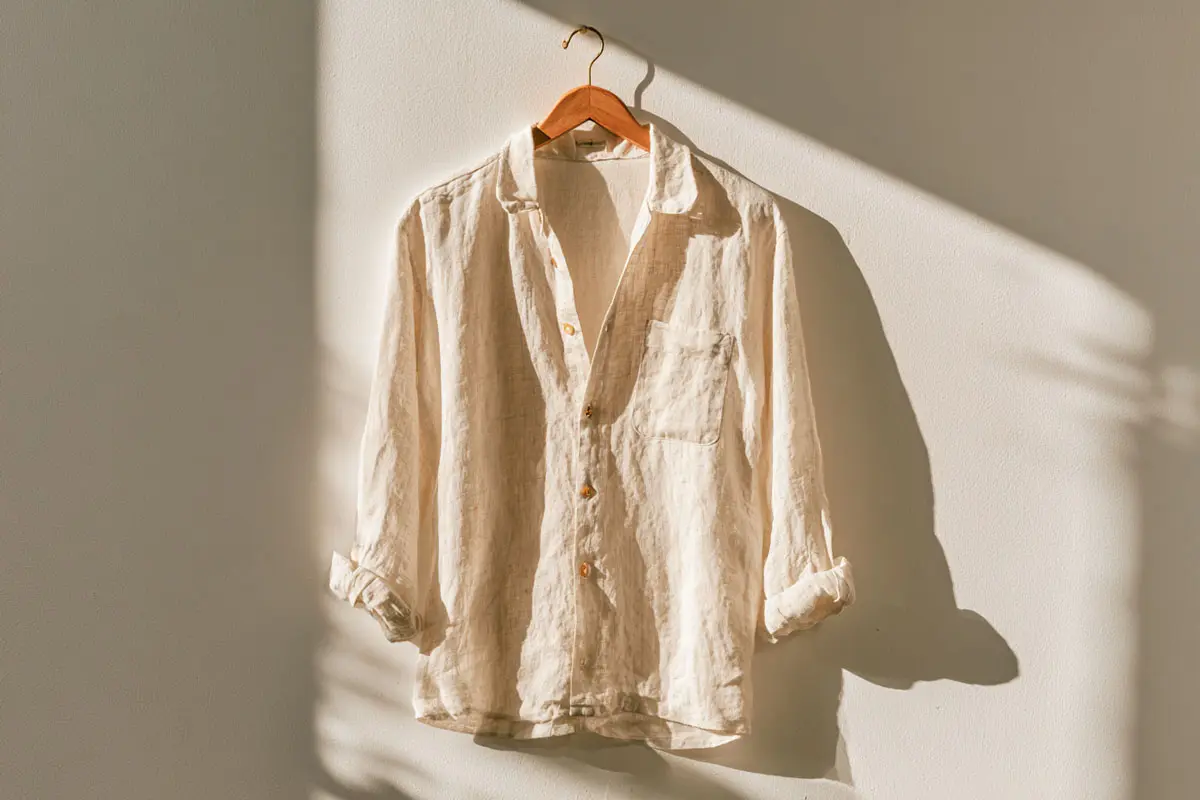
The relevant comparison is between a home-sewn shirt and a well-made, properly constructed shirt in a quality fabric from a brand that actually cares about those things. At that level — the kind of shirt that costs €80–150 from a quality menswear brand — the home-sewn equivalent in the same fabric is considerably cheaper.
The real cost of a home-sewn linen shirtGood linen fabric (2.5m) €20–35
Fabrico Vicenza pattern under €5
Thread, buttons, interfacing €5–10
Total — fits your exact measurements €30–50
Equivalent quality in a shop €80–150
For a man who wears shirts regularly — for work, for social occasions, for summer weekends — the economics of sewing his own are genuinely compelling over any reasonable time horizon.
Reason 3
Sustainability: Making Things That Last
The sustainability argument for sewing resonates particularly with younger generations. Gen Z and millennials are the most likely to make purchasing decisions based on environmental values, and the fashion industry's environmental record has become widely understood.
1You choose the fabric
When you sew, you can choose certified organic cotton, sustainably produced linen, or other fabrics with verified environmental credentials. You cannot make this choice when buying most ready-to-wear.
2You make things that last
A garment sewn carefully from good fabric, with attention to construction details, lasts significantly longer than most fast-fashion equivalents. A well-made linen shirt can be worn and washed for a decade.
3You waste less
The awareness that comes from choosing and cutting fabric produces a different relationship to consumption. People who sew tend to buy less clothing overall, and the clothing they do buy tends to be chosen more carefully.
4You repair what you make
Knowing how a garment is constructed makes you far more likely to repair it when something minor goes wrong — a seam, a button, a hem. This extends the life of everything in your wardrobe, not just what you sew.
The history
Men Have Always Sewn
The image of sewing as inherently feminine is a cultural construction of the 20th century, not a historical constant. For most of human history, professional tailoring — the skilled production of fitted garments for men — was a male-dominated trade. Savile Row, London's famous bespoke tailoring district, has been operating for nearly 200 years, and its master tailors have almost always been men. The same is true of the great tailoring traditions of Naples, Milan, Hong Kong, and Seoul.
The segregation of "home sewing" as feminine and "professional tailoring" as masculine was a product of industrialisation, which moved skilled garment production out of homes and workshops and into factories, while leaving domestic mending and dressmaking as the province of women who were not participating in the paid workforce. That segregation is itself a historical anomaly, not a natural state.
When men today take up sewing — whether for practical reasons, creative expression, or the pleasure of making something — they are in some ways reconnecting with a craft that has always had male practitioners.
Reason 4The Creative Case: Designing Your Own Wardrobe
Fashion for men in the ready-to-wear market is, with some exceptions, relatively limited. The seasonal offerings of most menswear brands cover a narrow range of options — similar silhouettes, similar colour palettes, similar construction approaches. A man who wants something slightly different — a shirt in an unusual colour, a cut that is not quite what any brand currently offers, a fabric that is not available in any shirt he can find — is largely out of luck unless he makes it himself.
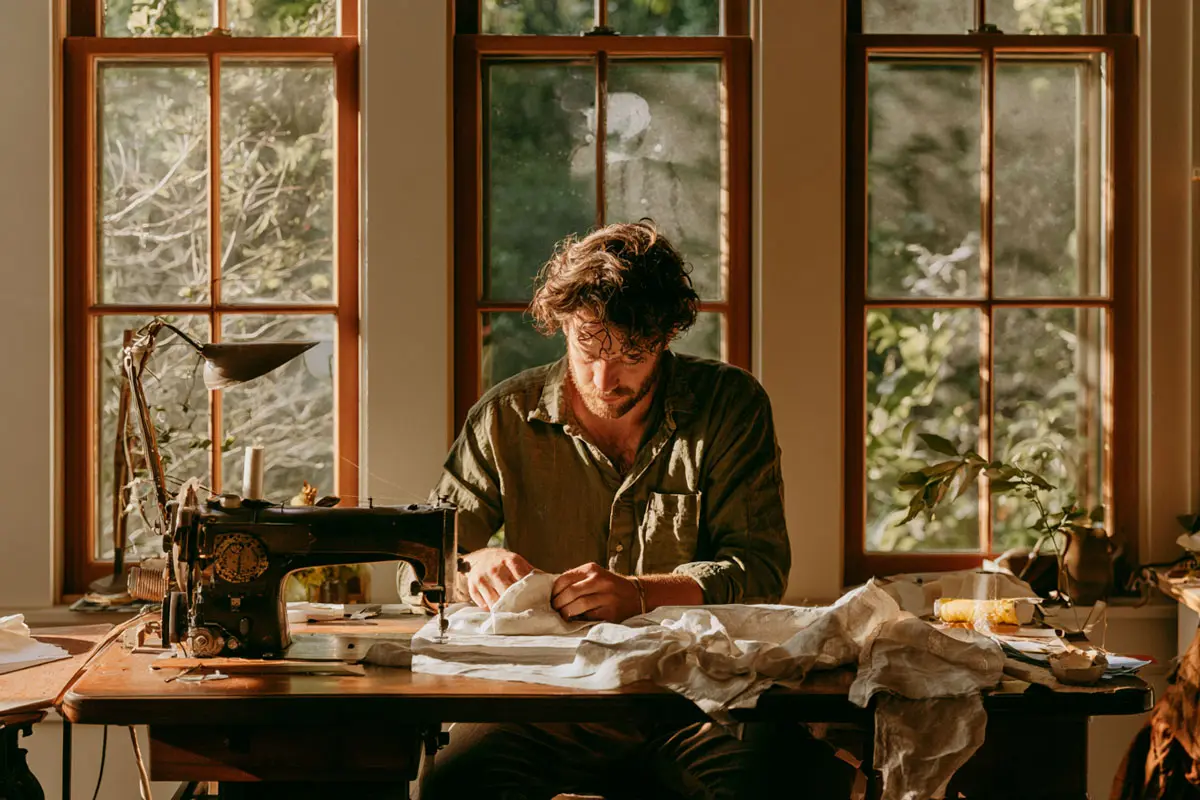
Sewing offers the same freedom to men that it has always offered to women: the freedom to make exactly the garment you are imagining, in the exact fabric and colour you choose, to the exact measurements of your own body. This is a creative freedom that cannot be purchased in any shop, regardless of budget.
Where to Start
For a man considering whether to start sewing, the entry point that makes most sense is a garment he actually wants to wear. Not a practice project, not a sample exercise — something real.
The Fabrico Vicenza men's shirt is one of the most appropriate starting patterns for exactly this reason: a shirt is a garment that any man who wears shirts will actually use, the construction is straightforward and well-supported by the video tutorial, and the result — a well-fitting shirt in a fabric you chose — is genuinely better than most of what is available to buy at a comparable price.
The skills are genuinely useful The ability to mend a seam, replace a button, take in a waistband, or shorten a hem — to keep clothing in service rather than discarding it at the first sign of damage — is valuable regardless of whether you go on to sew entire garments. And once you have learned the basics of mending, the progression to making simple garments is smaller than most people expect.
Frequently Asked Questions
Why are more men taking up sewing?
The main reasons are practical: the fit problem in ready-to-wear menswear, cost (a home-sewn linen shirt costs €30–50 in materials vs €80–150 for equivalent quality), sustainability (choosing organic fabrics, making things that last), and creative freedom. Research found this is not temporary — it reflects a genuine subculture of men who are fashion enthusiasts taking up the skill.
Is sewing a masculine or feminine hobby?
The image of sewing as inherently feminine is a 20th-century cultural construction, not a historical constant. Professional tailoring — the skilled production of fitted garments for men — was a male-dominated trade for most of history. Savile Row and the great tailoring traditions of Naples, Milan, Hong Kong, and Seoul were built by male craftsmen. The segregation of 'home sewing' as feminine was a product of industrialisation and is itself a historical anomaly.
What is the fit problem in men's ready-to-wear?
Ready-to-wear men's clothing is cut for a statistical average body that a relatively small percentage of actual men resemble. Men whose bodies differ from those proportions will consistently find that garments that fit in one dimension do not fit in another. A garment sewn to your own measurements is simply better-fitting than one cut to an industry average.
Is sewing your own clothes cheaper than buying?
The relevant comparison is with a well-made shirt in quality fabric from a brand that cares about construction — which costs €80–150. A home-sewn equivalent costs €30–50 in materials (good linen, a Fabrico pattern, notions). You also get a shirt that fits your exact measurements, in your chosen fabric, with details adjusted for your preferences.
What is the best first sewing project for men?
A shirt is the most appropriate starting point — a garment any man who wears shirts will actually use, with straightforward construction supported by a video tutorial. The Fabrico Vicenza men's shirt pattern is designed specifically for this entry point. The result is genuinely better than most equivalent garments available to buy at a comparable price.
Keep reading
 Men's sewing
 The Best Summer Shirt for Men
Linen, chambray, seersucker — the fabrics and cuts that actually work in summer heat.
Read more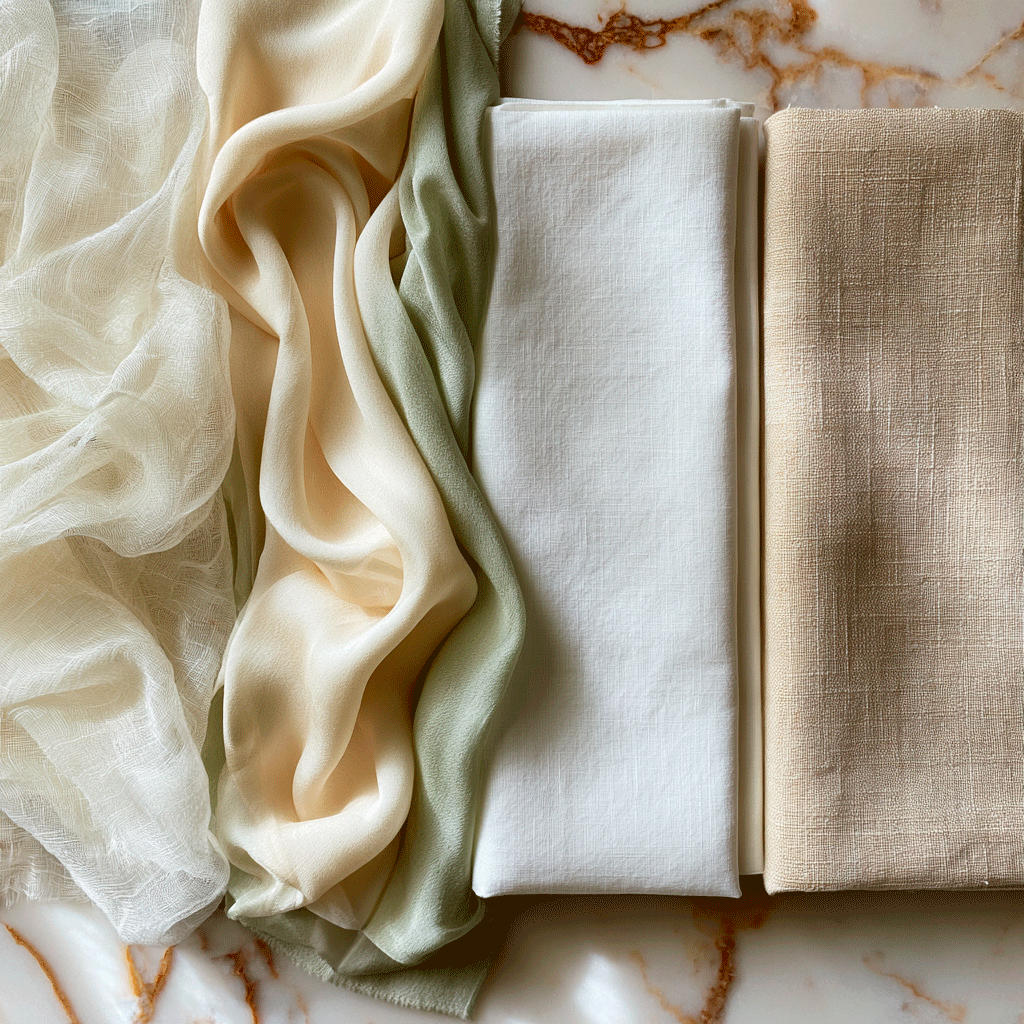 Fabric guide
 The Best Fabrics for Hot Weather
What works in real summer heat — and how to choose at the fabric shop.
Read more Sewing essentials
 How to Pre-Wash Your Fabric Before Sewing
The step most beginners skip — and the one most consistently regretted.
Read more Sewing guide
 How to Sew a Boy's Polo Shirt
The perfect first kids' clothes project — and a great way to learn knit fabric techniques.
Read more Fabric guide
 Linen vs Cotton: Which Fabric Should You Choose
A head-to-head comparison for anyone choosing fabric for their first summer project.
Read more Sewing essentials
 Press to Impress
The pressing technique that makes a handmade shirt look professional.
Read more