
The Party Dress Through the Ages: A Century of Dressing Up
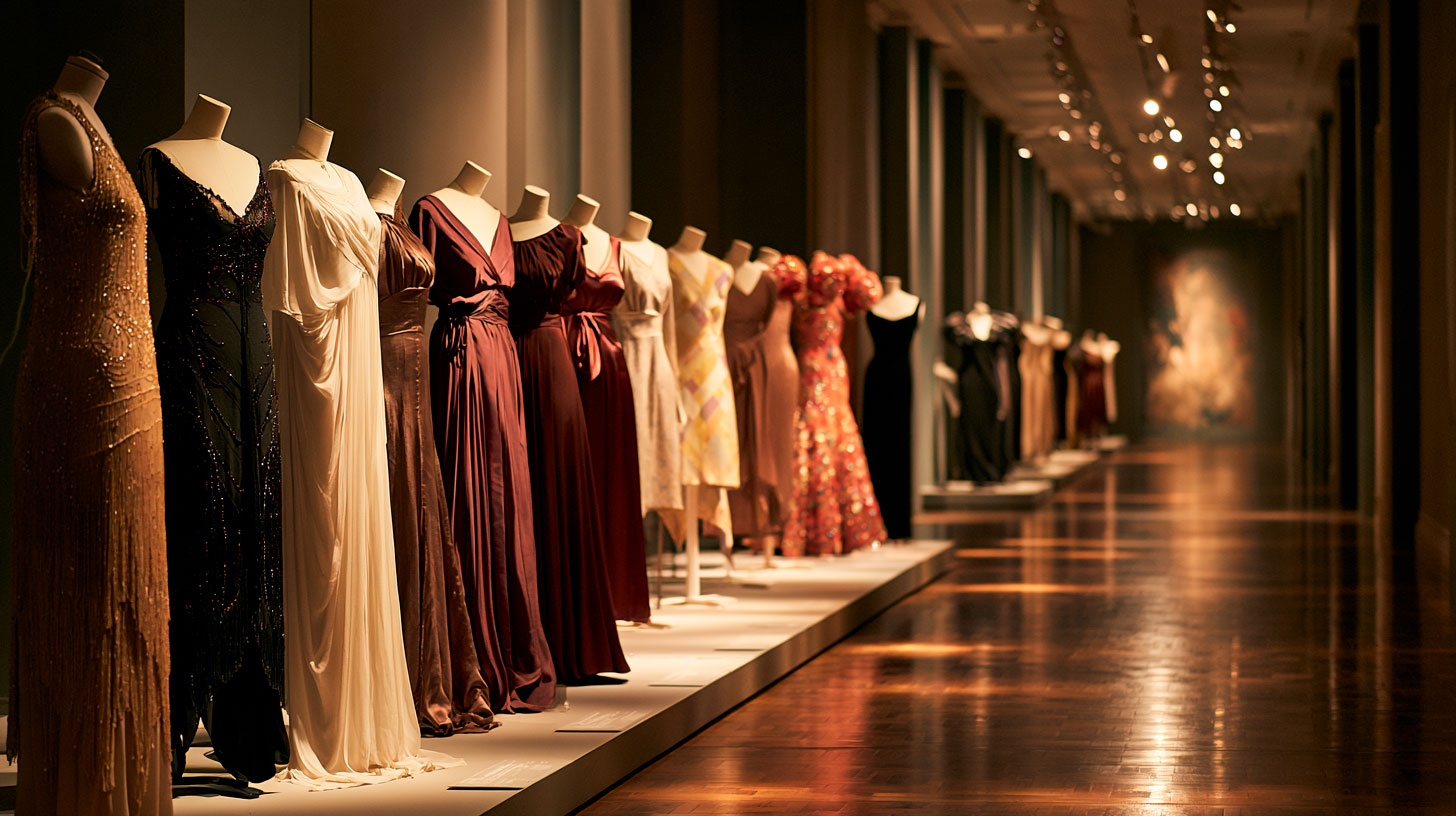
There is something that happens when a woman puts on a party dress. It is not quite the same as putting on any other garment. The decision to dress up — to choose something beautiful, something made for an occasion rather than simply for covering — has always been an act of intention. It says: this moment matters. I am here, and I am dressed for it.
The party dress has a long and surprisingly rich history. It's the story of how women have chosen to present themselves at the moments that meant most to them — at weddings, dances, dinners, and all the occasions that sit between the ordinary and the extraordinary. And like all fashion history, it's also the story of what was permitted, what was possible, and what women were quietly pushing against.
Here, decade by decade, is how the party dress evolved across the past hundred years — and what it tells us about the women who wore it.
From the 1920s flapper's dropped waist to the 1950s cocktail dress's nipped waist, from Diane von Furstenberg's 1974 wrap dress to the 1990s slip dress, the party dress has been the most expressive garment in a woman's wardrobe for a hundred years. What unites every era is a single principle: the party dress is the one you choose for the moments that matter.
A Century of Party Dresses, at a Glance
If you're scanning rather than reading, here's the whole century in one table.
| Era | Defining silhouette | Fabric & finish | Cultural moment |
|---|---|---|---|
| 1920s | Flapper shift, dropped waist, knee length | Beading, sequins, fringe | Jazz Age; dancing as social ritual |
| 1930s | Bias-cut gown, long, fluid, bare-back | Silk crepe, ivory satin | Hollywood glamour (Harlow, Garbo, Dietrich) |
| 1940s | Shorter, simpler, ingenious | Whatever could be sourced | Wartime austerity; rationed fabric |
| 1950s | Fitted bodice, nipped waist, full skirt | Taffeta, silk, tulle, velvet | Dior's New Look; the cocktail dress era |
| 1960s | Geometric mini shift, simple LBD | Wool crepe, graphic prints | Mary Quant; Audrey Hepburn in Tiffany's |
| 1970s | Wrap dress; disco halter and sequins | Silk jersey; metallics | DvF wrap dress (1974); Studio 54 |
| 1980s | Power shoulders, puffed sleeves, asymmetric | Duchesse satin, heavy taffeta, sequins | Princess Diana; power dressing |
| 1990s | Slip dress; minimal LBD | Satin, silk crepe, jersey | Calvin Klein minimalism; the red-carpet event |
| Today | All of the above, plurally | Every fabric is current | The return of making your own |
Fringe, Beads, and the Art of Dancing
Before the 1920s, a woman dressing for an evening occasion was required to dress formally in the most literal sense: a gown that reached the floor, usually requiring a corset, a structured bodice, and multiple layers. Getting dressed for a party was an event in itself.
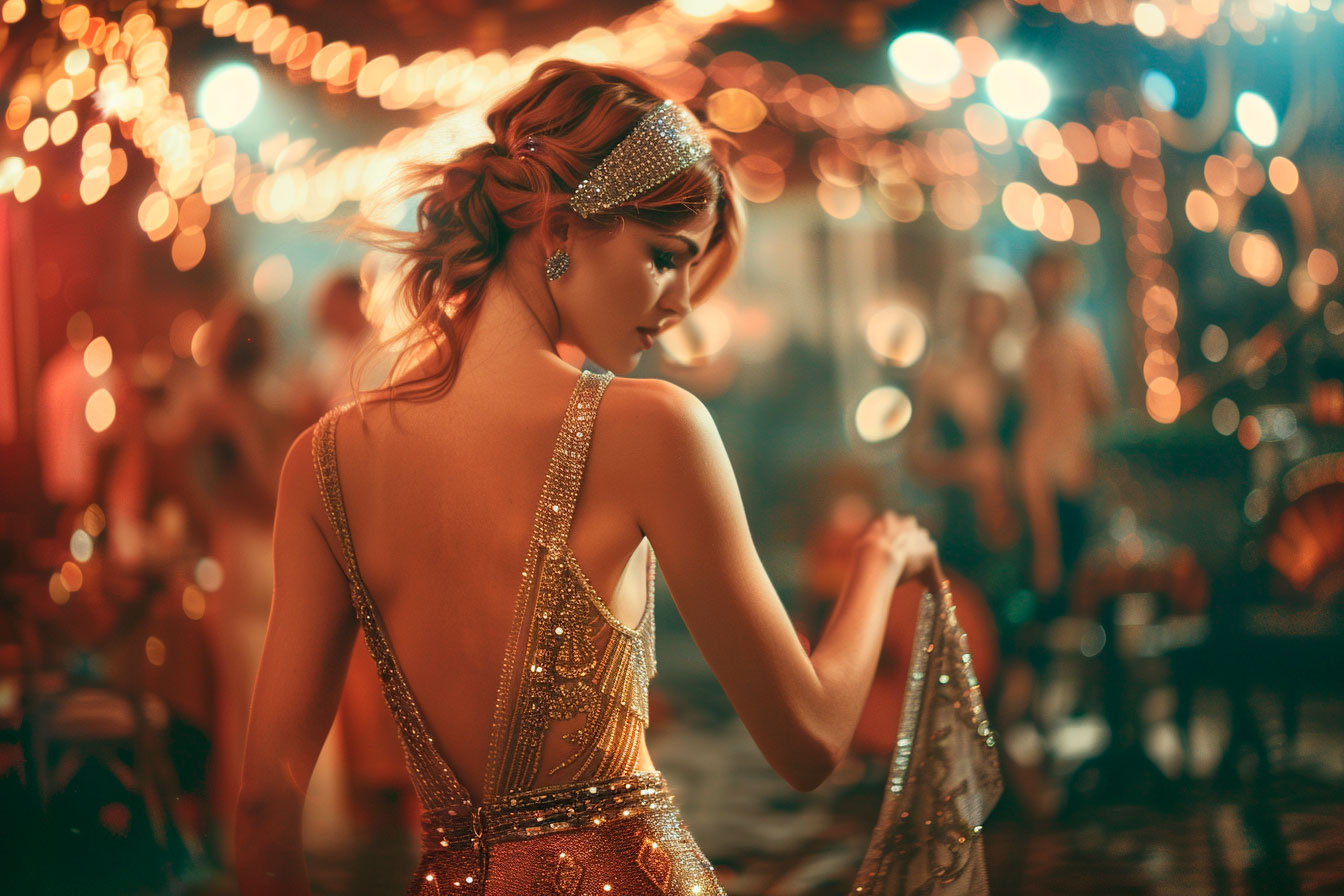
The 1920s changed this in ways that were genuinely radical. The decade saw the rise of the flapper dress — a sleeveless, relatively loose shift that sat below the knee rather than at the ankle, featuring dropped waistlines, straight silhouettes, and surfaces covered in beading, sequins, or fringe. The flat bust, the low waist, the bare arms — all of these were departures from the structured femininity of the previous generation's evening wear.
And dancing was very much the point. The Charleston, the foxtrot, the tango — the 1920s was a decade in love with movement, and the clothes that women wore to evening events were shaped by the need to move freely in a way that previous generations' party dresses had not permitted.
The evening accessories matched the ambition of the dress itself: beaded or metal mesh handbags, jewelled cigarette holders, crystal headdresses. A 1920s party dress was not merely a garment — it was a complete visual statement, assembled from many parts, designed to catch the light of a ballroom.
1930s & 1940sGlamour and Restraint
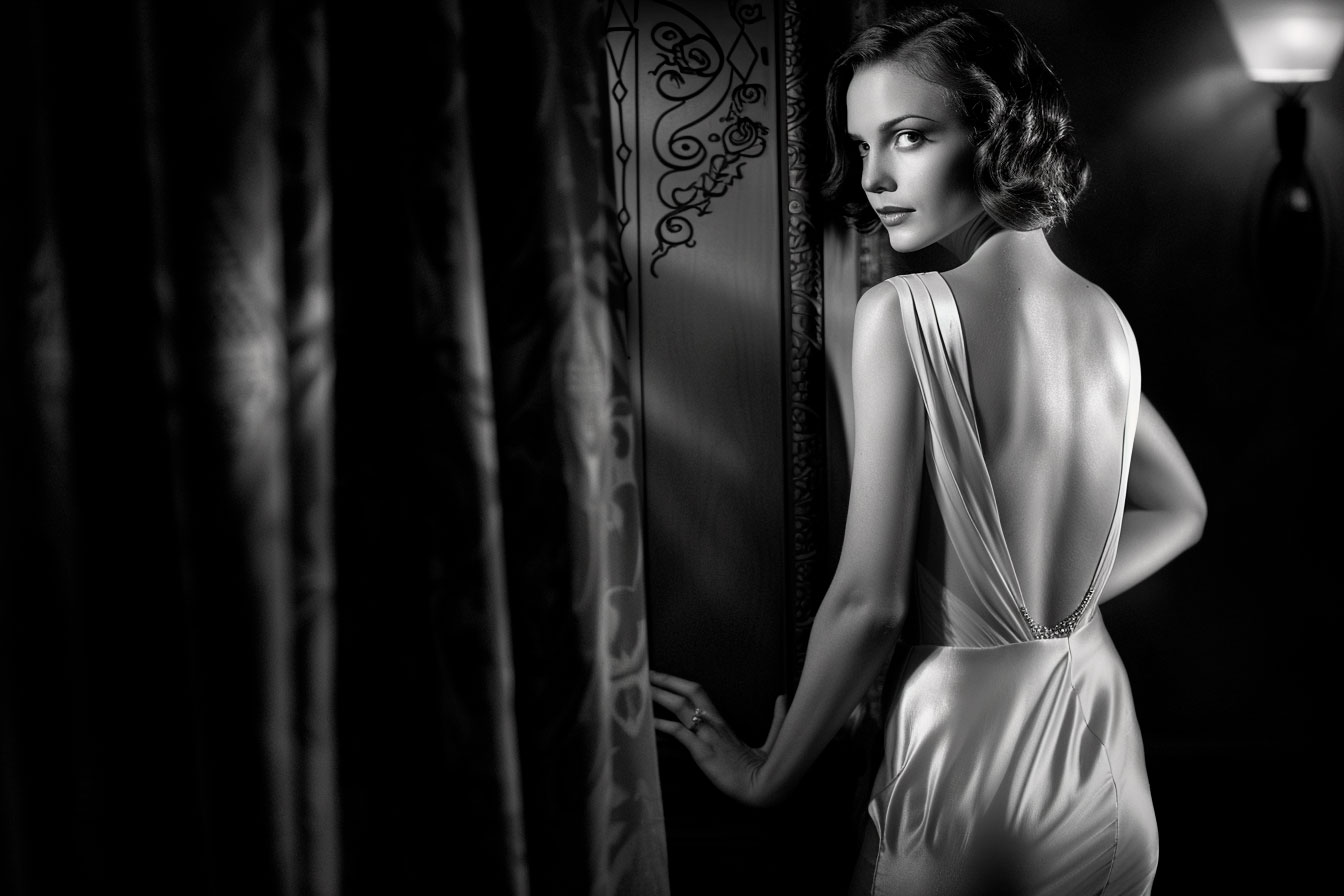
The Depression of the 1930s had a direct and visible effect on party dress design. The abundance and extravagance of 1920s beadwork gave way to more restrained silhouettes — but the restraint was, paradoxically, glamorous. The 1930s evening dress favoured the bias cut: a technique in which fabric is cut diagonally across the grain, allowing it to cling and flow simultaneously. The result was a long, fluid silhouette that emphasised the body's natural curves without structure or padding.
This was the era of Hollywood screen glamour — and the evening dresses worn by Jean Harlow, Greta Garbo, and Marlene Dietrich in films of the period became aspirational references for women everywhere. The bias-cut gown in ivory silk or black crepe, with a deep back neckline, became the defining party dress silhouette of the decade.
The 1940s brought wartime austerity — fabric rationing, utility clothing restrictions, and the requirement that fashion find ways to do more with less. Party dresses became shorter (less fabric), simpler in construction, and more reliant on accessories and personal expression to achieve elegance within significant material constraints. What the 1940s party dress lost in fabric it gained in ingenuity: clever draping, inventive use of what was available, and a kind of determined glamour in the face of difficult circumstances.
The 1940s party dress proved that glamour was never really about expense. It was about intention.
1950sThe Golden Age of the Cocktail Dress
No decade belongs more completely to the party dress than the 1950s. Rising postwar prosperity created a new culture of entertaining — cocktail parties, dinner dances, garden parties — and a new category of dress to attend them in: the cocktail dress.
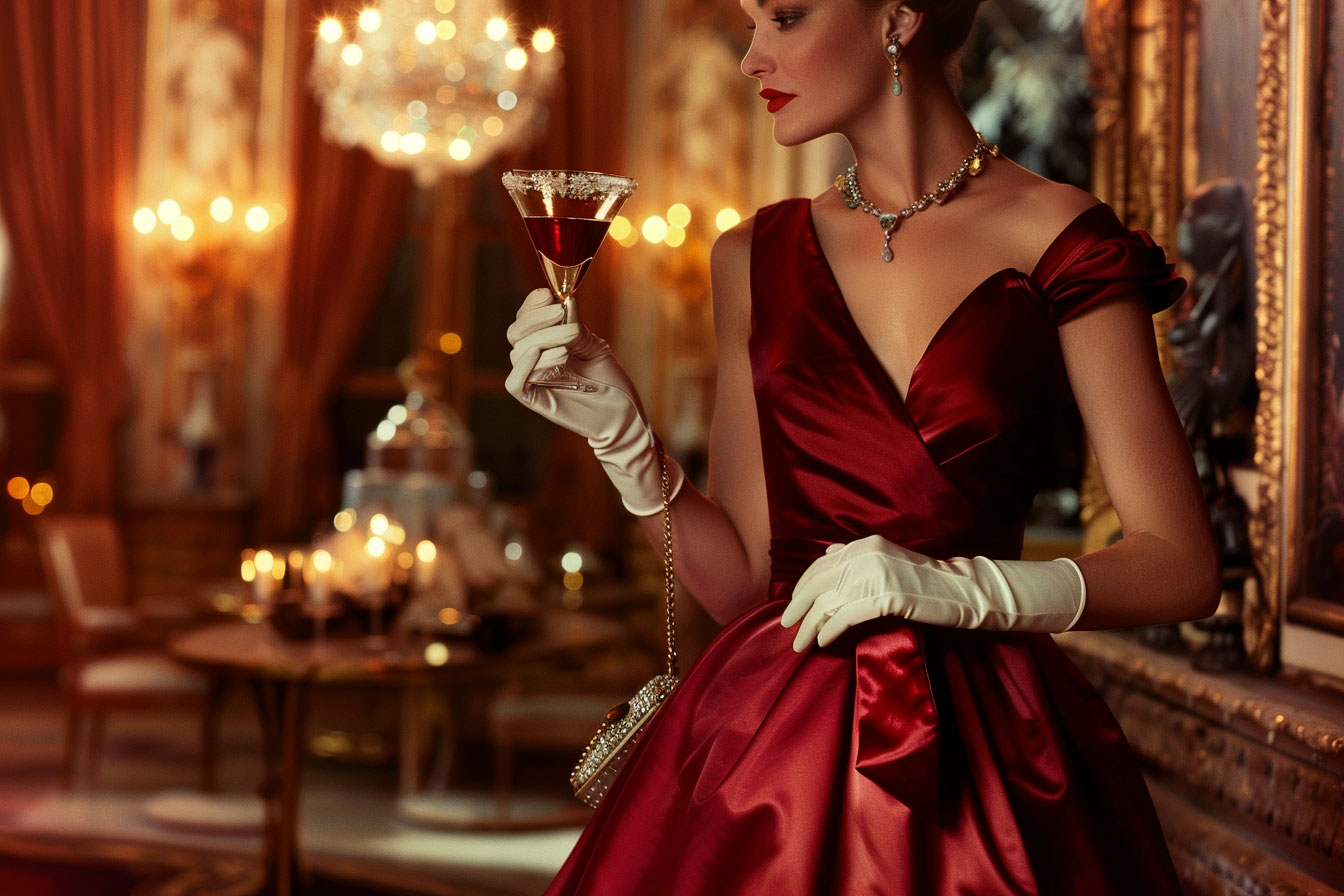
Christian Dior's "New Look" collection of 1947 revolutionised fashion and the universal silhouette for formal dressing became a full skirt and cinched waist. This translated directly into the 1950s party dress: a fitted bodice, a nipped waist emphasised with a wide belt or sash, and a full skirt in taffeta, silk, or tulle that extended to mid-calf. The effect was architectural — dramatic, feminine, intentional.
The 1950s were the heyday of the cocktail dress. Women were hosting cocktail parties in their homes, attending their husbands' office parties, and in general dressing more deliberately than they had in the previous decades. Every woman owned a little black dress in her collection and wore it frequently.
Colour mattered enormously. Black remained the most consistently worn, as it always has been for evening occasions, but the decade also embraced deep jewel tones — burgundy, forest green, sapphire blue — as well as the pastel pink and sage green that characterised the decade's more optimistic aesthetic. Fabric was rich: velvet, lace, tulle, and brocade for formal occasions; cotton organdie or printed silk for summer parties.
The 1950s party dress required accessories to be complete: matching shoes, a matching clutch, white gloves for more formal events. Getting dressed for a party was a deliberate, assembled process — and the result was an occasion in itself.
1960sThe Mini Revolution and the Little Black Dress
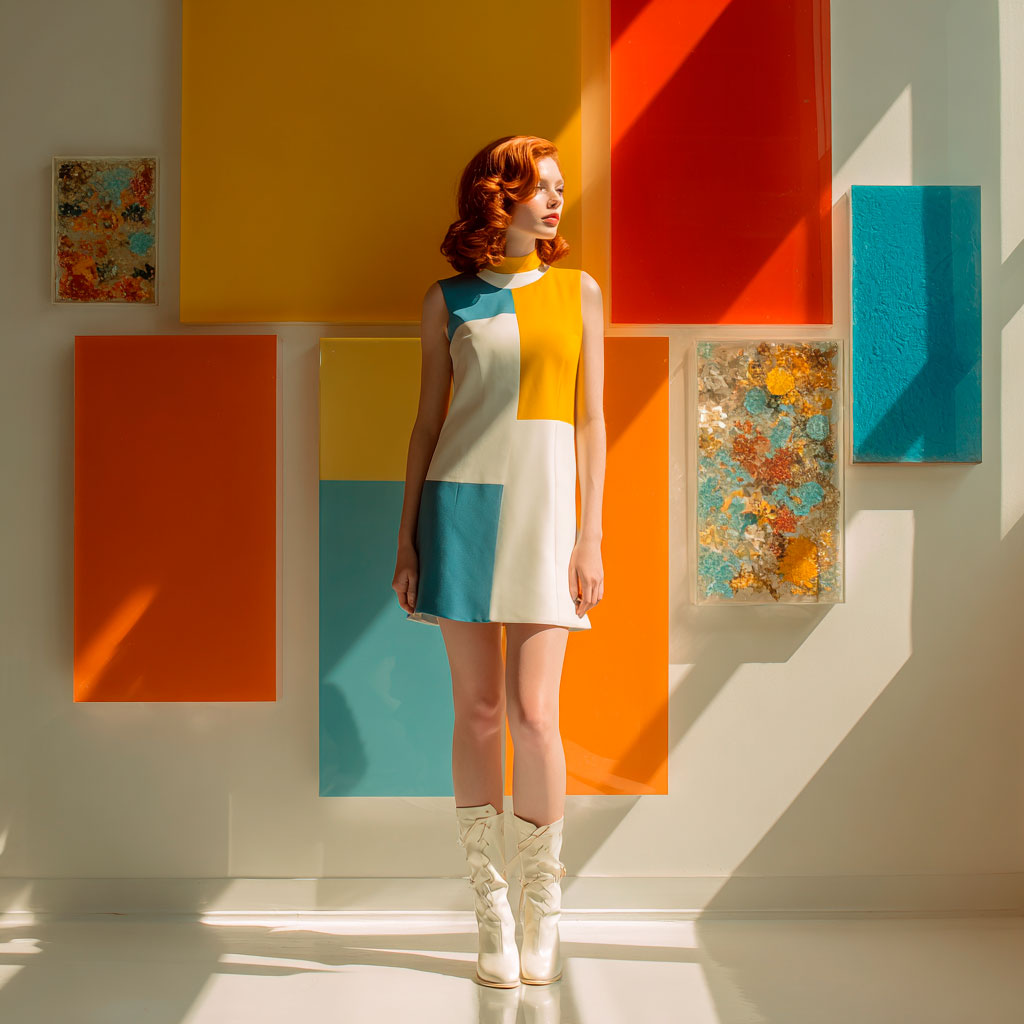
The 1960s broke with almost everything that had come before — including the idea that a party dress needed to be long, structured, or serious. Mary Quant's miniskirt, introduced in the early part of the decade, transformed evening wear along with everything else. Party dresses became shorter, younger, brighter, and considerably more cheerful.
The geometric shift dress — simple, sleeveless, short, often in solid colours or bold geometric prints — became the defining party silhouette of the mid-1960s. Yves Saint Laurent's Mondrian dress (1965), composed of colour-blocked panels of white, red, blue, and yellow, was one of the decade's most iconic party dress designs — wearable as art, striking in any room.
This was also the decade that formalised the Little Black Dress as a wardrobe concept. Coco Chanel had introduced the idea of a simple black dress as versatile evening wear in 1926 — American Vogue published a sketch of her plain black sheath and dubbed it "Chanel's Ford," predicting it would become a uniform. But it was Audrey Hepburn in Givenchy's black shift dress in Breakfast at Tiffany's (1961) that fixed the image permanently in the cultural imagination. The little black dress was not a specific garment but a category: any simple, well-made, dark dress that could be elevated by accessories and worn to almost any occasion after 6pm.
1970sThe Wrap Dress and the Democratisation of the Party
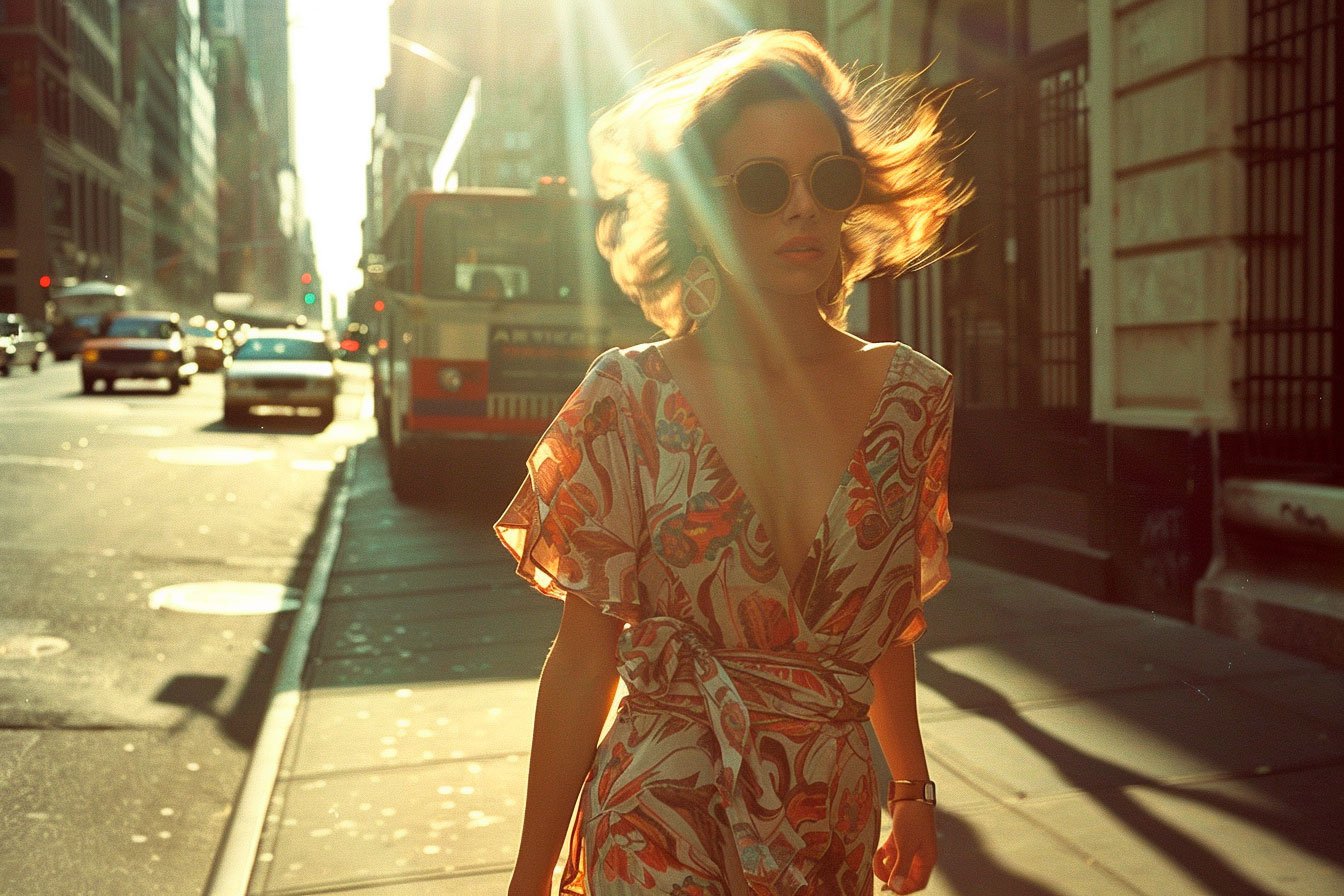
The 1970s made the party dress accessible in an entirely new way — not through mass production alone, but through design. In 1974, Diane von Furstenberg introduced the wrap dress: made of stretchy silk jersey with a V-neckline, a tie waist, and a skirt that hit just below the knee, the wrap dress was comfortable, lightweight, and universally flattering — a stark contrast to the restrictive clothing and masculine suiting often expected of women in the workforce.
Tailored during the women's liberation era, the wrap dress embodied the shifting roles of women in society and was regarded as a dress for a "woman in charge." By 1976, one million dresses had been sold.
The significance of the wrap dress in the history of the party dress was this: it was the first dress of the modern era that was genuinely flattering on every body shape, required no special understructure, could be worn for an office meeting and a dinner party on the same day, and was made for the woman wearing it rather than for the gaze of others. It was a party dress that felt as good as it looked — a combination that had not always been possible in previous decades.
The rest of the 1970s offered the contrast of the disco era: sequinned, floor-length gowns; halter necks; the kind of dressing up that Studio 54 required, where more was emphatically more and the party itself was the art form.
1980sPower, Shoulder Pads, and Excess
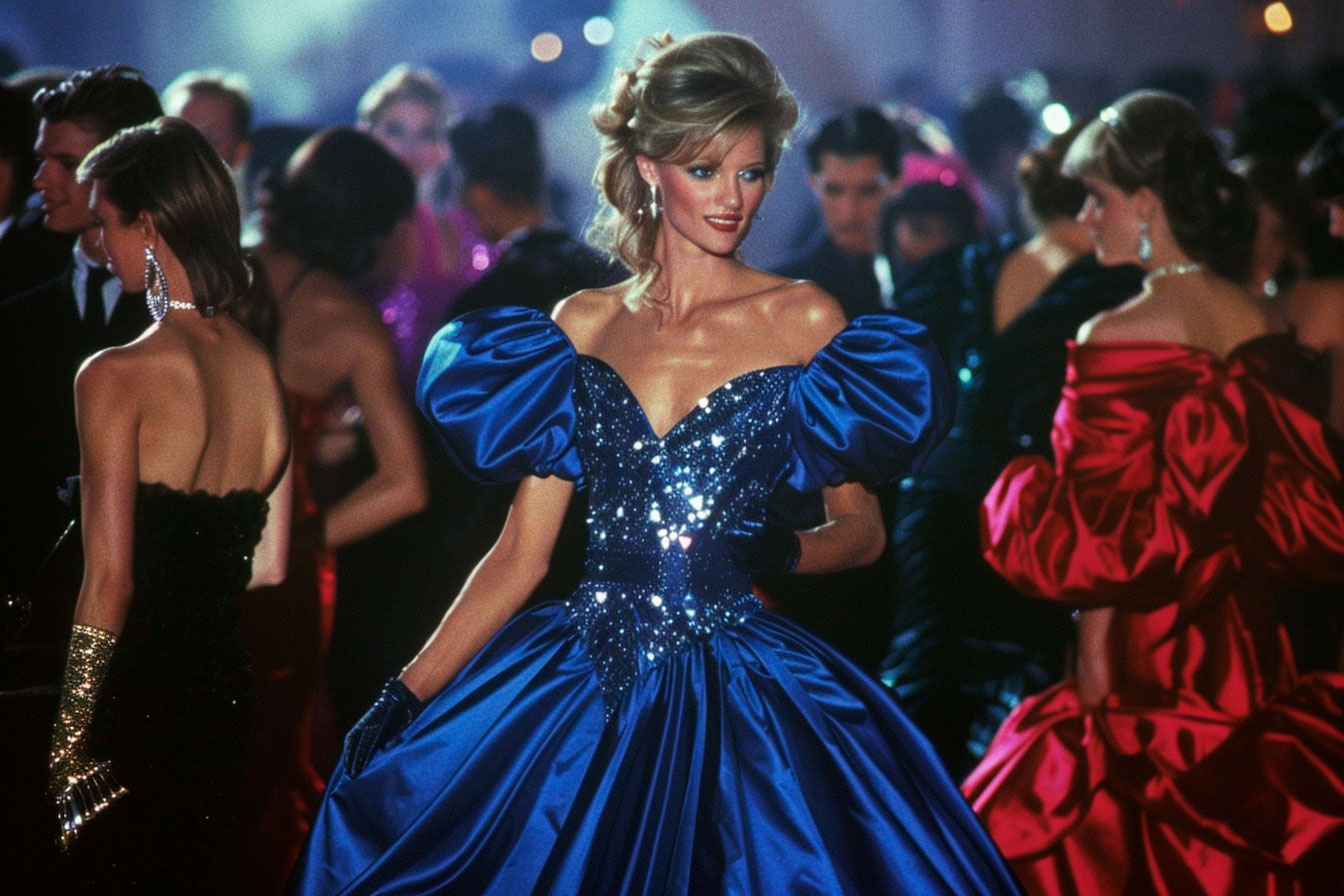
The 1980s party dress was unapologetically dramatic. Power dressing — the aesthetic of the decade — translated into evening wear as structured bodies, prominent shoulder pads, bold colours, and an overall sense that the woman wearing the dress was making a statement about her own ambition as much as her taste.
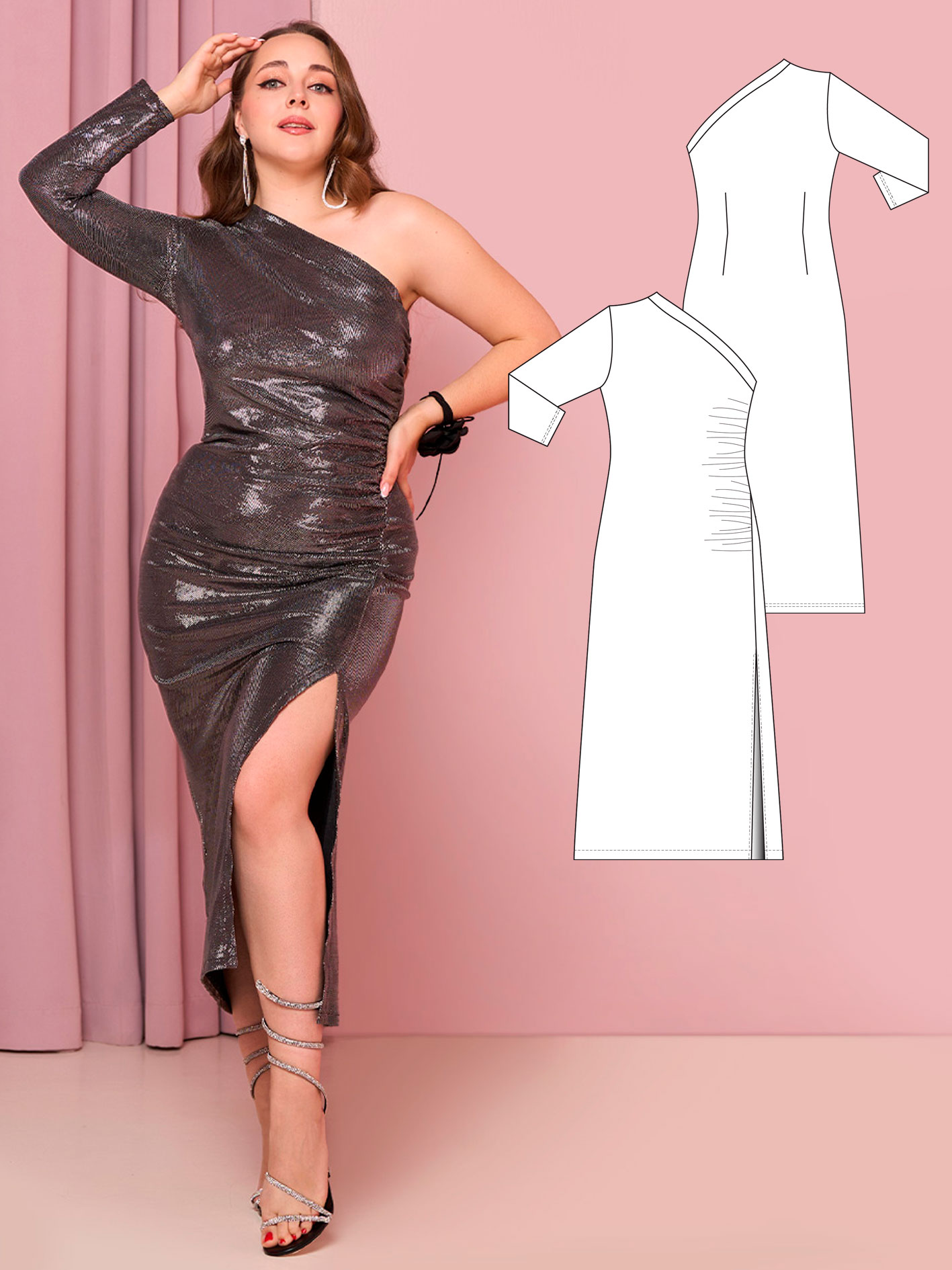
Puffed sleeves, dramatic necklines, sequinned bodices, and full skirts in duchesse satin or heavy taffeta characterised the formal end of 1980s evening wear. At the more casual end, the decade embraced the asymmetric hem, the one-shoulder dress, and the bandeau silhouette that sat strapless and straight across the chest.
Princess Diana's fashion choices — followed breathlessly throughout the decade — had a direct influence on what women wore to parties. The puffed sleeve, the cinched waist, the full skirt: the aesthetic of the most-photographed woman of the 1980s shaped evening wear internationally and made the fairy-tale silhouette mainstream.
1990sMinimalism and the Slip Dress
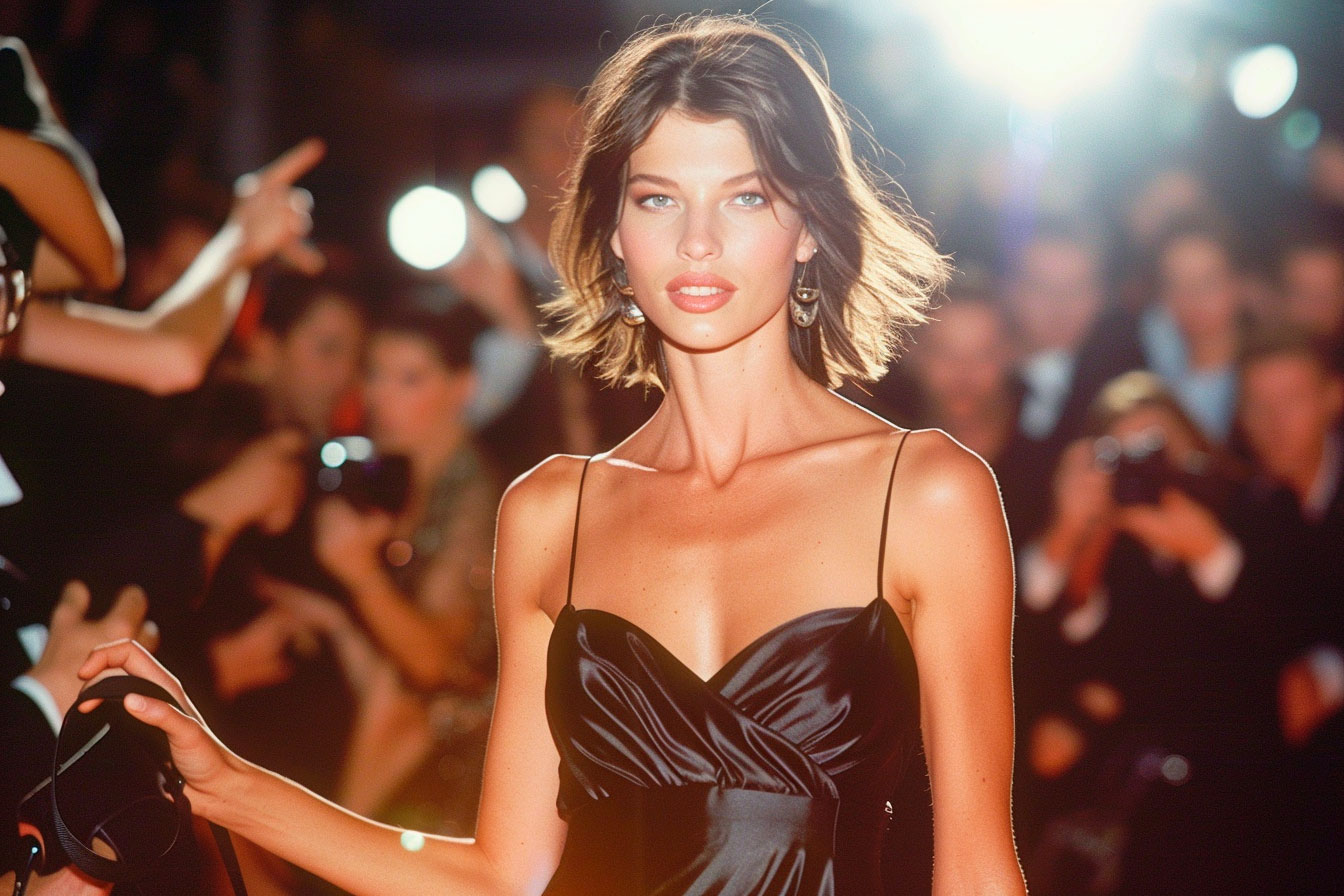
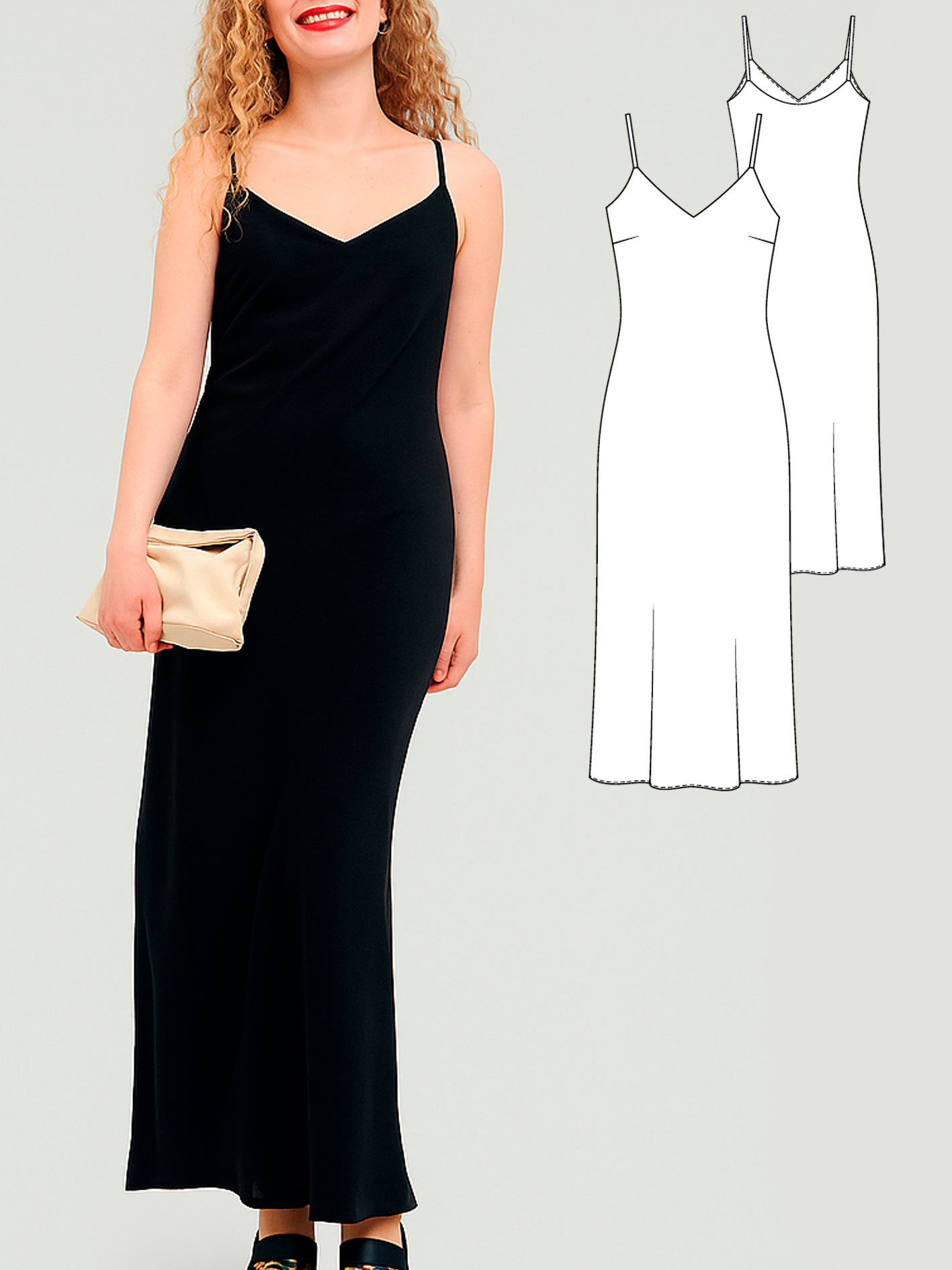
The 1990s reacted against the excess of the 1980s with deliberate restraint. The defining party dress silhouette of the decade was the slip dress: bias-cut or straight, made from satin or a satin-look fabric, minimal in ornamentation, short or midi in length. The slip dress was anti-structured, anti-theatrical, and deliberately understated in its elegance.
The decade's other defining party dress trend was the little black dress returned to its most minimal form: a simple shift, often in crepe or jersey, accessorised heavily or not at all. Designers like Calvin Klein and Jil Sander made understatement into a luxury aesthetic — the most expensive-looking dresses were the simplest.
The 1990s also saw the rise of the red-carpet dress as a public cultural event. When Elizabeth Hurley appeared in Versace's safety-pin dress in 1994, the fashion press had a new obsession: the specific choices celebrities made on the red carpet. Party dresses — the ones worn by famous women to famous events — became news in a way they had not been since the 1950s Hollywood era.
2000s — TodayFreedom to Choose
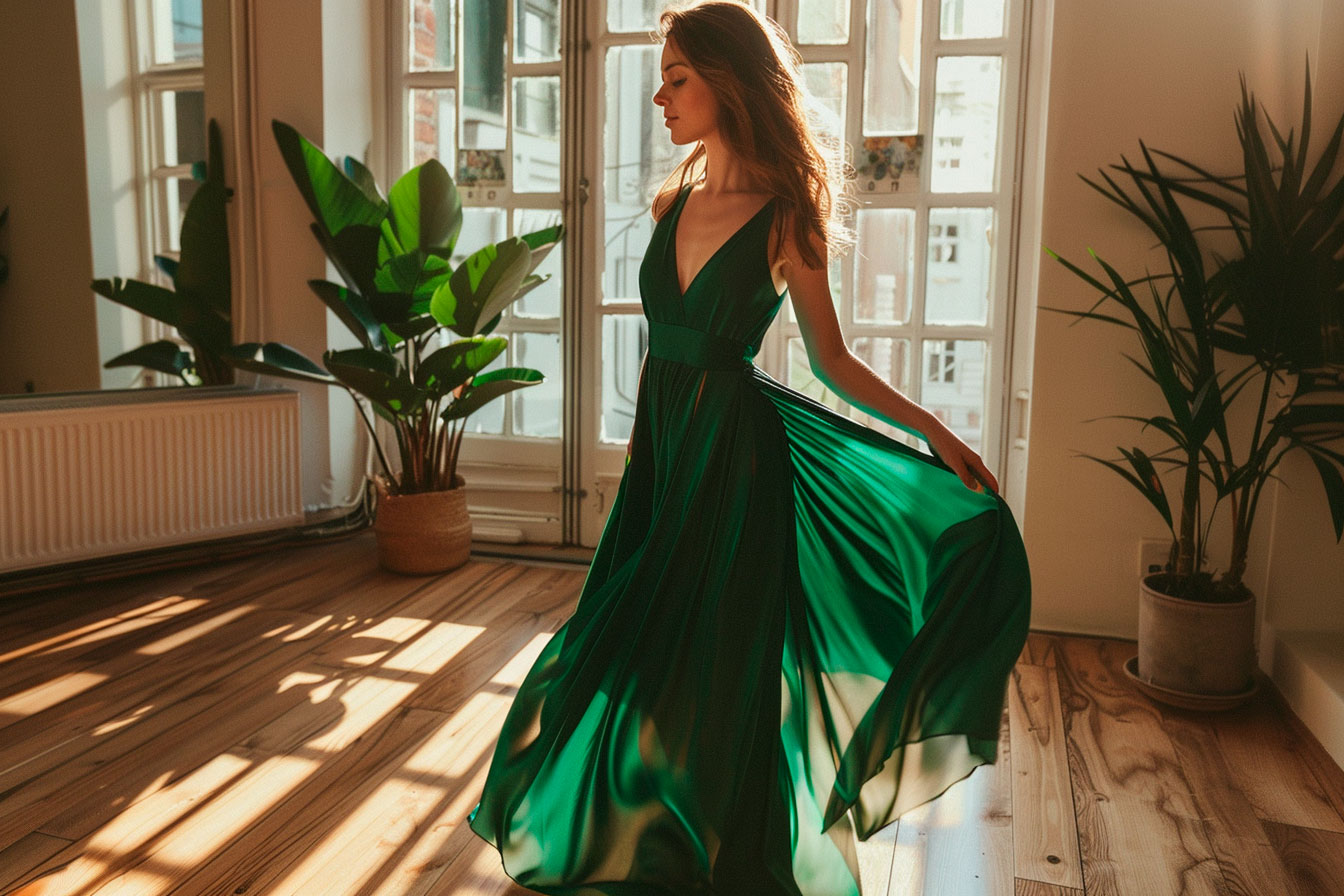
The contemporary party dress resists single definition. The 2000s brought bodycon — tight, short, figure-emphasising — alongside the return of the maxi gown for formal occasions. The 2010s saw the rise of the midi length, a renewed interest in vintage silhouettes, and an increasing acceptance that the "right" dress for a party was whatever the wearer wanted it to be.
Today, the most interesting shift in party dress culture is the return to making. The home sewing community has reclaimed the party dress as a project of personal expression — something made specifically for a specific occasion, in a fabric and a colour that means something to the person who will wear it, with a fit that was designed for one body rather than for a statistical average.
This is, in some ways, the oldest tradition of all. Before ready-to-wear fashion, every party dress was made — by a seamstress, a dressmaker, or the woman herself. The pattern, the fabric, the decision about which silhouette suited the occasion and the wearer: all of these were choices that the home sewer made.
That tradition never disappeared. It simply became unfashionable for a few decades, and now it is back.
What to Wear: A Modern Style Guide
The vocabulary of the party dress hasn't quite kept up with the freedom of the moment — invitations still say "cocktail attire," "black tie," "smart casual," and leave the rest to you. Here's a short, pragmatic translation, drawing on what each decade got right.
Cocktail party
Knee-length or just-below-knee. Fitted or A-line silhouette in a fabric with weight (crepe, satin, silk). The 1950s template still works — or a 1990s slip dress with a tailored jacket.
Black tie
Floor-length or substantial midi. Silk, velvet, or a structured satin. Either go classic (a bias-cut gown, 1930s style) or contemporary (a sleek column dress). Heels and an evening clutch are non-optional.
Garden party / daytime celebration
Tea-length or midi. Lighter fabrics — cotton, linen, viscose — and a print or pale colour. A 1950s sundress-and-jacket silhouette is the safest classic; a 1970s wrap dress is the most comfortable.
Christmas / holiday party
Dark jewel tones (burgundy, emerald, sapphire) or sequins. The 1980s did this best, and the silhouette is back: a sequinned bodice with a defined waist. A velvet midi is the dependable alternative.
Wedding guest
Read the invitation, then ignore anything white, ivory, or cream. A midi or knee-length dress in a colour that suits you, in a fabric appropriate to the season. The 1970s wrap dress is, for these, almost unbeatable.
"Smart casual" or unspecified
When in doubt, a little black dress. The 1960s LBD — simple, sleeveless or short-sleeved, knee-length — is the most versatile single garment in the history of women's fashion. Dress it up or down with accessories.
Sew Your Own Piece of History
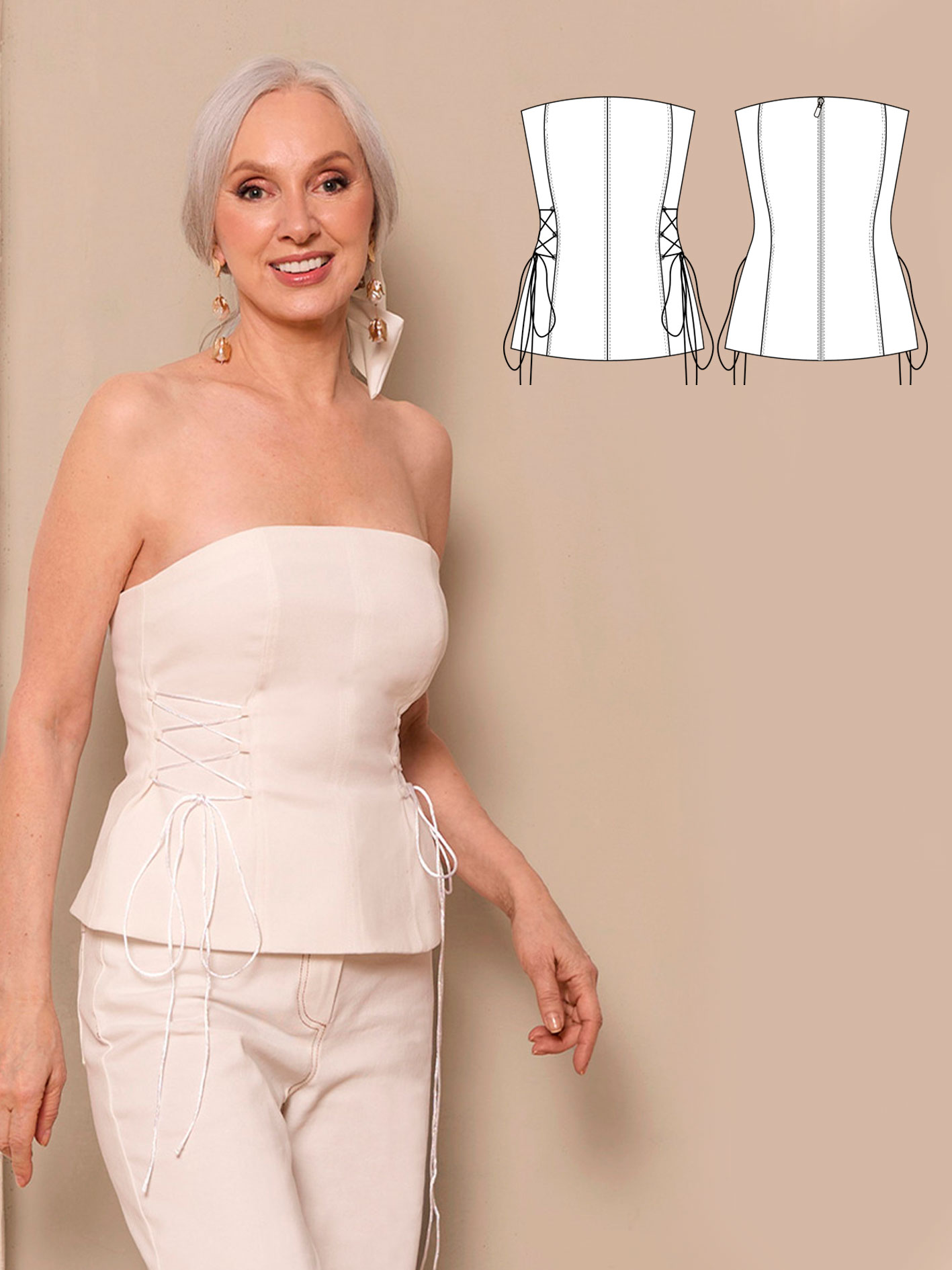
At Fabrico, our women's dress patterns give you the choice that the history of the party dress has always returned to: make exactly what you want, for exactly the occasion you have in mind. A 1950s cocktail silhouette in midnight velvet. A 1970s wrap in printed jersey. A 1990s slip in silk crepe. The pattern is the start of a conversation between you, the fabric you choose, and the moment you're dressing for.
Frequently Asked Questions
What is the history of the party dress?
The party dress as we know it emerged in the 1920s, when the flapper dress replaced the long, corseted evening gowns of the previous generation. Across the following century it evolved through the bias-cut Hollywood glamour of the 1930s, the New Look cocktail dress of the 1950s, the mini and the little black dress of the 1960s, the wrap dress of the 1970s, the power-shoulder excess of the 1980s, the minimal slip dress of the 1990s, and today's plural, anything-goes party wear.
Who invented the little black dress?
Coco Chanel introduced the idea of a simple black dress as versatile evening wear in 1926, when American Vogue published a sketch of her plain black sheath dress and dubbed it "Chanel's Ford" — predicting it would become a uniform. But it was Audrey Hepburn in Givenchy's black shift dress in Breakfast at Tiffany's (1961) that fixed the image of the little black dress permanently in the cultural imagination.
When was the wrap dress invented?
The wrap dress was invented by Diane von Furstenberg in 1974. Made of stretchy silk jersey with a V-neckline, a tie waist, and a skirt that hit just below the knee, it was comfortable, lightweight, and universally flattering. By 1976, one million wrap dresses had been sold — making it one of the most successful single dress designs of the twentieth century.
What is a 1920s flapper dress?
A 1920s flapper dress is a sleeveless, relatively loose shift dress that sits below the knee rather than at the ankle. It features a dropped waistline, a straight silhouette with a flat bust, and surfaces covered in beading, sequins, or fringe. The design was made for dancing — the Charleston, the foxtrot, the tango — and represented a radical break from the corseted evening wear of the previous generation.
What defined the 1950s cocktail dress?
The 1950s cocktail dress was defined by Christian Dior's "New Look": a fitted bodice, a nipped waist emphasised with a wide belt or sash, and a full skirt in taffeta, silk, or tulle extending to mid-calf. It was worn to a new kind of social occasion — the cocktail party — and was typically paired with matching shoes, a clutch, and (for formal events) white gloves.
What is a slip dress?
A slip dress is a thin-strapped, bias-cut or straight-cut dress in satin, silk, or a satin-look fabric, worn close to the body. It defined 1990s party fashion as a deliberate rejection of the structured excess of the 1980s. Designers like Calvin Klein and Jil Sander made the slip dress's minimalism into a luxury aesthetic — the most expensive-looking dresses were the simplest.
What should I wear to a cocktail party?
For a cocktail party, a knee-length or just-below-knee dress is the traditional choice — a fitted bodice with a moderate skirt, in fabric with some weight (crepe, satin, or silk). The little black dress remains the safest option; jewel tones (burgundy, sapphire, forest green) are equally appropriate. Pair with heels, a small clutch, and minimal but considered jewellery.
Are party dresses still in fashion?
Yes — and arguably more so than ever, because there is no longer a single "correct" party dress silhouette. 1920s-style fringe dresses, 1950s cocktail full skirts, 1970s wraps, 1990s slip dresses, and modern minimal shifts are all equally current. The contemporary moment offers genuine freedom of choice — the right party dress is whichever one the wearer wants for the occasion in mind.
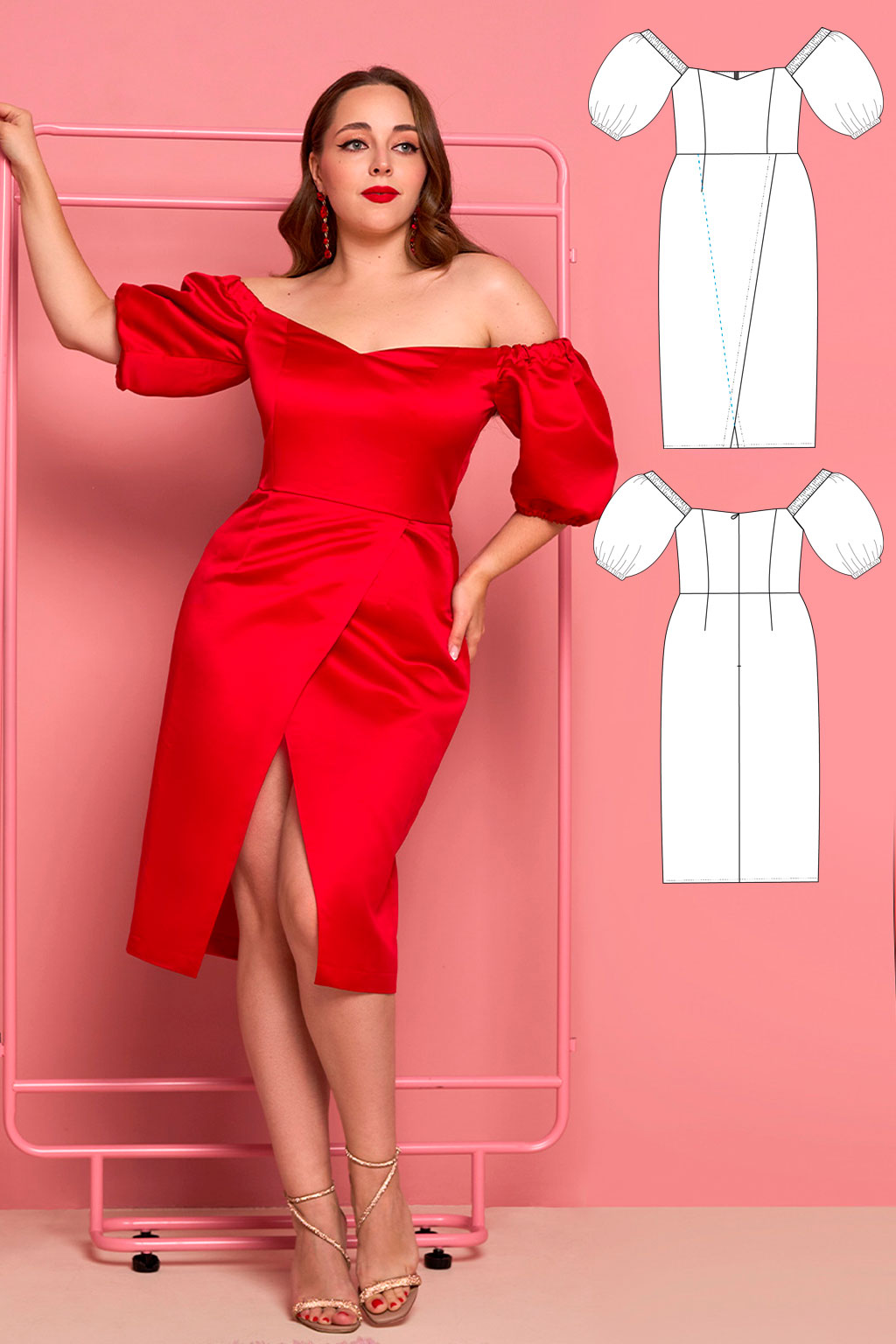
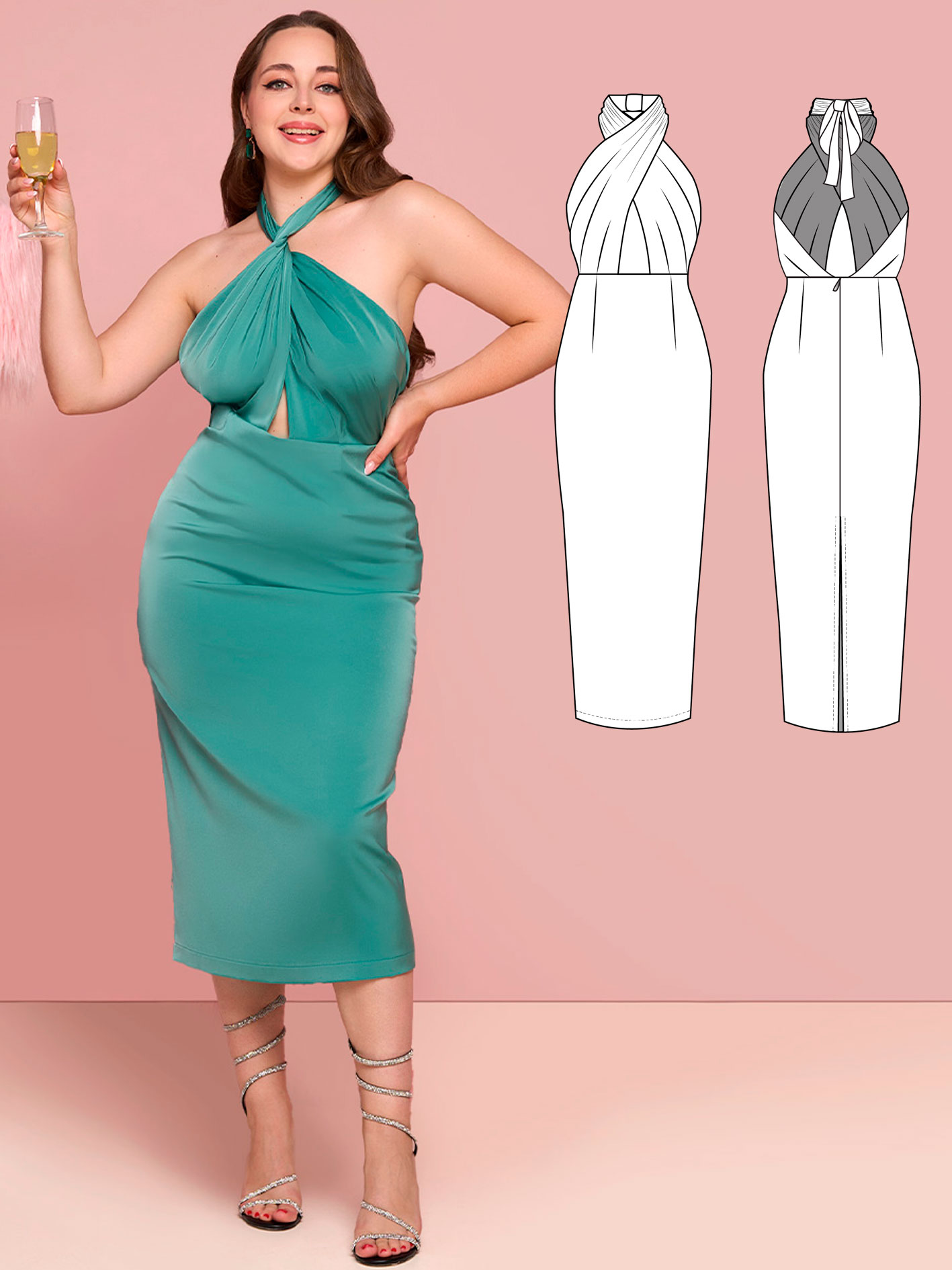
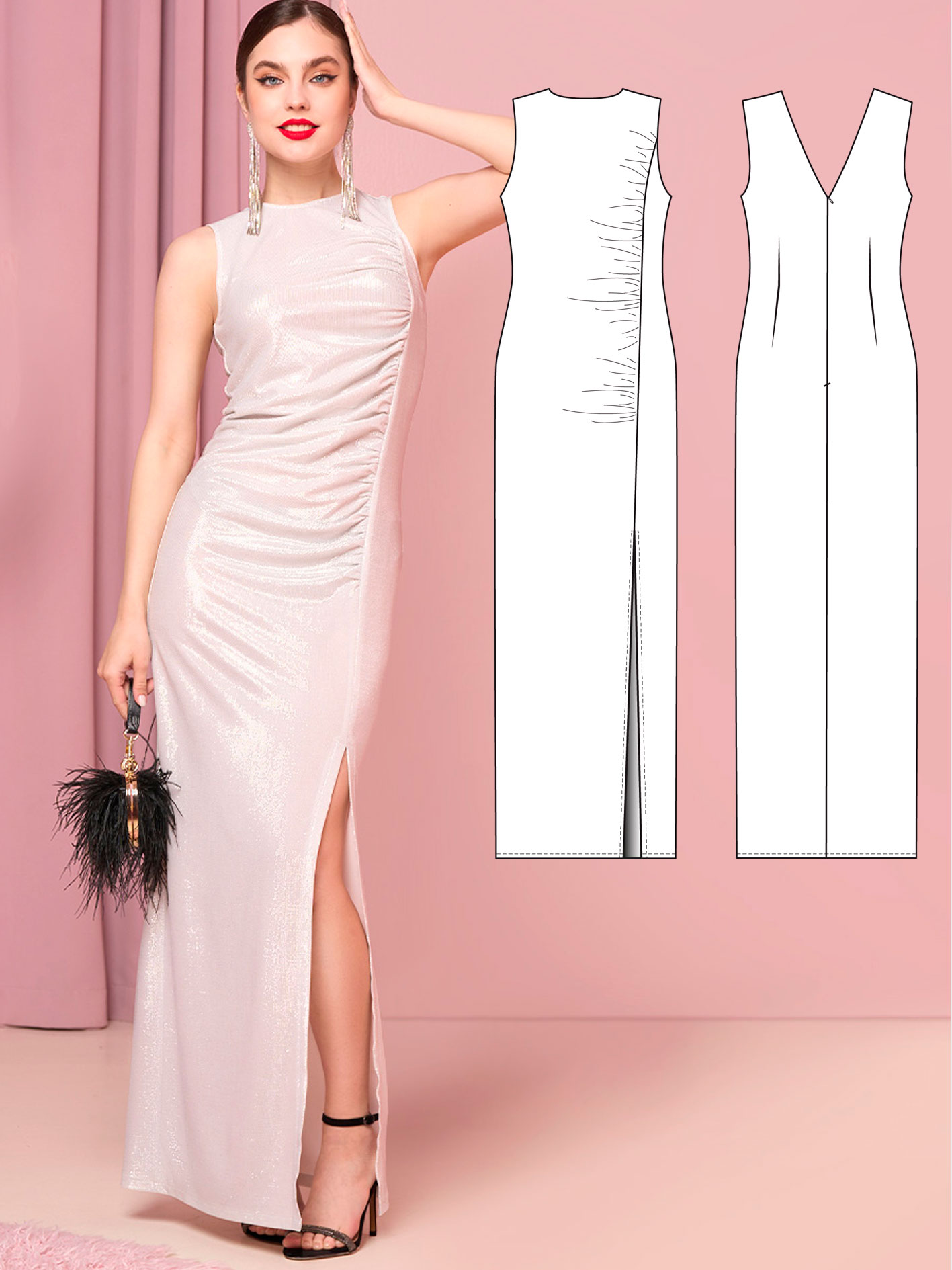
Shop these patterns
Keep reading
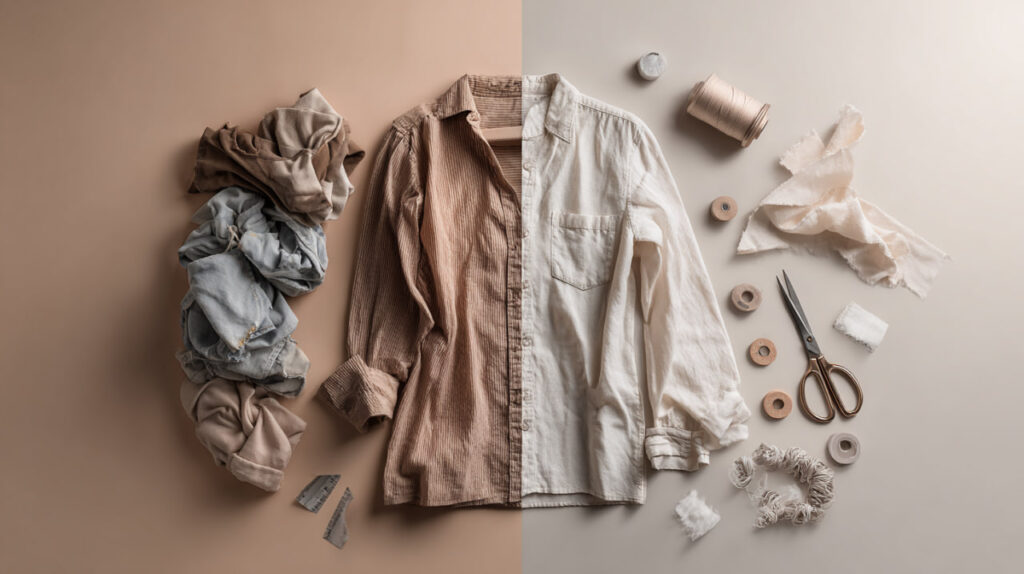
Why Choosing the Right Fabric Matters
Silk crepe, satin, tulle, velvet — every party dress era has its signature fabric. Here's how to pick yours.
Read more
Press to Impress
The ironing trick that instantly upgrades your sewing — the silent hero of every well-finished garment.
Read more
Behind the Pattern
What actually goes into the PDF that lands in your inbox — and why a well-graded pattern is worth more than its price tag.
Read more
Thread, Click, Sew.
Free online sewing resources every beginner should know — courses, channels, and communities worth bookmarking.
Read more
Beyond the Seam
From sewing alone to finding your creative community — where to look and what changes when you do.
Read more
From Tossed to Treasured
A quiet revolution in sewing rooms — turning fast-fashion castoffs into the wardrobe you actually want.
Read more