6 min read Beginner sewing Summer wardrobe
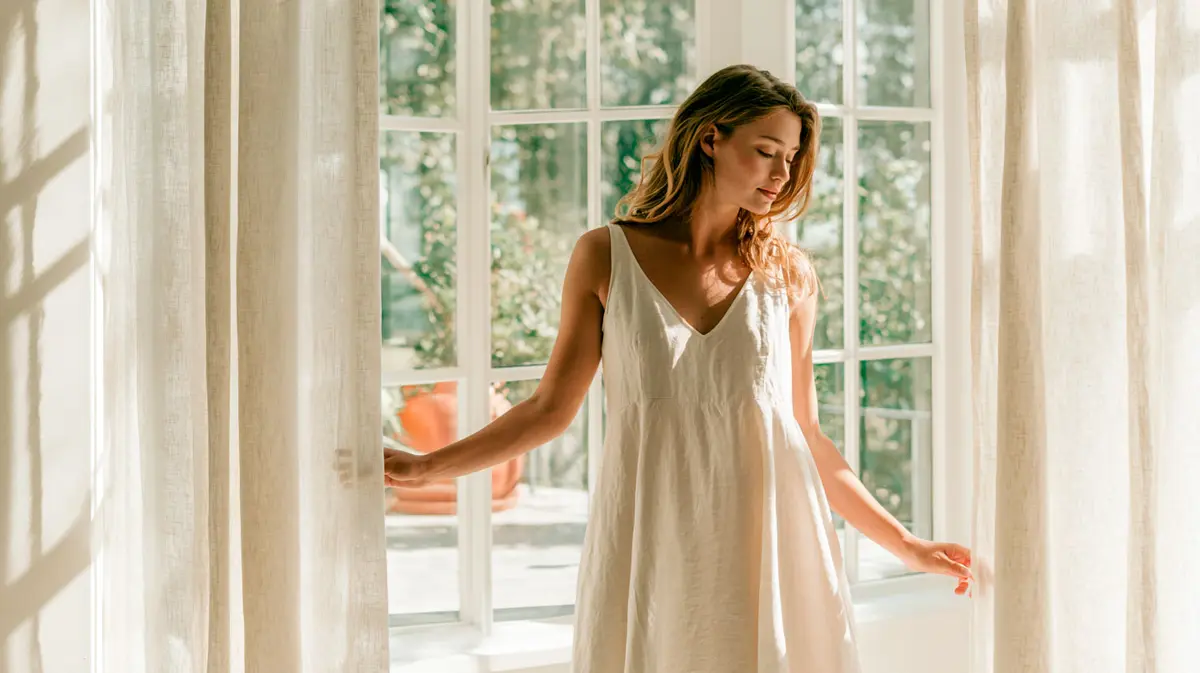
There's a moment every home sewer knows. You open your wardrobe on a hot morning, push past the shirts that need ironing and the trousers that feel too heavy, and reach for the one dress that fits perfectly, feels like nothing, and makes you look like you tried. Then you think: I wish I had three more of these.
The good news is that you can. And if you've never sewn a dress before, summer is the best possible time to start — because a summer dress is, by almost every measure, the most forgiving, most rewarding, and most satisfying garment a home sewer can make.
The Quick TakeA summer dress is the easiest garment to sew because it's one pattern, one piece, one finished outfit. The fabrics are forgiving, the silhouettes are flattering, and a single afternoon of work gives you a complete look — cut to your measurements, in a fabric and colour you chose. For a first project, an A-line or V-neck dress in light cotton or viscose is the best place to start.
One Pattern, One Garment, One Complete Outfit
The practical advantage of a dress over any other summer garment is simple: it's finished the moment you put it on. There's no coordinating a top with trousers, no wondering whether the skirt hem hits at the right point on your ankle, no searching for a belt that matches. A dress is a complete thought. You sew it, you wear it, you're done.
For a home sewer, this means the effort you put into one pattern — choosing the fabric, cutting carefully, sewing the seams — produces a complete, wearable result. A shirt requires a skirt. Trousers require a top. A dress requires nothing but itself.
Experienced sewists describe dresses as their most satisfying projects: the ratio of effort to result is simply better than anything else in the wardrobe.
Dresses Are More Forgiving Than You Think
There's a widespread assumption among beginners that dresses are complicated — that they involve darts, zips, and linings beyond an early-stage sewist's skills. This is sometimes true of tailored, structured dresses. It's almost never true of summer dresses.
A well-designed summer dress pattern — particularly an A-line or wrap silhouette — has very little fitting complexity. The flared skirt section means small variations in hip measurement disappear into the ease of the fabric. The bodice, if cut accurately from a good-quality PDF pattern with video guidance, requires only basic straight-seam sewing skills.
The result is a garment that is accessible to a beginner, satisfying to an intermediate sewist, and fast enough that an experienced maker can complete it in a single afternoon.
Summer Fabric Makes Everything Easier
The fabrics that work best for summer dresses — light cotton, cotton voile, viscose, linen — are also the fabrics that are easiest to sew. They don't fray aggressively, they press beautifully, and they behave predictably under the needle. There's no stretch fabric complexity, no slippery satin, no thick denim that needs industrial equipment.
Here's a quick guide to the best summer dress fabrics, from easiest to handle to slightly more demanding:
| Fabric | Difficulty | Best for | Notes |
|---|---|---|---|
| Cotton poplin | Beginner | A-line and shift dresses | Holds shape, presses crisply, very forgiving. |
| Cotton voile | Beginner | Sundresses and tiered skirts | Light and breezy. Use sharp needles and fine thread. |
| Linen | Beginner | Relaxed, breathable summer dresses | Wrinkles by design — that's the look. Pre-wash before cutting. |
| Viscose / Rayon | Intermediate | Drapey wrap and bias dresses | Beautiful drape. Cut on a single layer to prevent shifting. |
| Chambray | Beginner | Casual everyday dresses | Sews like cotton, looks like denim. Great for first projects. |
| Tana lawn / fine cotton | Intermediate | Party dresses with structure | Slightly slippery — pin generously. |
This means a summer dress isn't just a simple pattern — it's a simple sewing experience, from the moment you unroll the fabric to the moment you press the finished hem. For a beginner, that simplicity builds confidence. For an experienced sewist, it means you can make multiples: the same pattern in three different fabrics gives you a wardrobe, not a single garment.
The Cost Argument Is Compelling
A good summer dress in a high-street shop costs, depending on the brand, somewhere between €30 and €150. A PDF sewing pattern from Fabrico costs under €5. Two to three metres of good cotton or viscose costs €10–€20.
The maths is straightforward: for the price of one mid-range shop-bought dress, you can make three or four at home — each cut precisely to your measurements, in a fabric and colour you actually chose, finished exactly as you wanted.
| Buy | Sew | |
|---|---|---|
| Cost | €30–€150 per dress | €15–€25 in materials |
| Fit | Cut for a statistical average | Cut for your measurements |
| Fabric | Whatever is in stock | Any colour, weight, or pattern you like |
| Length | Fixed by the buying team | Hemmed exactly where you want |
| Repeatability | One dress per purchase | One pattern, unlimited makes |
The fit alone makes the case. A shop-bought dress is cut for a standard set of measurements that may or may not correspond to yours. A sewn dress is cut for your body, adjusted where needed, and finished as long or as short as you prefer. The fit of a well-made home-sewn dress is almost always better than the shop-bought equivalent — because it was made for one person, not for a statistical average.
What You'll Need for Your First Summer Dress
Before you start, gather these. Most of it you probably already have.
- A PDF sewing pattern in your size — with clear instructions and ideally a video tutorial.
- 2–3 metres of fabric — light cotton, viscose, or linen at 140–150 cm width.
- Matching thread — polyester all-purpose is fine for almost any summer fabric.
- Sharp fabric scissors or a rotary cutter — never use them on paper.
- Pins or pattern weights — weights are gentler on lightweight fabrics.
- A sewing machine with a straight stitch and a zigzag — that's all you need.
- An iron and ironing board — pressing as you sew is what gives the finish.
- A measuring tape and tailor's chalk — for adjustments and marking darts.
Which Dress Pattern Should You Start With?
If you're sewing your first summer dress, the choice of pattern matters more than the choice of fabric. A good pattern should have clear instructions, graded sizes that correspond to real measurements, and enough guidance that you can troubleshoot if something isn't going to plan.
At Fabrico, every pattern comes with a step-by-step video tutorial that walks you through construction in real time — so you're never stuck wondering what "ease the sleeve cap" means or how to finish a facing neatly. The video does the explaining; you do the sewing.
Three patterns we recommend, depending on where you are in your sewing journey:
For a true beginnerThe Victoria V-neck Dress
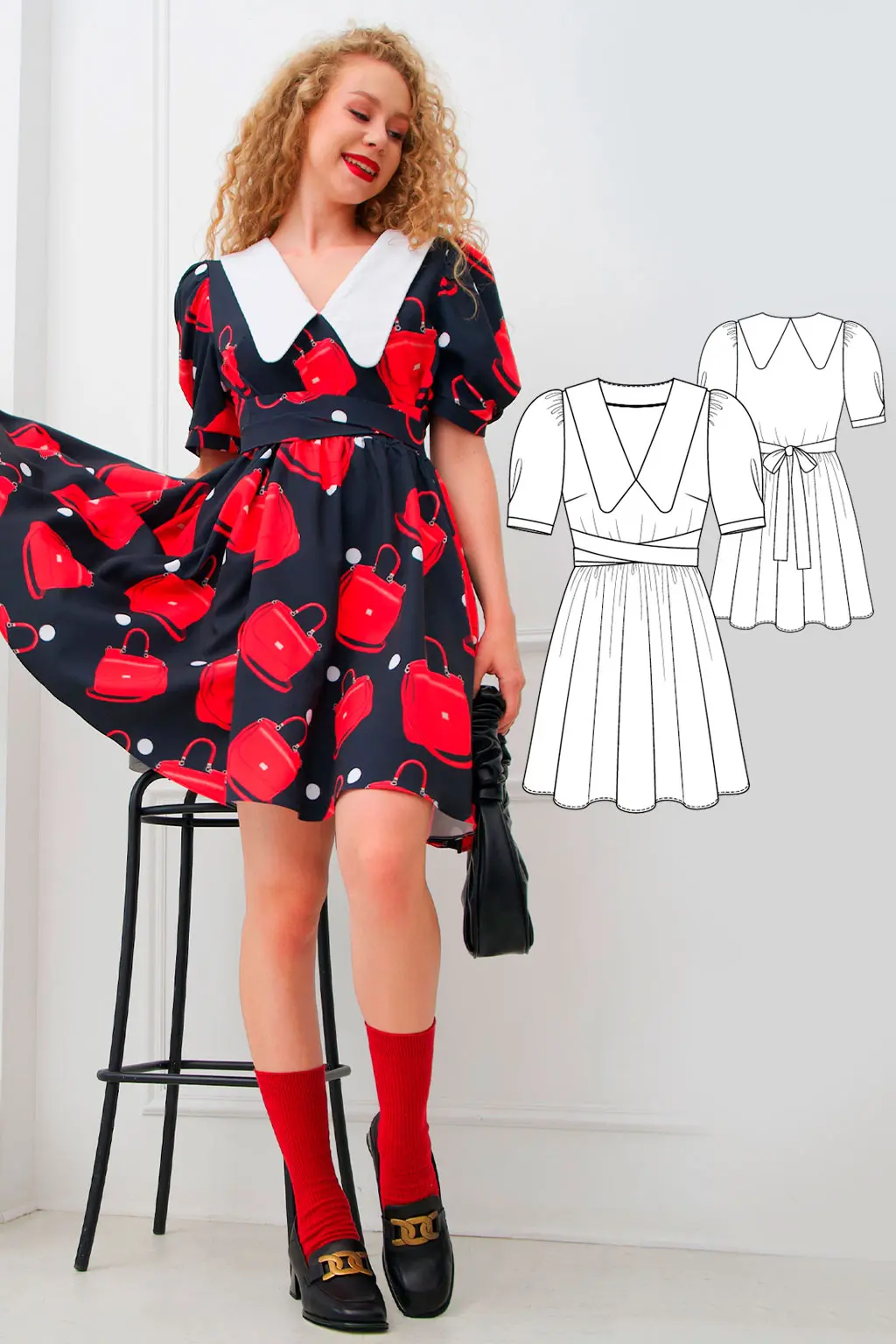
An excellent first project. The silhouette is flattering on almost every figure, the construction is straightforward, and the V-neck is finished cleanly using the pattern's facing — no separate lining required. If you've never sewn a dress before, start here.
Download the Victoria V-neck pattern For some experienceThe Margaret Dress
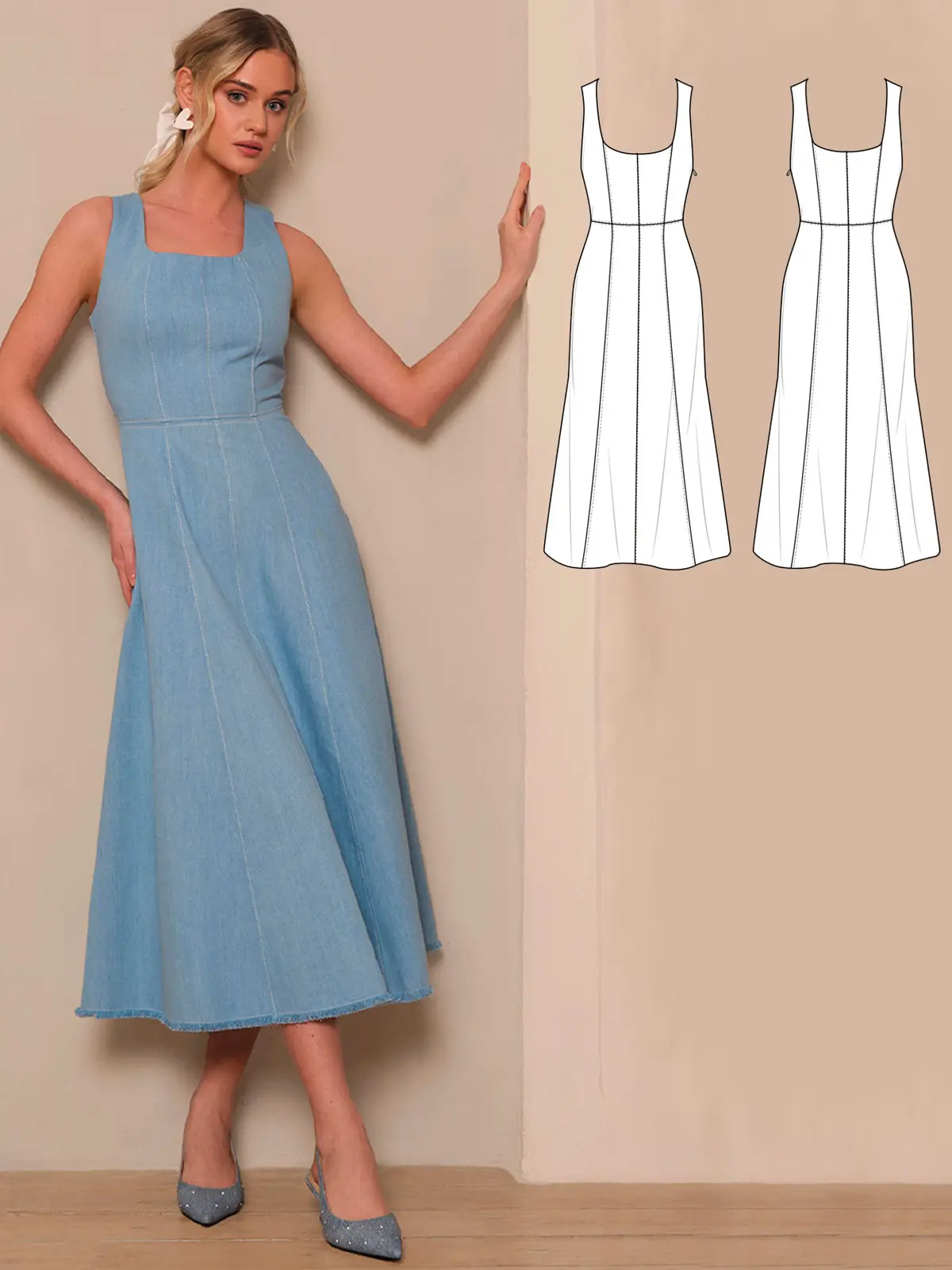
A slightly more interesting construction — a fitted bodice paired with a fuller skirt — that produces a result that feels genuinely elegant without being technically demanding. A good step up from a basic A-line.
Download the Margaret pattern For a special occasionThe Vivien Party Dress
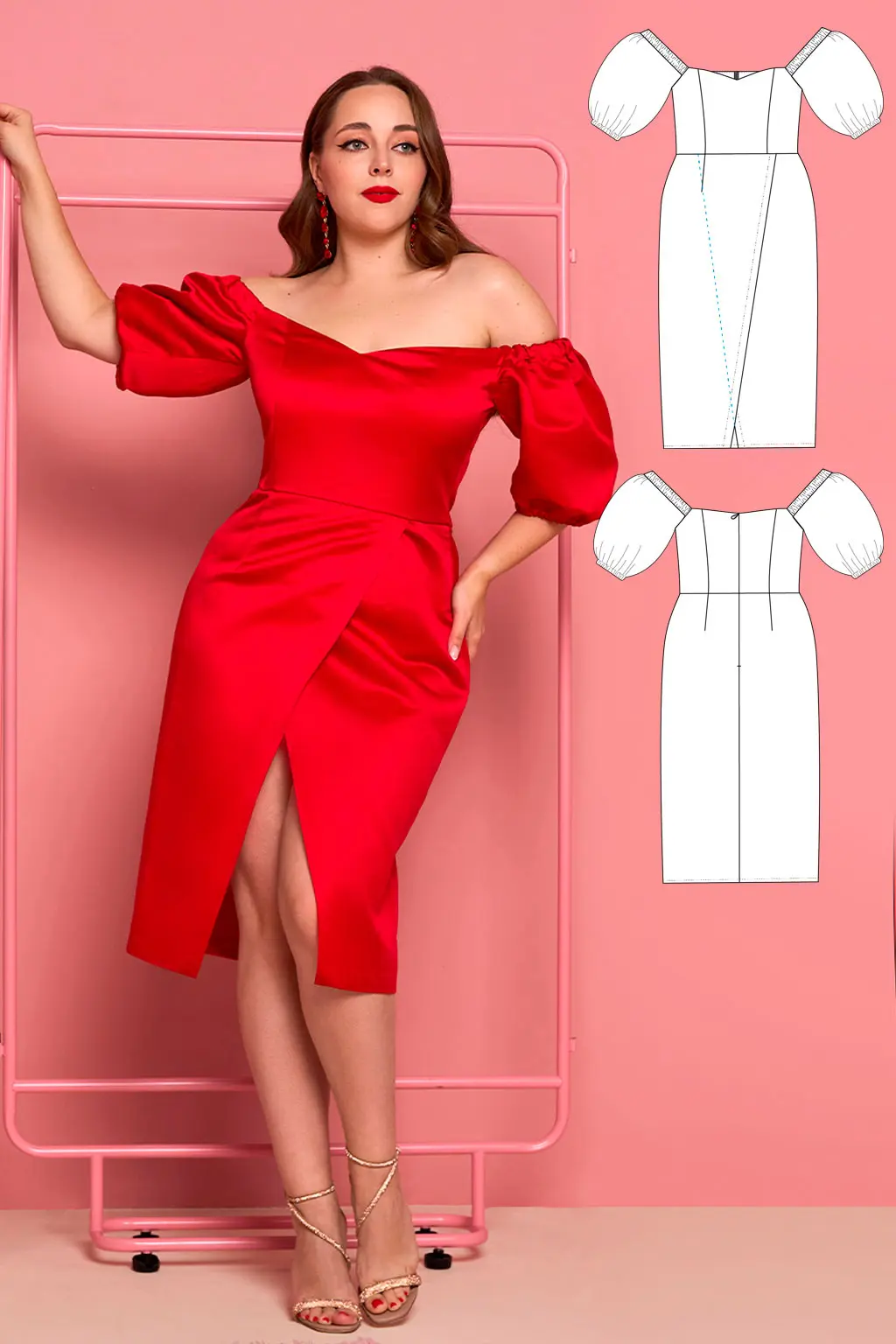
For when you want a finish that justifies a longer sewing session. Structured enough to feel formal, comfortable enough to dance in — the kind of dress that earns the extra hour spent on the topstitching.
Download the Vivien patternThe Wardrobe Case for Making Your Own
The longer argument for sewing your own summer dresses isn't about cost or fit, though both matter. It's about the difference between a wardrobe that happened to you and a wardrobe you designed.
When you sew your own clothes, you stop buying what's available and start making what you want. The colour that actually suits you, not the one that was on the hanger. The length that works for your height, not the length the buying team decided was fashionable this season. The fabric that feels good in your climate, not the synthetic that photographs well but is unwearable above 25 °C.
This is the real pleasure of home sewing — and the summer dress, because it's simple, fast, and infinitely variable, is the best possible entry point.
Frequently Asked Questions
What is the easiest summer dress to sew for a beginner?
An A-line or wrap-style dress in a light cotton or viscose is the easiest summer dress for a beginner. The flared skirt forgives small fitting errors, the bodice uses simple straight seams, and the fabric is well-behaved under the needle. The Victoria V-neck dress is a popular first project because its facing-finished neckline replaces the need for a separate lining.
How long does it take to sew a summer dress?
An experienced sewist can finish a simple summer dress in a single afternoon — roughly three to four hours of focused work. A beginner following a video tutorial should plan for a weekend: one session to cut, one session to sew, and time in between to press as you go.
What fabric should I use for my first summer dress?
Light cotton, cotton voile, viscose, and linen are the best fabrics for a first summer dress. They press beautifully, don't fray aggressively, and behave predictably under the needle. Avoid stretch knits, slippery satin, and heavy denim for your first project — they all require more advanced technique.
How much fabric do I need for a summer dress?
Most summer dress patterns need 2 to 3 metres of fabric at standard width (140–150 cm). Always check the fabric requirements on your specific pattern, and add 10–15 cm if you're working with a directional print or a stripe you want to match at the seams.
Is it cheaper to sew a dress than to buy one?
Yes, in most cases. A PDF sewing pattern costs under €5, and 2–3 metres of good cotton or viscose costs €10–€20. That's €15–€25 in materials versus €30–€150 for a comparable shop-bought dress. The bigger win is fit and fabric choice — both of which you control.
Do I need a serger to sew a summer dress?
No. A regular sewing machine with a zigzag stitch is enough to finish the seam allowances on a woven summer dress. A serger gives a cleaner finish faster, but it isn't required for any of Fabrico's beginner dress patterns.
What's the difference between an A-line and a wrap dress?
An A-line dress is fitted at the bust and flares out to the hem in a straight "A" shape — it pulls on over the head and needs almost no fitting adjustments. A wrap dress crosses one front panel over the other and ties at the waist, making it more adjustable to your exact measurements but slightly more complex to sew.
Can I sew a summer dress without a pattern?
You can, but we don't recommend it for your first dress. A graded PDF pattern guarantees a balanced fit across bust, waist, and hip, gives you tested seam allowances, and comes with construction instructions. Free-drafting works once you understand how garments are built — start with a pattern.
Shop these patterns
Beginner Victoria V-neck dress
PDF pattern · Video tutorial
3,99 € Everyday Margaret dress
PDF pattern · Video tutorial
3,99 € Party Vivien party dress
PDF pattern · Video tutorial
4,50 €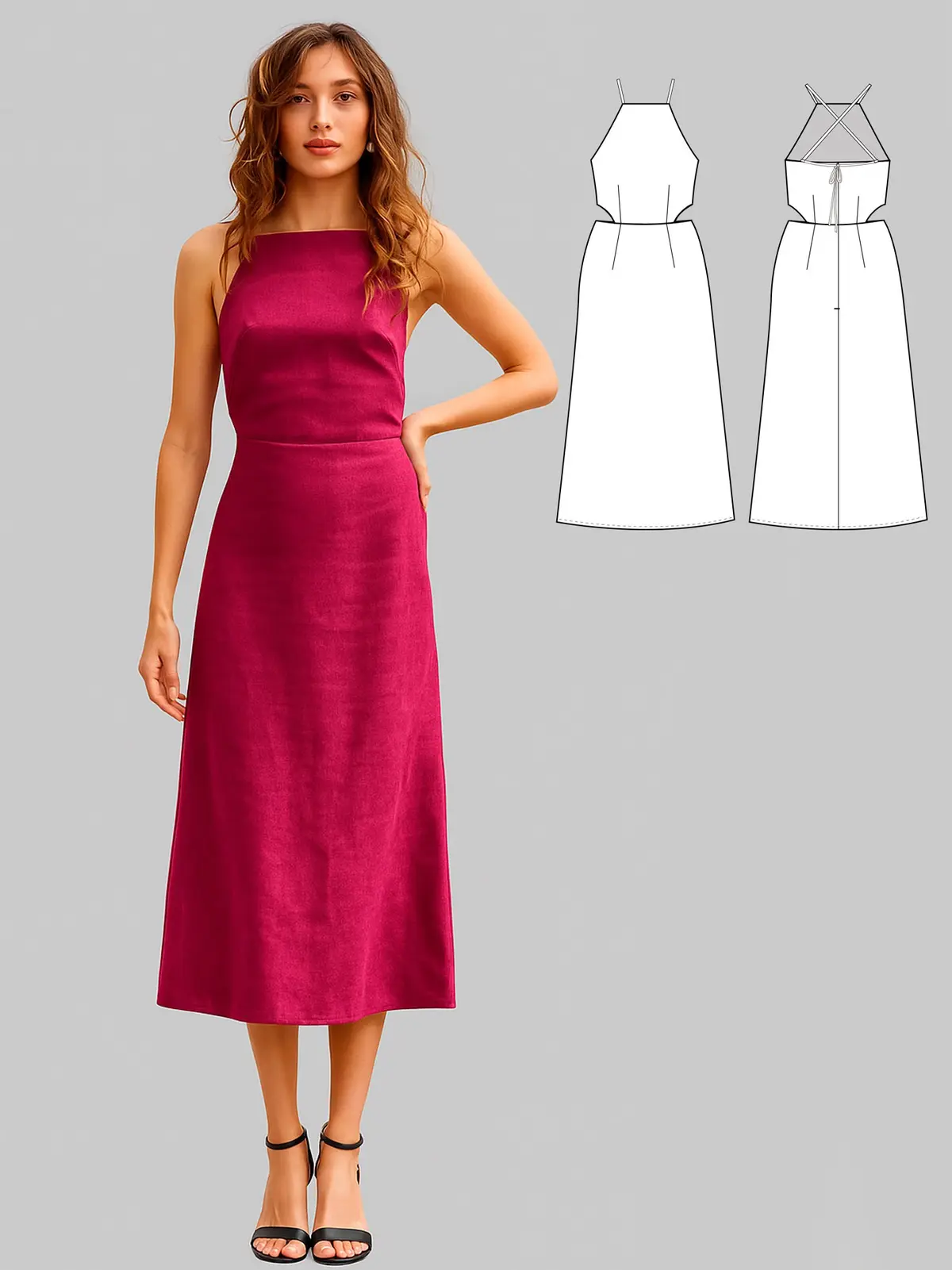 Sundress
 Muffin sundress
PDF pattern · Video tutorial
4,50 €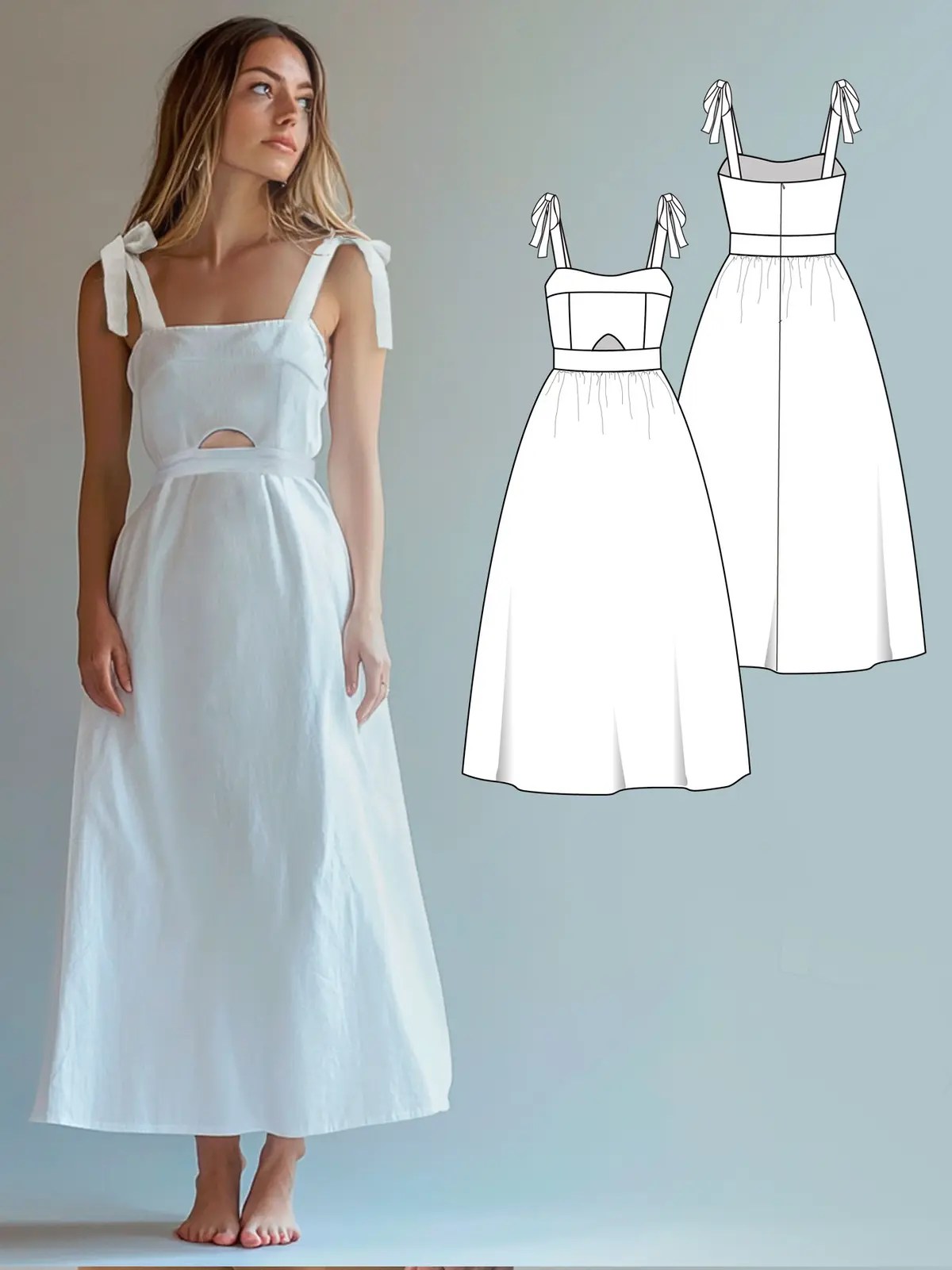 Everyday
 Vanilla dress
PDF pattern · Video tutorial
4,50 €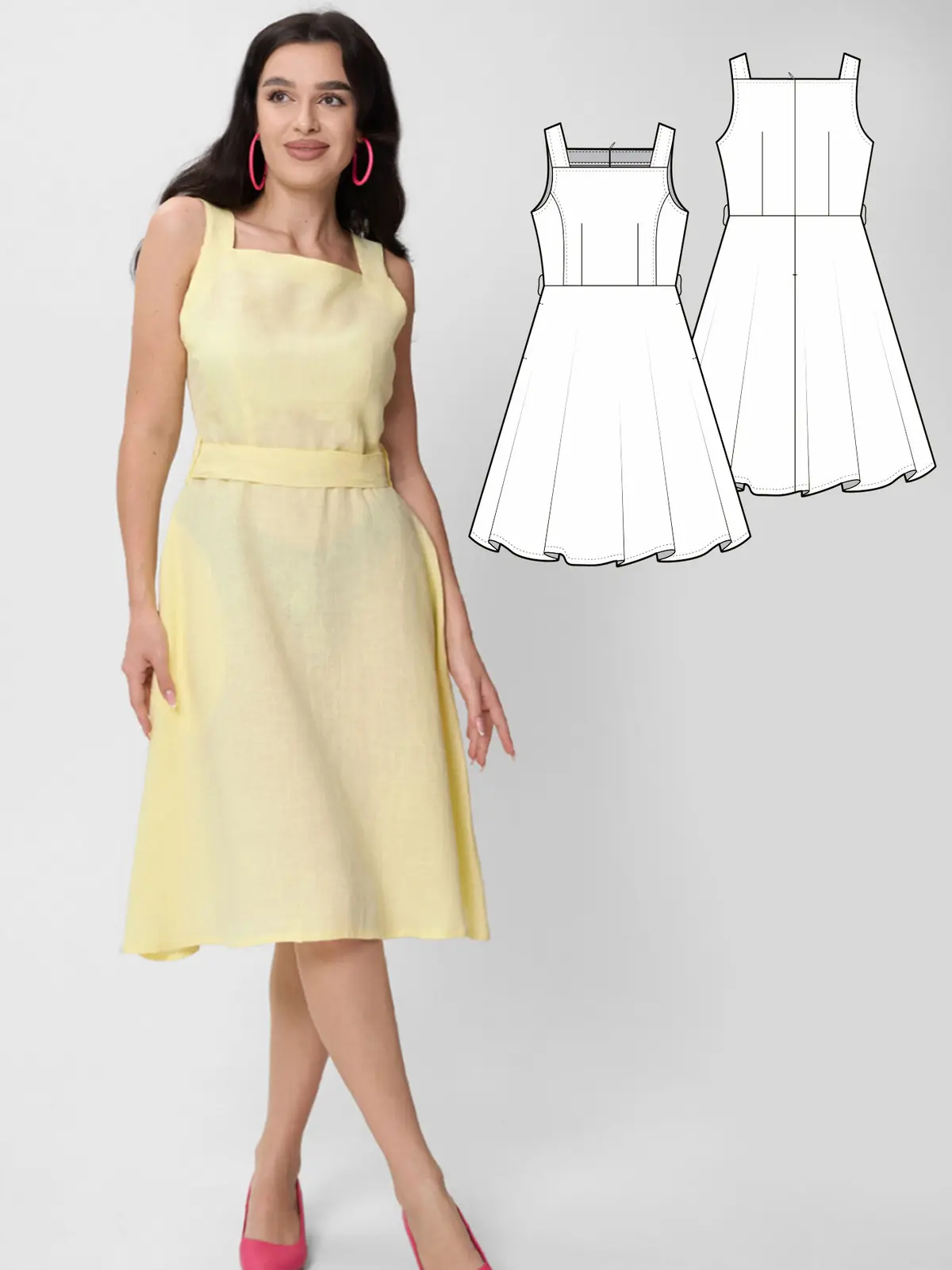 Summer
 Sardinia dress
PDF pattern · Video tutorial
3,99 €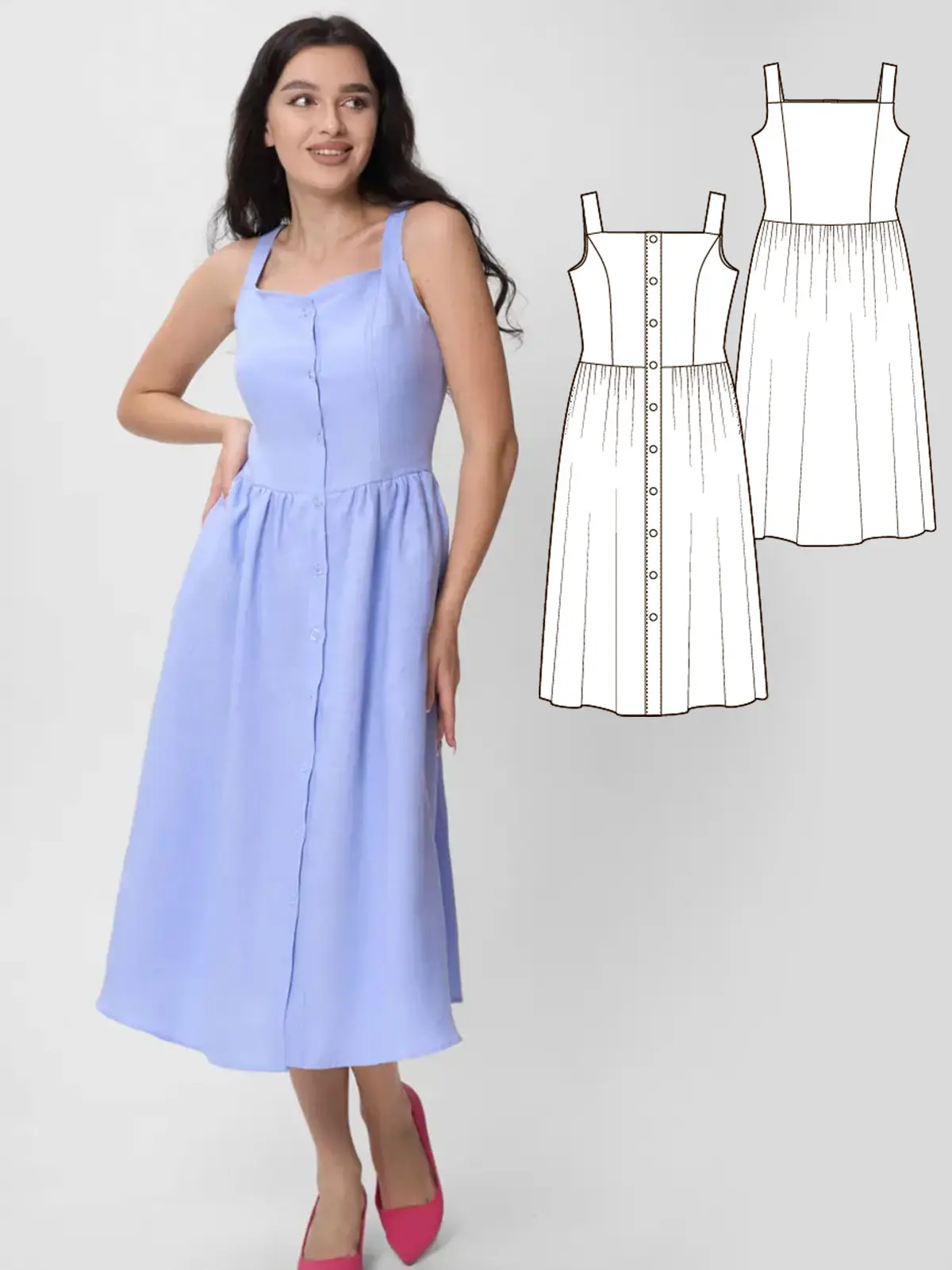 Cottage-core
 Florence dress
PDF pattern
3,99 €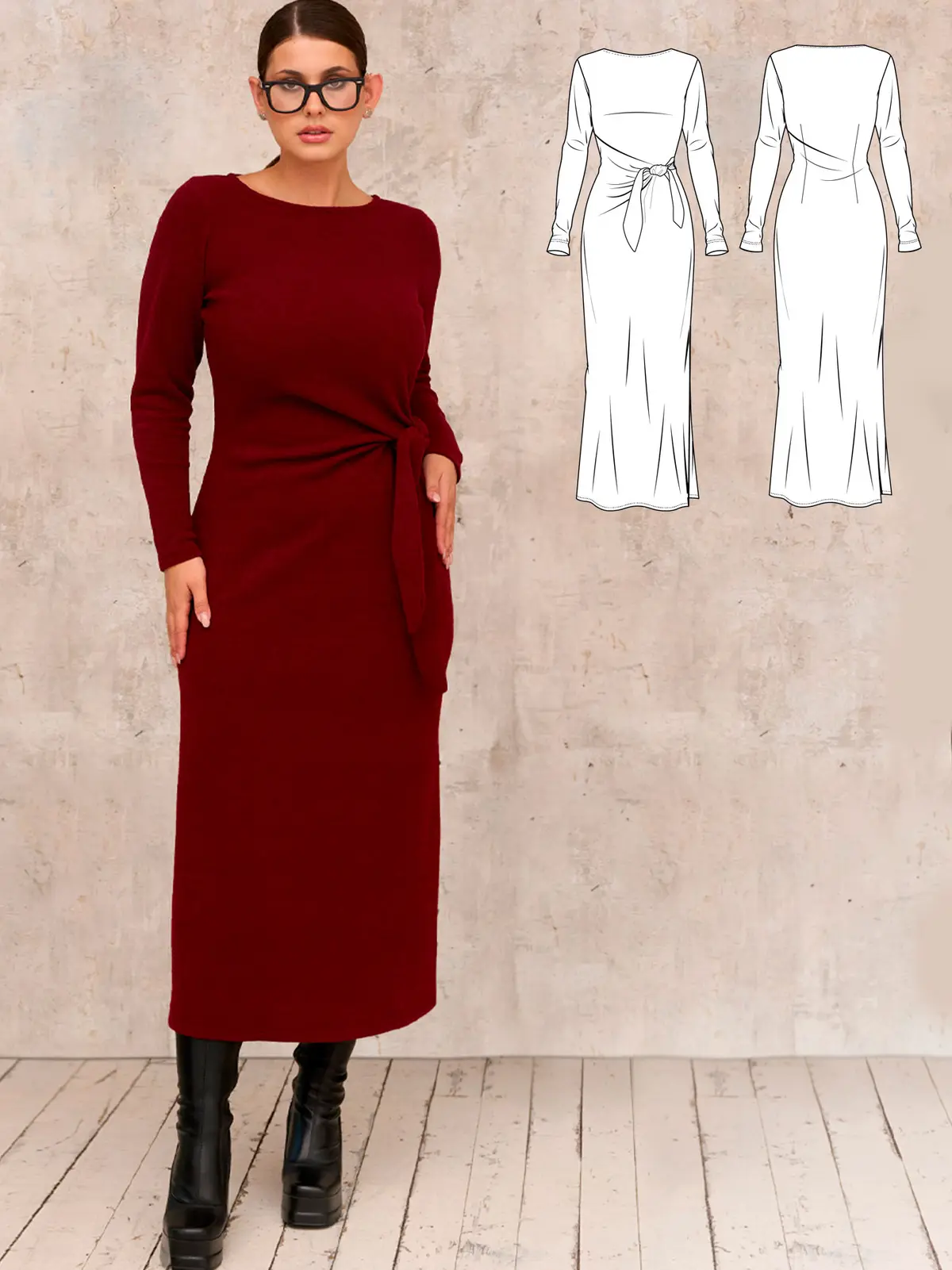 Summer
 Pomegranate dress
PDF pattern · Video tutorial
3,99 €→ Browse all dress patterns
Keep reading
 Sewing essentials
 Press to Impress
The ironing trick that instantly upgrades your sewing — the silent hero of every well-finished garment.
Read more Fabric guide
 Why Choosing the Right Fabric Matters
Spent hours sewing a project only to realise something isn't right? The fabric was almost certainly the culprit.
Read more For beginners
 Thread, Click, Sew.
Free online sewing resources every beginner should know — courses, channels, and communities worth bookmarking.
Read more How it works
 Behind the Pattern
What actually goes into the PDF that lands in your inbox — and why a well-graded pattern is worth more than its price tag.
Read more Community
 Beyond the Seam
From sewing alone to finding your creative community — where to look and what changes when you do.
Read more Sustainability
 From Tossed to Treasured
A quiet revolution in sewing rooms — how home sewists are turning fast-fashion castoffs into the wardrobe they actually want.
Read more