9 min read Style guide Necklines
Listen to this article
Neckline Geometry for Your Silhouette
0:00
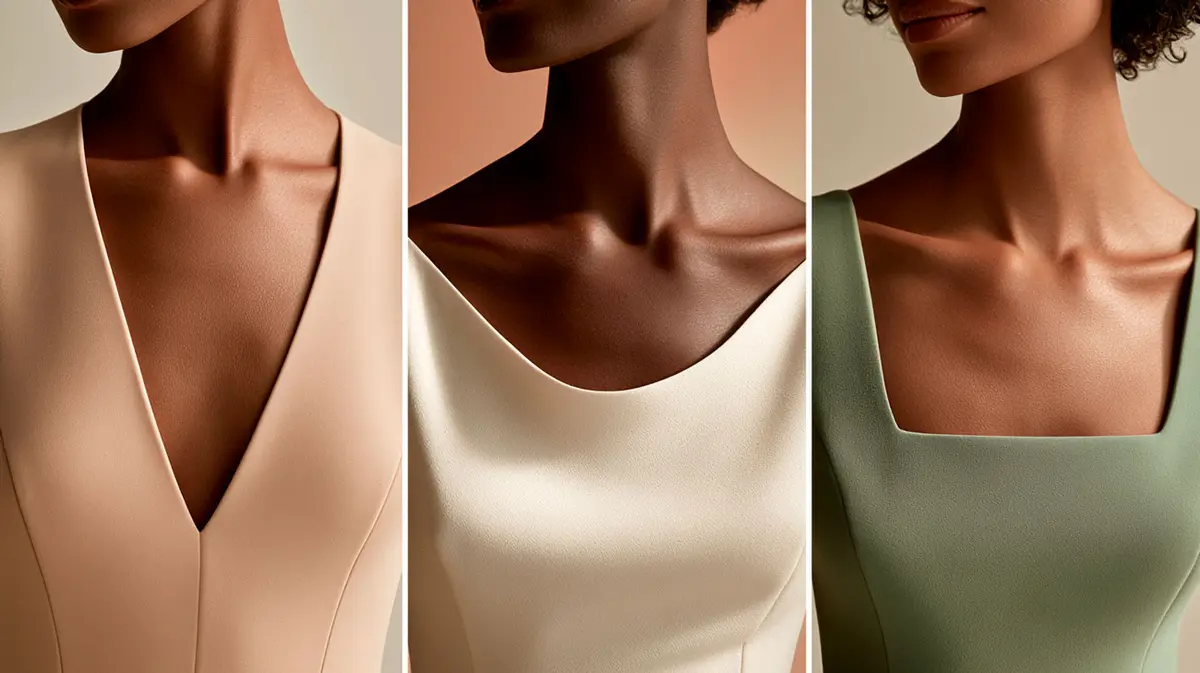
Of all the decisions that go into designing or choosing a dress, the neckline is the one most likely to change the entire character of a garment. The same dress, in the same fabric, sewn to the same measurements, can look entirely different with a V-neck instead of a square neck, or a round neck instead of a boat neck.
The neckline is the first thing the eye sees when it travels upward from the hem — it frames your face, your collarbone, and your décolletage, and it creates an immediate visual impression that the rest of the garment then builds on. Understanding how different necklines work means you can look at a pattern and understand not just whether you like it, but why it will or won't work for your specific face and figure. And because you're sewing the garment yourself, you can adapt: raising a neckline slightly, widening a V, deepening a scoop — small adjustments that make the difference between "nice" and "perfect."
The Quick TakeThe V-neck elongates and flatters the widest range of figures; the round / scoop is soft and universally wearable; the square adds structure and frames the collarbone; the boat neck broadens narrow shoulders; the sweetheart brings romance and curves; and the off-shoulder turns any dress into an occasion. The neckline is the detail that changes everything — and when you sew, you control it completely.
Every Neckline, at a Glance
If you're scanning rather than reading, here's the whole guide in one table.
| Neckline | What it does | Especially suits |
|---|---|---|
| V-neck | Vertical line; elongates neck and torso | Fuller bust, round faces, short necks, apple & pear |
| Round / scoop | Soft curved line; gentle and versatile | Angular faces, petite, smaller busts |
| Square | Sharp horizontal line; frames the collarbone | Narrow shoulders, long faces, medium busts, pear |
| Boat (bateau) | Wide horizontal line; broadens the upper body | Narrow shoulders, rectangular shapes, long faces |
| Sweetheart | Heart-shaped curves; romantic, adds bust volume | Smaller busts, hourglass, square faces |
| Off-shoulder | Exposes collarbone & shoulders; festive | Narrow / sloped shoulders, pear |
The Great Elongator
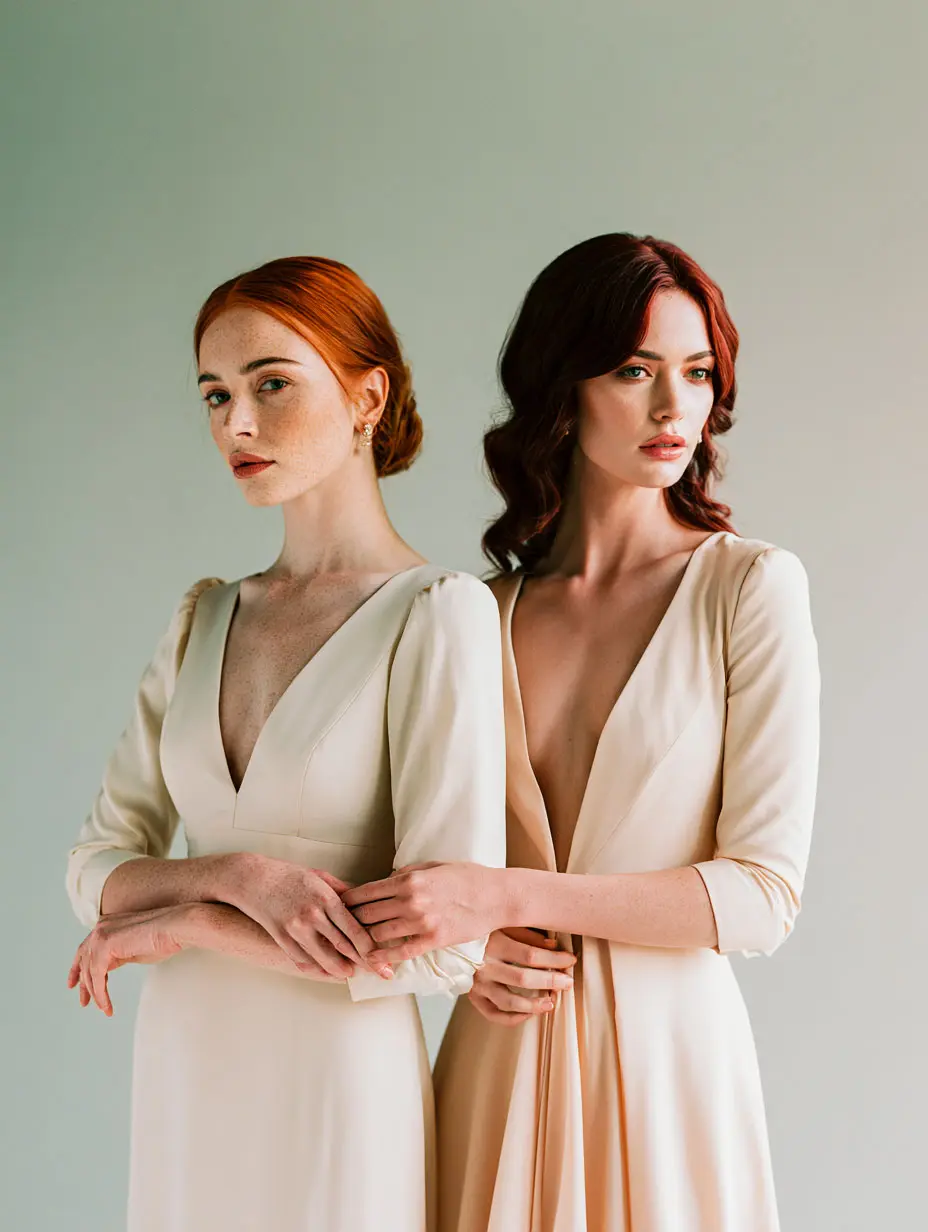
The V-neck is probably the most consistently flattering neckline in women's fashion, and its consistency comes from one simple visual principle: a V-shape creates a vertical line that draws the eye downward and inward, lengthening the appearance of the neck and torso.
What it does: elongates the neck, creates the impression of height, and draws attention to the face along a vertical line. It opens the chest area without fully exposing the décolletage in a shallow V — or does so more dramatically in a deeper one.
It works particularly well for fuller busts, where it provides elegant décolletage exposure without the strain high necklines create across the chest (and the vertical line visually reduces chest width); for round faces, where the angular V contrasts with the curved face shape; for shorter necks, where the open V extends the neckline downward; and for apple- and pear-shaped figures, where the V draws the eye upward and balances the lower half.
One consideration A very deep V on a fuller bust can feel insecure or require careful undergarment choices. A moderate V — ending at or just below the sternum rather than at the navel — gives you the elongating effect without requiring anything elaborate underneath.
At Fabrico The Victoria V-neck dress uses a clean, elegant V-neckline as its central design feature — one of the most flattering everyday patterns in the collection, precisely because this neckline works on such a wide range of figures and face shapes.
Round / ScoopSoft, Versatile, Universally Wearable
The round neck (or scoop neck, depending on how deep it's cut) is the neckline equivalent of a little black dress: it suits almost everyone, it never looks wrong, and it can be elevated or made casual simply by changing what you wear with it.
A crew neck sits at or close to the base of the throat — think of a classic T-shirt. A scoop neck follows the same round line but dips lower, often to the upper sternum, exposing more of the collarbone and chest. Between the two, the scoop is generally more flattering for summer dresses, because the additional openness lightens the visual weight of the neckline.
What it does: creates a soft, curved line that echoes the natural curve of the collarbone, drawing attention to the face without the angular drama of a V or the horizontal width of a boat neck. It's gentle, readable, and universally pleasant.
It works particularly well for angular or square faces, where the softness contrasts with stronger angles; for petite figures, where a scoop adds openness without overwhelming a smaller frame; and for smaller busts, where a scoop can be embellished with a gathered or ruched edge to add gentle volume.
One consideration A crew neck (the higher version) can shorten the appearance of an already-short neck or a petite frame. Lowering it to a proper scoop — even by just two or three centimetres — makes a noticeable difference in how the garment sits.
SquareStructure, Confidence, and Collarbone
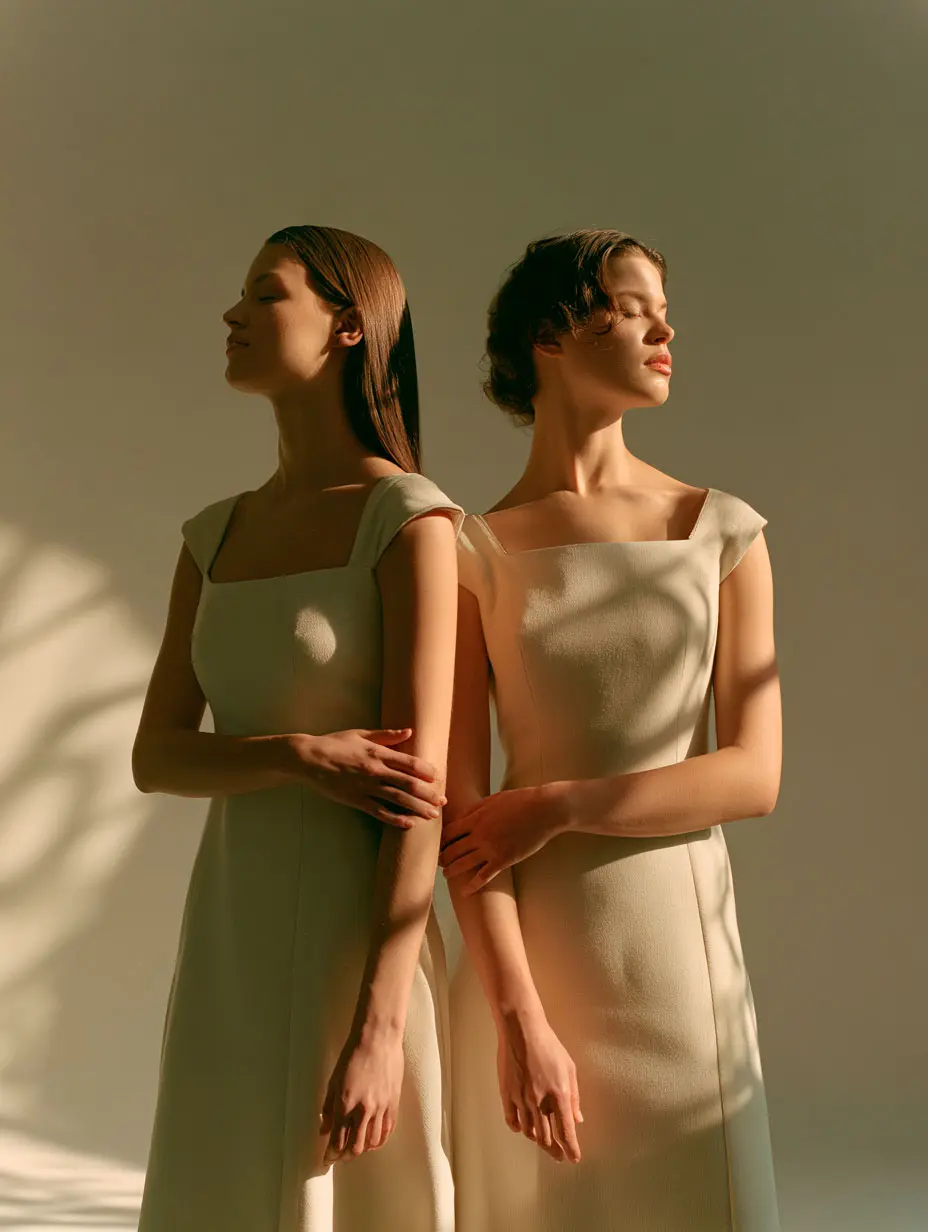
The square neckline has had a significant moment in fashion in recent years, and for good reason: it's structured where the scoop is soft, horizontal where the V is vertical, and it frames the collarbone and upper chest in a way that's both bold and elegant.
What it does: creates a sharp horizontal line across the chest, emphasising the width of the shoulders and the length of the neck above it. It frames the collarbone beautifully and adds a vintage-inspired confidence to any garment.
It works particularly well for narrow shoulders or a slim upper body, where the horizontal line adds visual width; for long faces, where it adds horizontal emphasis to counterbalance length; for medium and smaller busts, where the structured edge creates definition; and for pear-shaped figures, where — like the V — it draws attention upward, but with more horizontal drama that also widens the shoulder line.
One consideration For very full busts, a square neckline can feel tight across the chest or require pattern adjustment to prevent pulling. If you have a fuller bust and love the look, choose patterns with ease built into the bodice, or be ready to make a small chest-width adjustment.
Horizontal Elegance
The boat neck (also called the bateau neckline, named for its resemblance to a boat's hull) runs nearly straight across the collarbone from shoulder to shoulder, sitting high on the chest and exposing very little décolletage. It's the neckline most associated with a certain classic, understated elegance — think Audrey Hepburn in a striped Breton top.
What it does: creates a strong horizontal line across the upper chest, emphasising the width of the shoulders and the collarbone, and adding breadth to the upper body without any vertical movement.
It works particularly well for narrow shoulders, where the horizontal line makes the shoulders appear wider; for square or rectangular body shapes, where adding width to the upper body creates the impression of more defined curves below; and for long, slim faces, where the horizontal width counterbalances facial length.
One consideration For broad or square shoulders, the boat neck can make the shoulder line appear even wider. If that's not the effect you want, a V-neck or scoop will be more flattering — drawing the eye inward and downward rather than horizontally across.
SweetheartRomance and Curves
The sweetheart neckline — shaped like the top of a heart, with two gentle curves meeting at a central point — is one of the most inherently romantic necklines in fashion. It originated in the 1930s and 1940s and has been associated with bridal and evening wear ever since, though it appears in casual summer dresses as often as in formal gowns.
What it does: creates soft curved lines at the chest that follow the natural curve of the bust, frames the décolletage elegantly, and adds the impression of a fuller bust through the curved upper edge.
It works particularly well for smaller busts, where the curved upper edge adds visual volume and definition; for hourglass figures, where the curves echo the body's natural shape; and for square or angular faces, where the soft curves contrast with and soften stronger angles.
Off-ShoulderSummer's Most Celebratory Neckline
The off-shoulder neckline sits below the shoulders entirely, leaving the collarbone and the tops of the arms exposed. It's the neckline most specifically associated with summer, with celebration, and with a sense of occasion that doesn't require a formal setting.
What it does: draws the eye to the collarbone and the line of the upper arm, creates a wide horizontal opening that makes the upper body appear broader and the neck longer, and adds an immediately festive quality to any garment.
It works particularly well for narrow or sloped shoulders, where the horizontal line creates the impression of wider, more defined shoulders; for pear-shaped figures, where the breadth balances fuller hips; and for anyone who wants to create an occasion without a formal dress code, since it elevates even the simplest silhouette.
One consideration The off-shoulder neckline requires a strapless or very minimal bra, which may be less comfortable for larger busts. If you love the look but want support, choose off-shoulder styles with a structured or boned bodice that supports without an external bra.

How Necklines Interact with Jewellery
A practical note that's often overlooked: the neckline of a dress determines which jewellery works with it, and planning this before you finalise a pattern choice is worth doing.
Neckline & jewellery pairingsV-neck
Pendant necklaces that follow the V line — the pendant should stop above the point of the V, not below it. Also looks elegant with no necklace at all.
Square neck
One of the best necklines for a delicate collarbone-length necklace or a simple choker — the horizontal line provides a frame for a straight or chain necklace to sit against.
Boat neck
Traditionally worn with statement earrings rather than a necklace — the wide opening makes necklaces feel crowded, but long pendant earrings draw the eye to the face.
Round / scoop
The most versatile for jewellery: works with chokers, collarbone-length necklaces, longer pendants, and no jewellery at all.
Choosing Your Neckline When Sewing
One of the great advantages of sewing your own clothes is that you're not limited to the necklines available in the shops. If you love a pattern's overall silhouette but prefer a different neckline, many modifications are possible — particularly for simple necklines like V, round, and square. Raise or lower the depth. Widen or narrow a square. These are relatively straightforward alterations that Fabrico's video tutorials will help you navigate.
Try before you commit: hold the cut bodice front to your chest in front of a mirror before you finish the seams. Small adjustments at this stage cost almost nothing; unpicking a finished bodice costs considerably more.
Which Fabrico Patterns Have Which Necklines?
Match the neckline to the patternV-neck
Victoria V-neck dress — clean, modern, versatile.
Party necklines with structure
Barbara and Vivien party dress — necklines designed for occasion dressing.
Browse the full range of neckline options across the collection and find the one that frames your face exactly the way you want.
Frequently Asked Questions
What is the most flattering neckline?
The V-neck is the most consistently flattering neckline in women's fashion. Its vertical line draws the eye downward and inward, lengthening the neck and torso. It works especially well for fuller busts, round faces, shorter necks, and apple- and pear-shaped figures — which is why it suits such a wide range of faces and figures.
What neckline is best for a round face?
A V-neck is the best neckline for a round face. The angular V creates contrast with the curved face shape, adding the appearance of length and structure to softer features. A deeper scoop neck can also work, but the angularity of the V is the most effective at balancing a round face.
What neckline suits broad or square shoulders?
For broad or square shoulders, a V-neck or scoop neck is most flattering, because it draws the eye inward and downward rather than horizontally across the shoulders. Avoid the boat neck and square neck, which add horizontal width and can make broad shoulders appear even wider.
What body type is a square neckline good for?
A square neckline suits narrow shoulders or a slim upper body (the horizontal line adds visual width), long faces (it adds horizontal emphasis to counterbalance length), medium and smaller busts (the structured edge creates definition), and pear-shaped figures (it draws the eye upward while widening the shoulder line). Very full busts may need a small pattern adjustment to avoid pulling.
What is a boat neck and who does it suit?
A boat neck (or bateau neckline) runs nearly straight across the collarbone from shoulder to shoulder, sitting high on the chest. It creates a strong horizontal line that adds width to the upper body, making it ideal for narrow shoulders, square or rectangular body shapes, and long, slim faces. It's less flattering for broad or square shoulders, which it can widen further.
What neckline is best for a fuller bust?
A V-neck is generally best for a fuller bust, as it provides elegant décolletage exposure without the strain high necklines create across the chest, and the vertical line visually reduces chest width. A moderate V — ending at or just below the sternum — gives the elongating effect without requiring elaborate undergarments. Off-shoulder and square necklines can also work but may need extra support or a small bodice adjustment.
What necklace works with a V-neck?
A V-neck works best with a pendant necklace that follows the V line — the pendant should stop above the point of the V, not below it. It also looks elegant with no necklace at all, letting the neckline speak for itself. By contrast, a square neck frames a collarbone-length necklace or choker, and a boat neck pairs best with statement earrings rather than a necklace.
What is a sweetheart neckline?
A sweetheart neckline is shaped like the top of a heart, with two gentle curves meeting at a central point. Originating in the 1930s and 1940s, it frames the décolletage and adds the impression of a fuller bust. It suits smaller busts (the curved edge adds volume), hourglass figures (the curves echo the body), and square or angular faces (the soft curves contrast with stronger angles).
Can I change the neckline on a sewing pattern?
Yes — one of the advantages of sewing your own clothes is that you aren't limited to the necklines available in shops. Simple necklines like V, round, and square are relatively straightforward to modify: you can raise or lower the depth, or widen or narrow a square. The key is to test before committing — hold the cut bodice front to your chest in front of a mirror before finishing the seams.
Shop these patterns
 V-neck
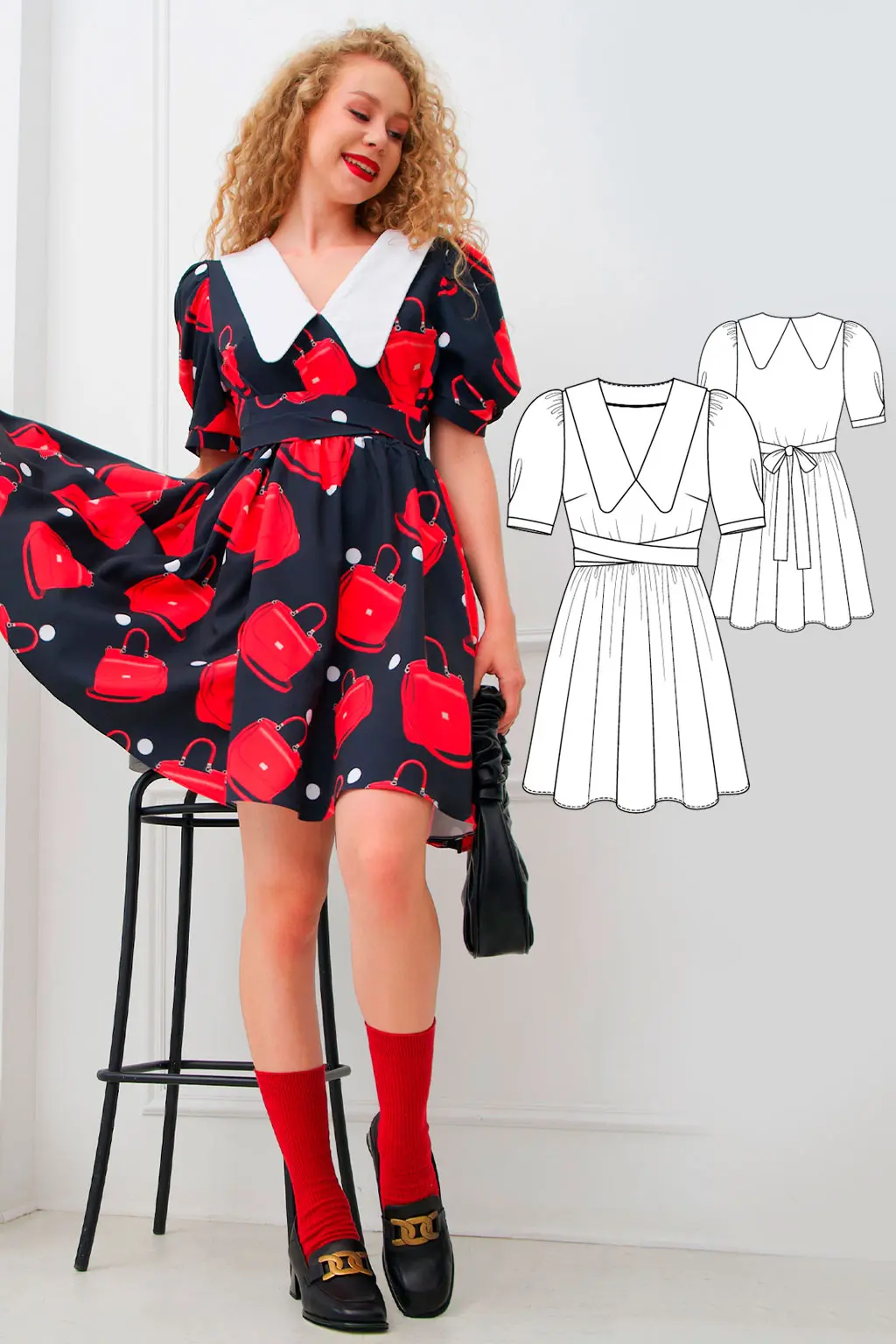
 Victoria V-neck dress
PDF pattern · Video tutorial
from 3,99 €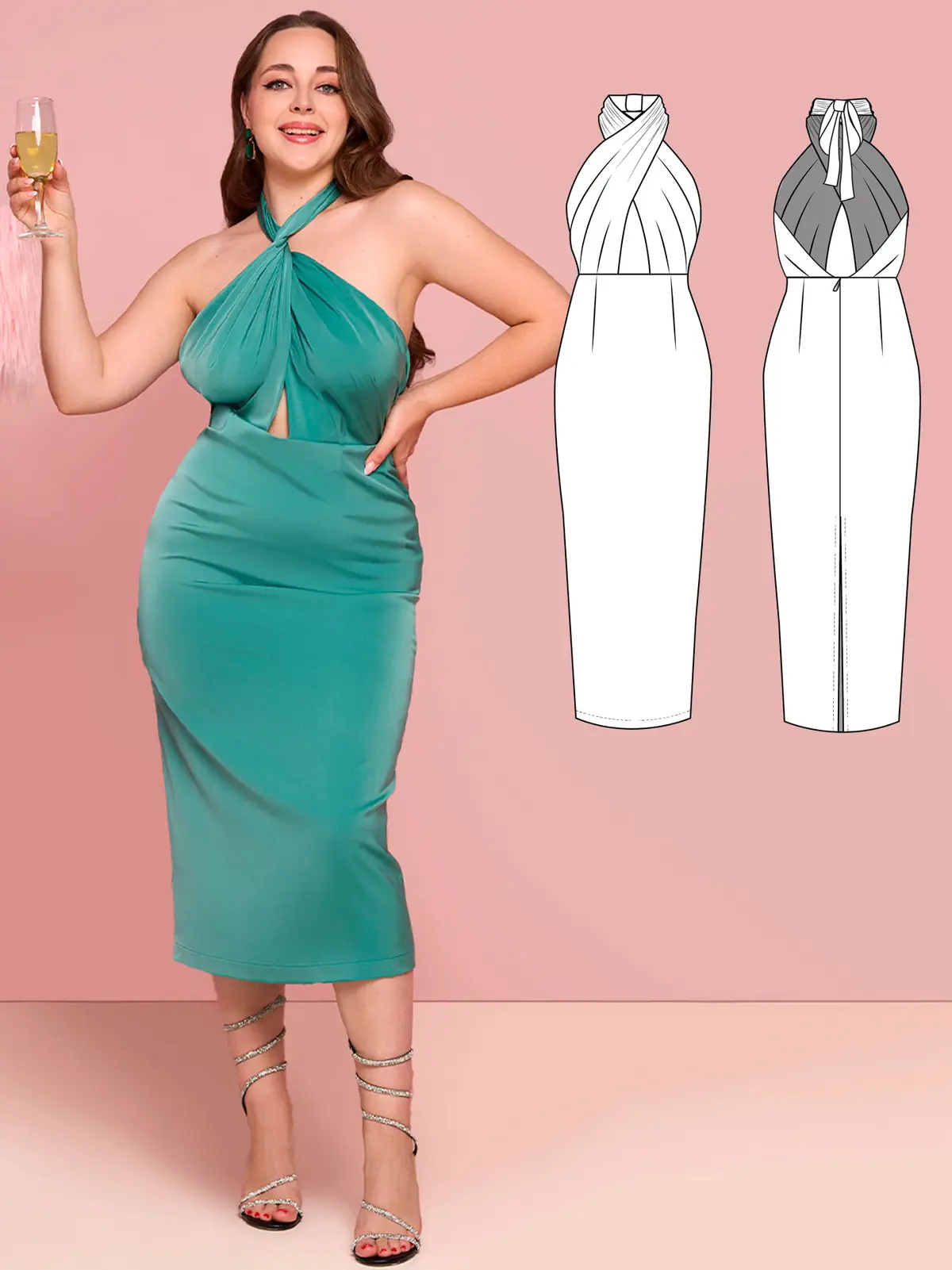 Structured
 Barbara party dress
PDF pattern · Video tutorial
from 3,99 €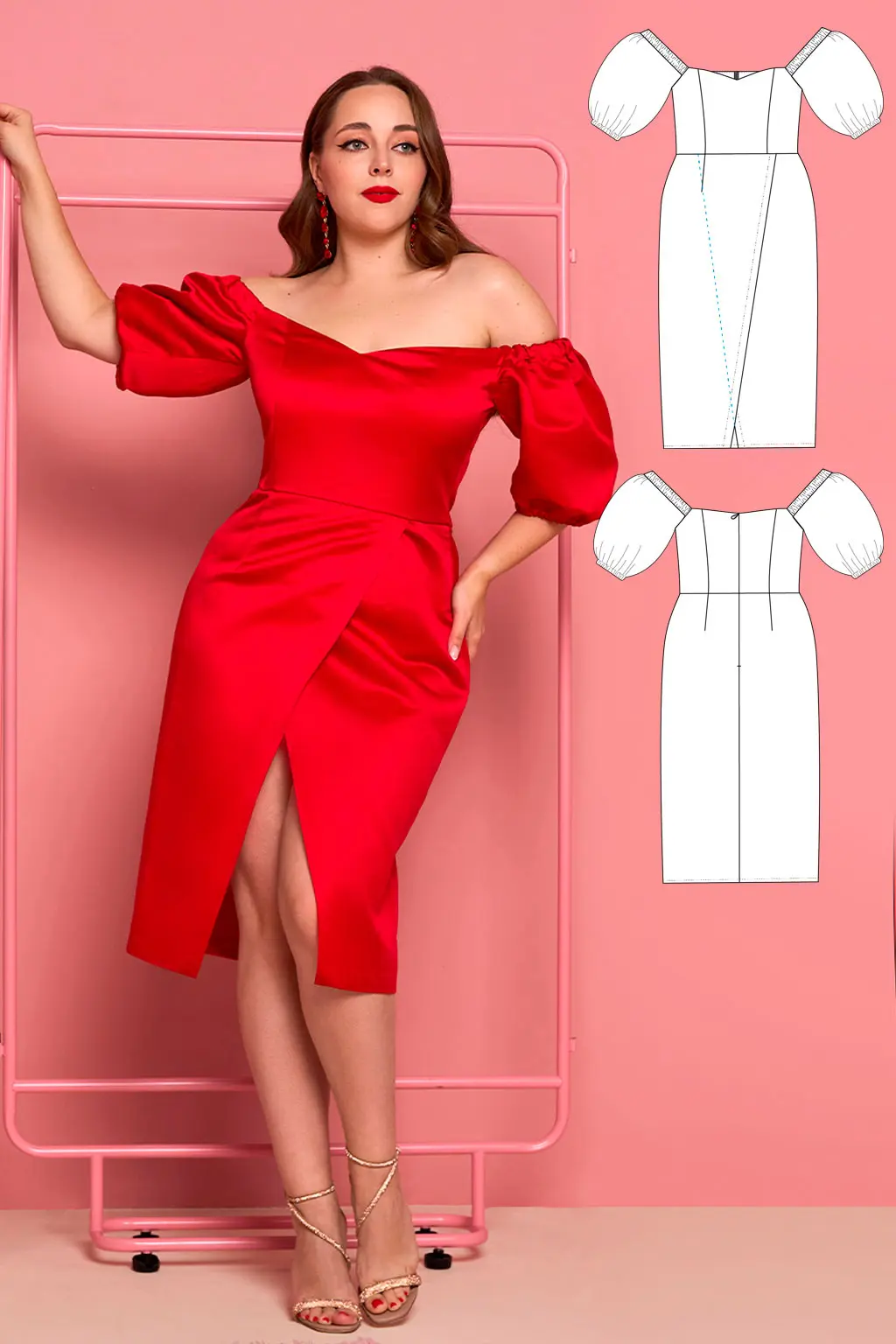 Wrap V-neck
 Vivien party dress
PDF pattern · Video tutorial
from 4,50 €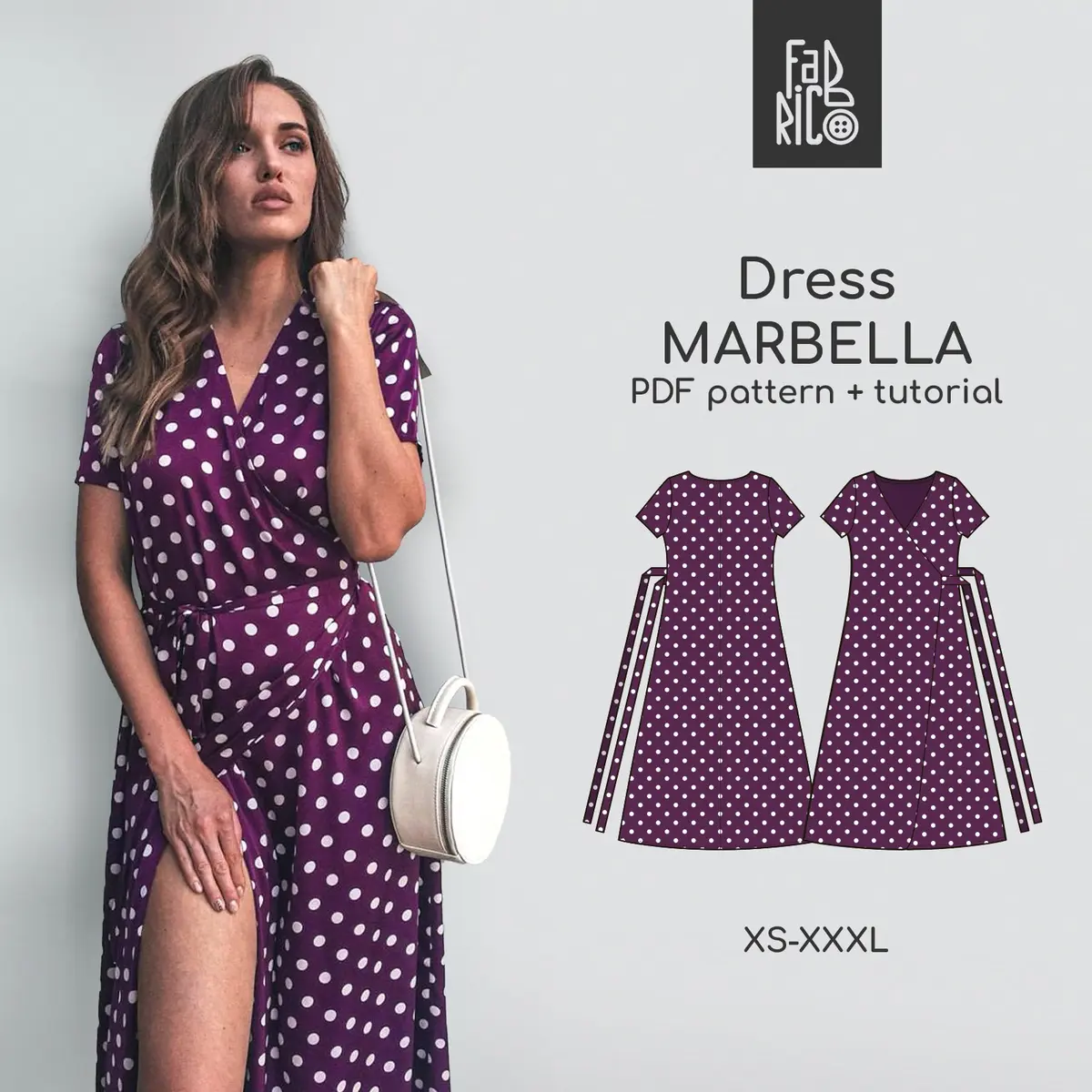 Wrap V-neck
 Marbella wrap dress
PDF pattern · Video tutorial
from 4,50 €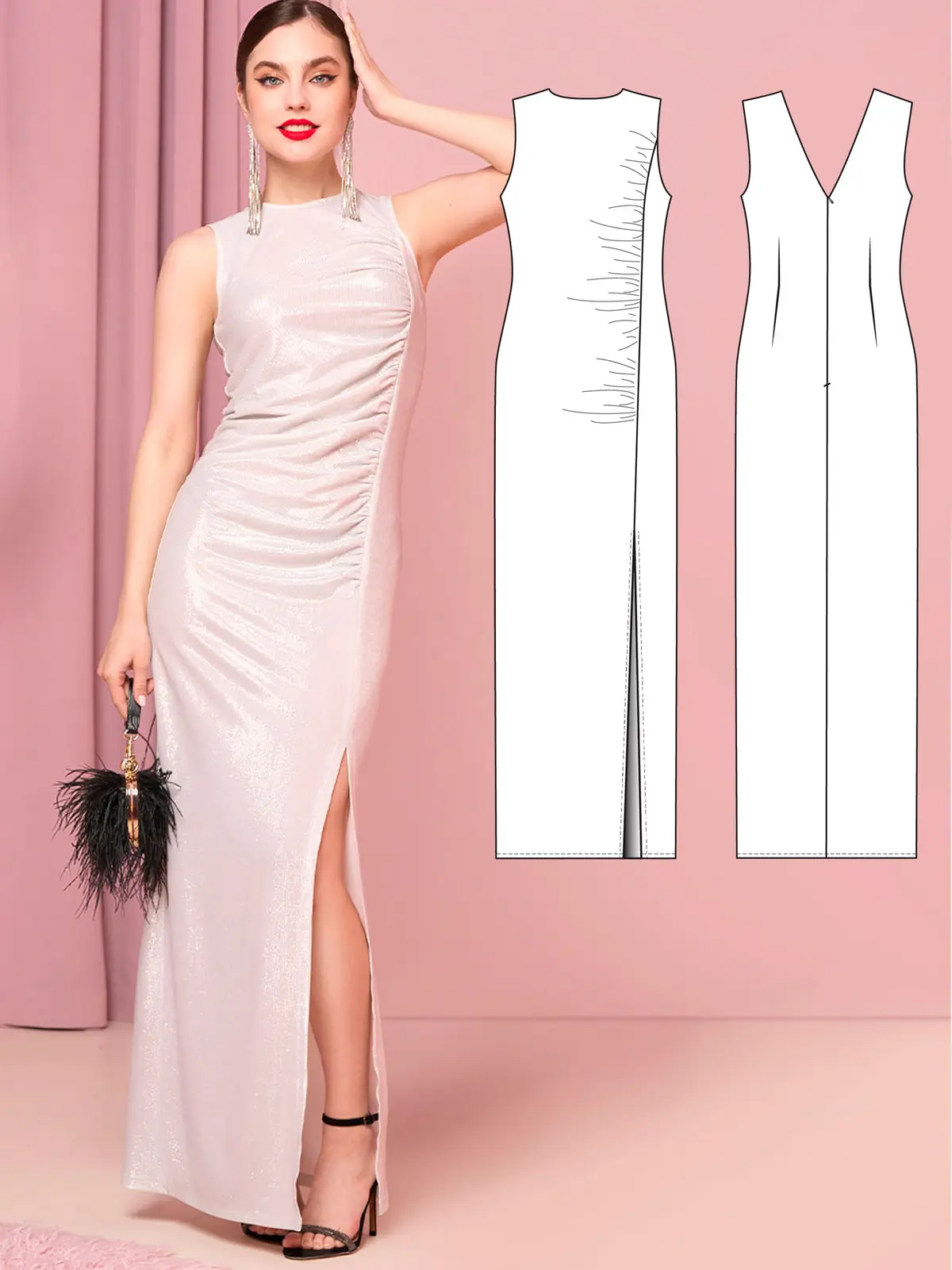 Evening
 Sharlize evening dress
PDF pattern · Video tutorial
from 3,99 €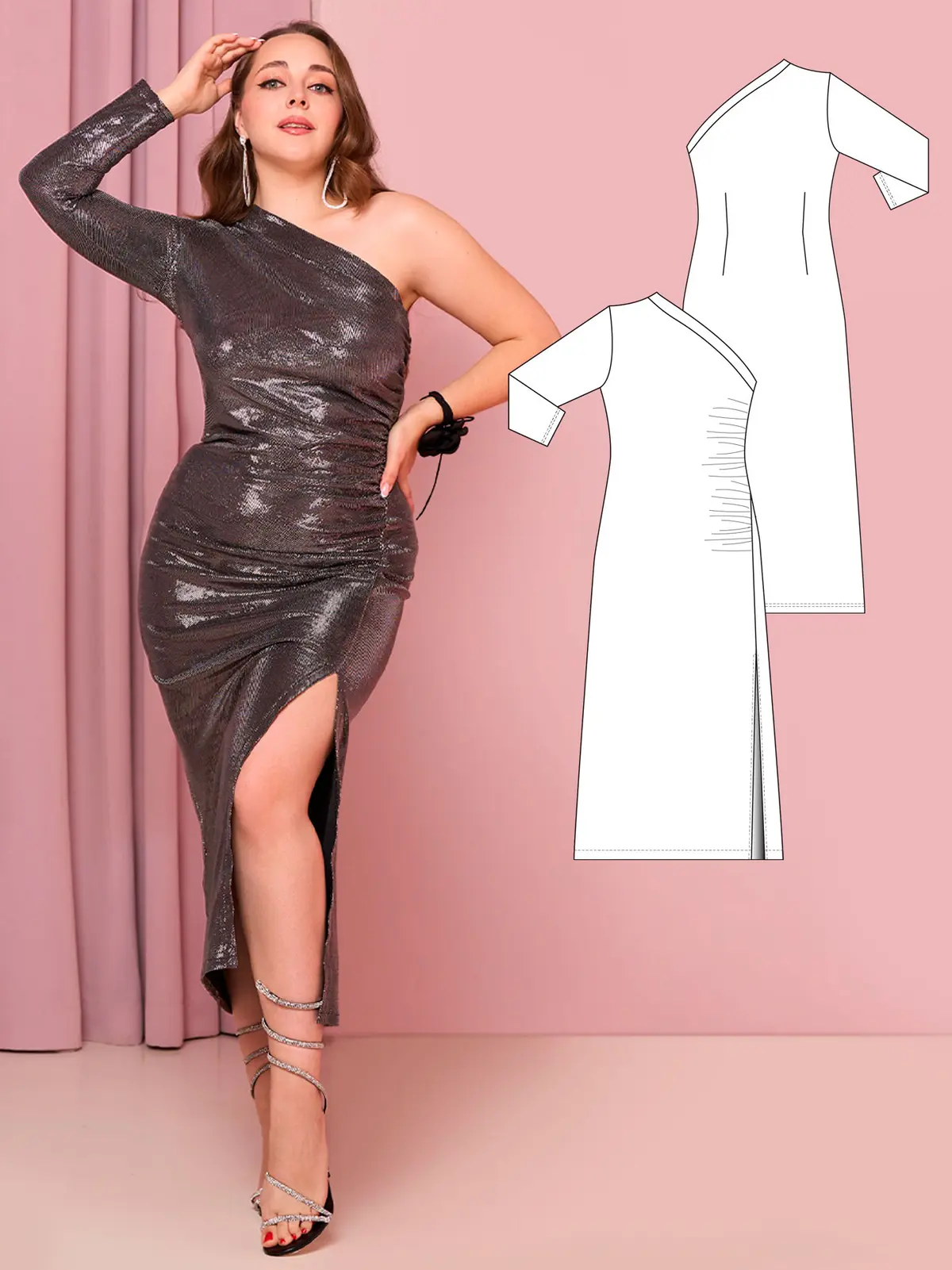 Asymmetric
 Kylie one-sleeve dress
PDF pattern · Video tutorial
from 3,99 €→ Browse all dress patterns
Keep reading
 Fabric guide
 Why Choosing the Right Fabric Matters
A neckline holds its shape in crisp cotton and softens in drapey viscose. Here's how to choose the right one.
Read more Sewing essentials
 Press to Impress
A crisply pressed neckline is what separates a homemade look from a handmade one. The iron does the work.
Read more How it works
 Behind the Pattern
What actually goes into the PDF that lands in your inbox — and why a well-graded pattern is worth more than its price tag.
Read more For beginners
 Thread, Click, Sew.
Free online sewing resources every beginner should know — courses, channels, and communities worth bookmarking.
Read more Community
 Beyond the Seam
From sewing alone to finding your creative community — where to look and what changes when you do.
Read more Sustainability
 From Tossed to Treasured
A quiet revolution in sewing rooms — turning fast-fashion castoffs into the wardrobe you actually want.
Read more