8 min read Fashion history Summer dresses
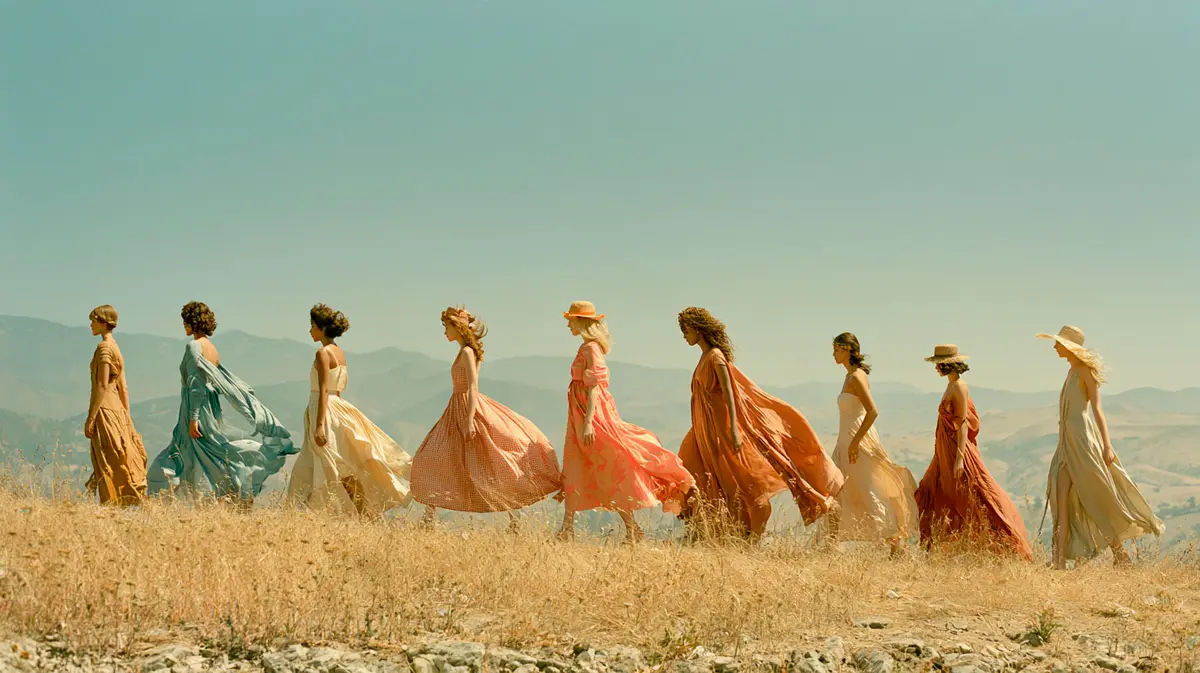
It's one of those words that sounds as if it has always existed — sundress — conjuring immediately the image of a light, sleeveless dress, a warm afternoon, the feeling of being exactly dressed for the season. But the sundress as we know it is a relatively modern invention, and its history is more interesting than its effortless reputation suggests.
It's a story about women's freedom, postwar optimism, counterculture, celebrity, and the enduring human desire to be cool, comfortable, and beautiful at the same time. Here, decade by decade, is how the sundress became the summer essential it is today.
The Quick TakeThe word sundress first appeared in print in 1937, but the modern garment was invented by American designer Carolyn Schnurer in the mid-1940s. Across eight decades it has been a beach cover-up, a 1950s resort uniform, a 1960s Lilly Pulitzer icon, a 1970s boho maxi, a 1990s slip dress, and today — all of those at once. What unites them is a single idea: lightness, ease, and a garment designed for the season you're actually in.
The Sundress, Decade by Decade
If you're scanning rather than reading, here's the whole history in one table.
| Era | Defining silhouette | Fabric | Cultural moment |
|---|---|---|---|
| Late 1920s | Sun-back dress (bare back to waist) | Light cotton, rayon | Resort and beach only |
| 1940s | Soft A-line, racerback straps | Cotton, linen | Carolyn Schnurer invents the modern sundress |
| 1950s | Fitted bodice, full skirt, defined waist | Cotton, gingham | Dior's New Look meets postwar leisure |
| 1960s | A-line shift, geometric mod cuts | Bright printed cotton | Lilly Pulitzer; Jackie Kennedy |
| 1970s | Maxi, empire waist, tiered skirts | Cotton gauze, crepe | Woodstock; YSL boho couture |
| 1980s | Strapless bandeau, off-the-shoulder | Heavier cottons, polyester blends | Retreats to resort wear |
| 1990s | Slip dress, floral mini | Satin, silk, cotton lawn | Layered over T-shirts; Phoebe in Friends |
| 2000s–2010s | Festival maxi, peasant details | Crochet, embroidered cotton | Coachella; Kate Moss; Sienna Miller |
| Today | All of the above, in revival | Cotton, linen, viscose | Genuinely plural — no single silhouette dominates |
Before the Sundress: The Sun-Back Dress
The sundress didn't arrive fully formed. Its earliest ancestor was the "sun-back dress" — a garment that began appearing in fashion columns and department store advertisements in the late 1920s. A 1929 article in the Tampa Tribune described it precisely: a dress which exposes the back, usually to the waist line, with the "sun" appellation coming from the fact that it permits the sun full access to the skin.
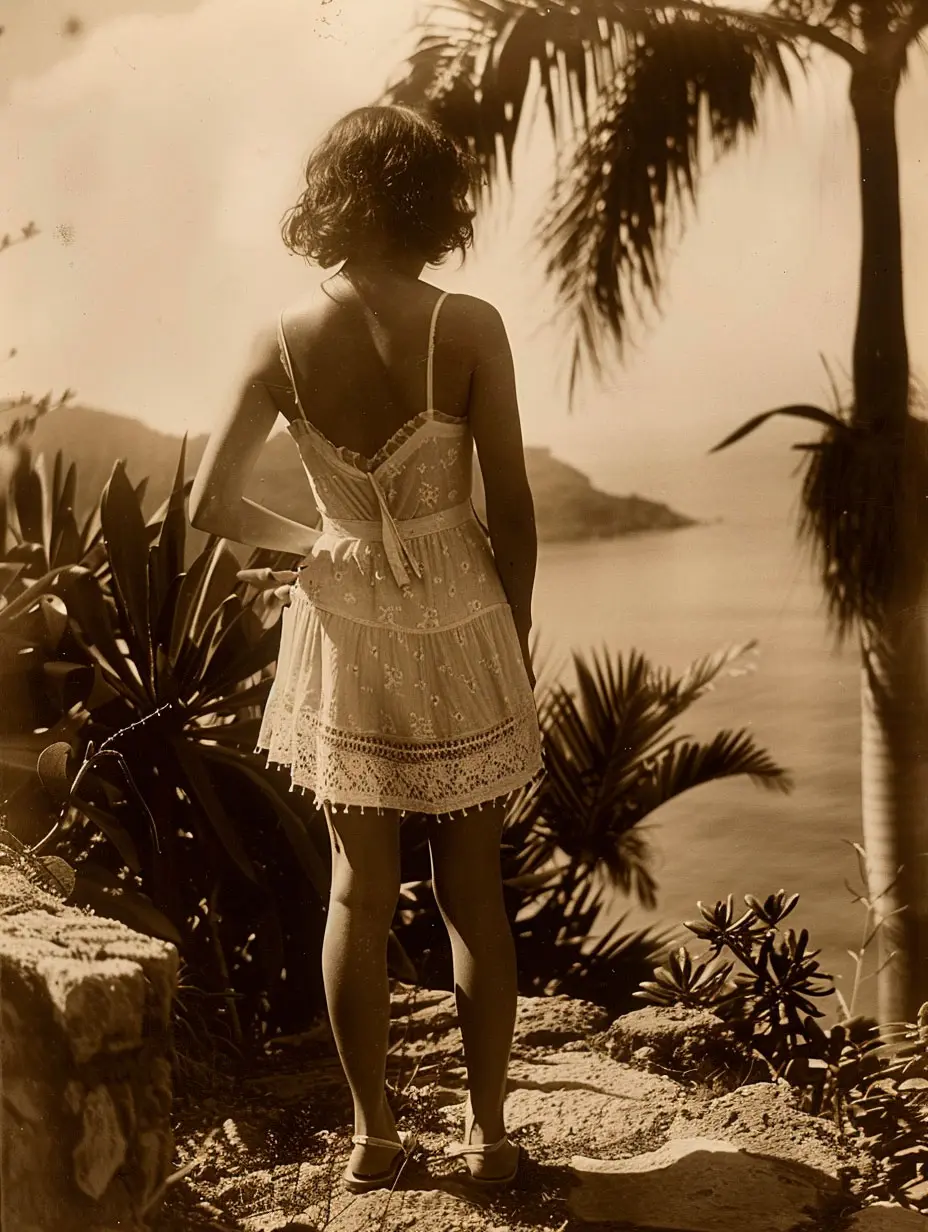
This was genuinely revolutionary for its time. Women's clothing in the 1920s, even after the relative liberation of the flapper era, still covered considerably more skin than we'd expect today. The sun-back dress was a beach and resort garment — worn at the seaside or in the garden, not on the street — and it represented a new idea: that a woman's clothing could be designed specifically for warmth, leisure, and exposure to sunlight.
The word sundress itself appears in print for the first time in 1937, in advertisements for summer clothing. By then, the concept had taken enough hold that it needed its own name.
1940sThe Sundress Is Properly Invented
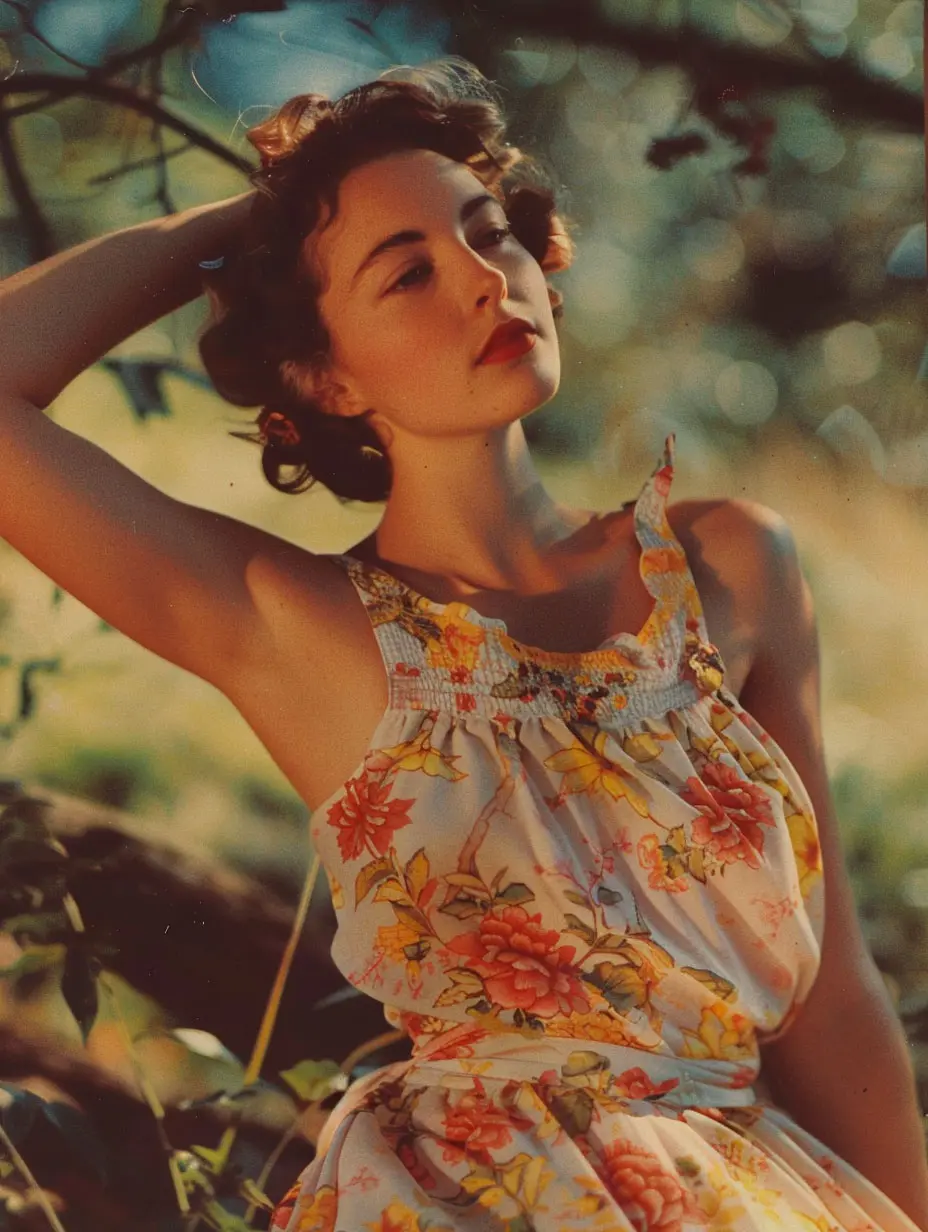
Most fashion historians credit American sportswear designer Carolyn Schnurer with creating the modern sundress in the mid-1940s. Working in the postwar spirit of practicality and optimism, Schnurer designed dresses that were intentionally casual, comfortable, and suited to warm weather — a significant departure from the structured, formal day dresses that had dominated women's fashion in the previous decades.
Her sundresses featured lightweight fabrics, soft silhouettes, racerback straps, and imaginative prints. They were designed to be worn without the elaborate understructure — the corsets, the girdles, the multiple layers — that women's fashion had previously required. You put the dress on. You went outside. That was the point.
At the same time, designer Claire McCardell — one of the most influential American designers of the twentieth century — was developing what she called the "Monastic Dress," an early version of the wrap and tent dress that prioritised ease of movement over formal silhouette. McCardell championed the idea that women's clothing should work with the body rather than against it: breathable, washable, wearable without assistance.
Together, Schnurer and McCardell established the principles that have governed summer dress design ever since: lightness, comfort, ease, and the pleasure of fabric that feels good in warm air.
1950sLeisure, Travel, and the Resort Look
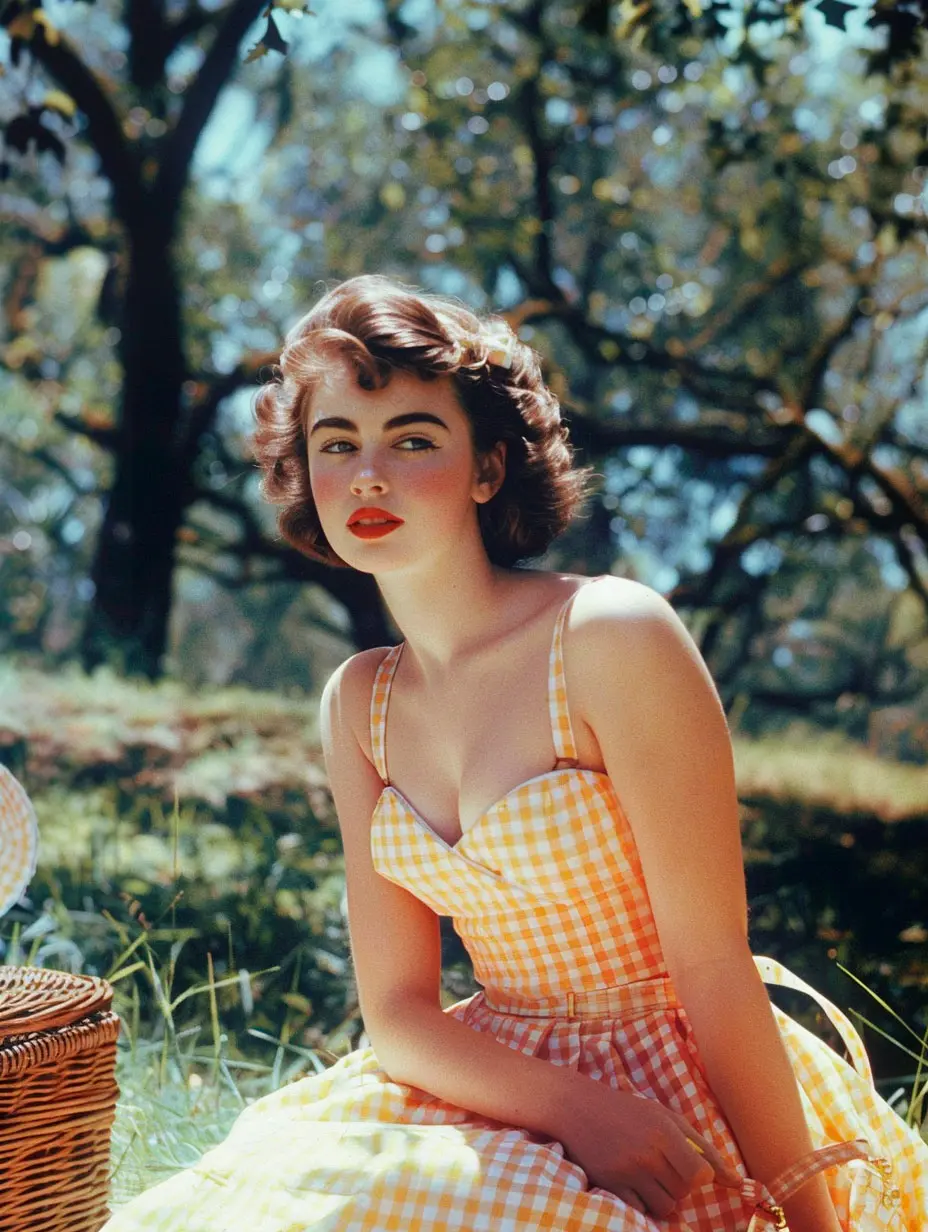
The 1950s brought rising postwar prosperity and, with it, the possibility of leisure travel for a broader population than had previously been able to afford it. Beach holidays, resort weekends, and garden parties became part of mainstream middle-class life — and the sundress became their uniform.
This decade saw the sundress evolve from a purely practical garment into something more deliberately glamorous. Full skirts in bright cotton prints, fitted bodices, sweetheart necklines, and wide belts that emphasised the waist characterised the 1950s sundress. The New Look silhouette that Dior had launched in 1947 — nipped waist, full skirt — translated into summer clothing as the quintessential 1950s sundress: feminine, structured in its own way, but made from cotton or gingham rather than silk.
The 1950s also saw the rise of the matching sundress-and-jacket set — a garment that could be respectable enough for a restaurant lunch when the jacket was on, and perfectly relaxed as a sundress when it came off. This versatility made the sundress socially acceptable in a broader range of contexts than it had been in the 1940s.
1960sColour, Pattern, and Lilly Pulitzer
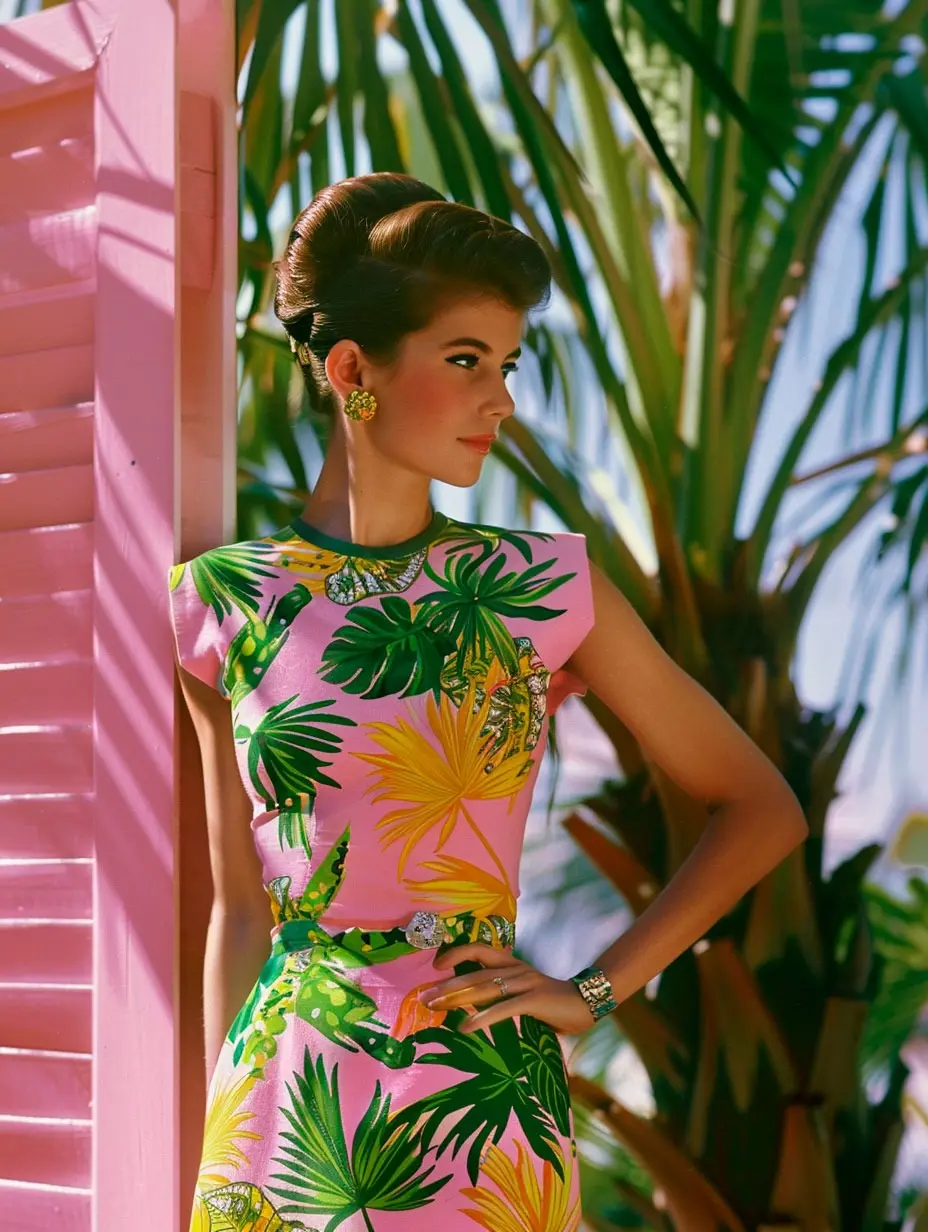
The 1960s transformed the sundress from a resort staple into a cultural icon, largely thanks to one designer: Lilly Pulitzer.
Pulitzer, a socialite from Palm Beach, Florida, began selling brightly coloured, boldly printed shift dresses from a juice stand in the early 1960s. The dresses were practical — the vivid prints hid juice stains — and were made from lightweight cotton that was perfect for the Florida heat. When Jackie Kennedy, a friend of Pulitzer's, was photographed wearing one of the dresses in 1962, the resulting publicity made Lilly Pulitzer a national name almost overnight.
The Lilly Pulitzer sundress was a specific thing: a simple A-line or shift silhouette, in bright tropical prints, worn by women who wanted to signal ease, optimism, and a certain cheerful confidence. It remains in production today, essentially unchanged in spirit.
But the 1960s sundress wasn't only about Palm Beach. The decade also saw the rise of the mod shift dress — a short, geometric, often sleeveless garment that owed more to the space age than to the beach. Mary Quant's miniskirt translated into summer as a very short, very simple sundress. These dresses weren't about nature or leisure; they were about modernity, youth, and the exciting sense that fashion was being reinvented.
1970sMaxi Lengths, Boho Spirit, and Woodstock's Legacy
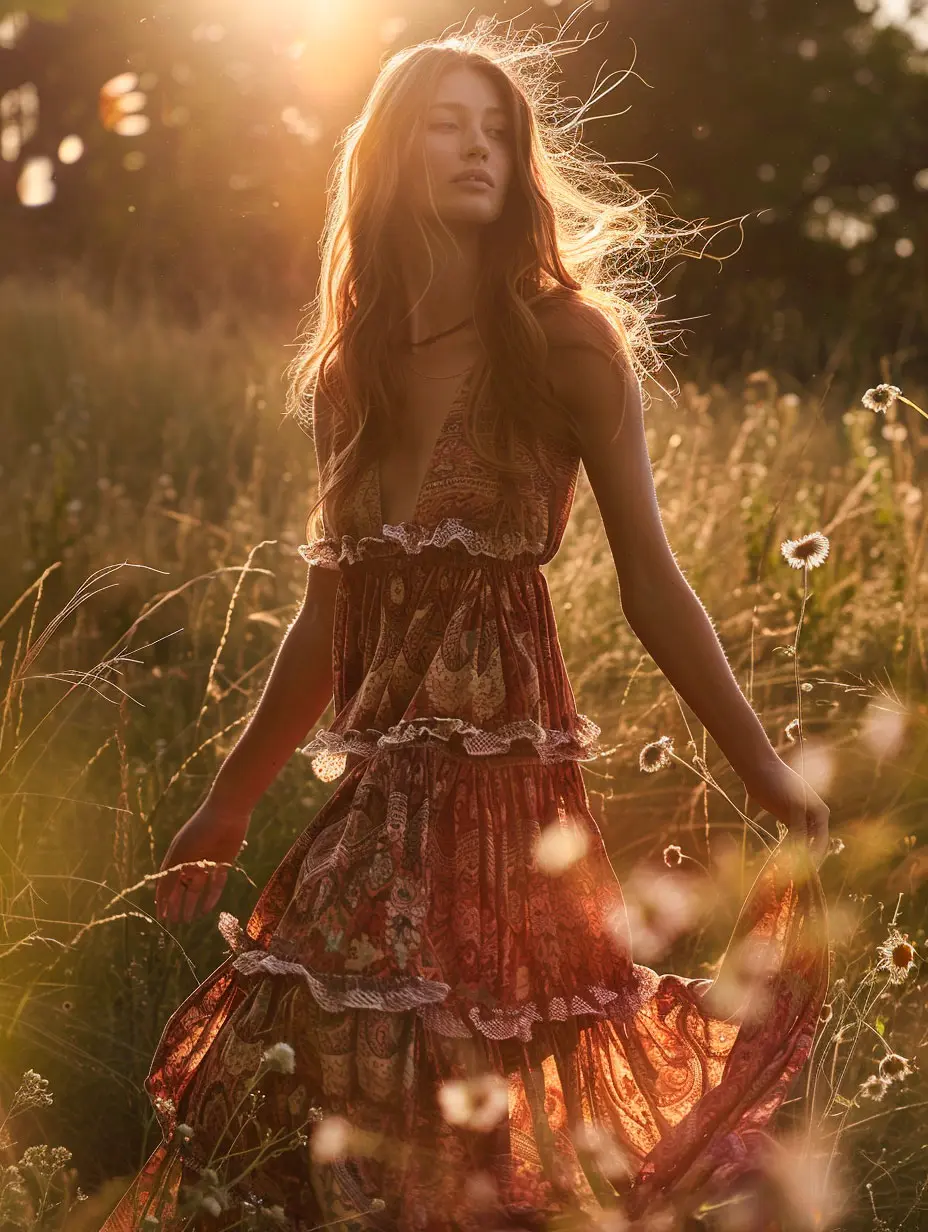
If the 1950s sundress was about femininity and the 1960s sundress was about youth, the 1970s sundress was about freedom — specifically, the freedom that the counterculture had been arguing for since the mid-1960s and that was now filtering into mainstream fashion.
The defining silhouette was the maxi dress: floor-length, flowing, often made from cotton gauze or crepe, with empire waists, tiered skirts, and the kind of easy, unpressed ease that suggested the wearer had better things to do than stand in front of an iron. Woodstock in 1969 had established the cultural template — maxi dresses, loose silhouettes, natural fabrics, floral and paisley prints — and the 1970s spent the decade elaborating on it.
Designers like Yves Saint Laurent brought the boho aesthetic to the runway in his celebrated 1976 couture collection, drawing on Russian and Eastern European folk costume to create sweeping, embroidered dresses that gave the bohemian sundress a sense of luxury. At the other end of the market, the same spirit was available in cotton at any high-street shop.
The 1970s also saw the sundress become an explicitly political garment in some contexts — a rejection of the structured, formal clothing that was associated with conventional femininity and the kind of life that the women's movement was questioning.
1980sA Step Back, Then a New Direction
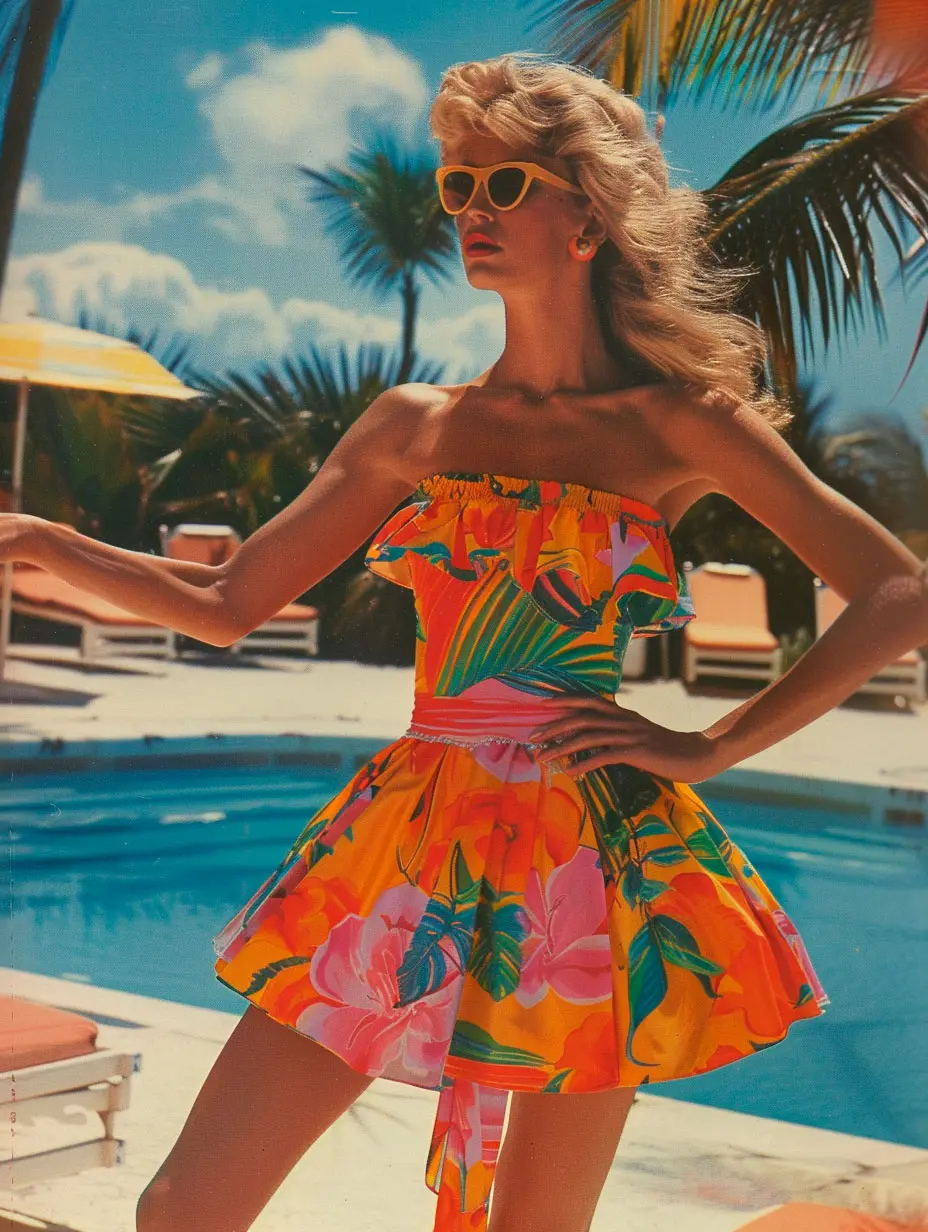
The 1980s weren't, on the whole, good years for the sundress. The decade's dominant aesthetic — power shoulders, structured silhouettes, bold primary colours in heavy fabrics — was almost the opposite of what a sundress represents. The sundress survived but retreated to its resort roots: holiday and beach wear, worn at Club Med rather than on the street.
What the 1980s did contribute was the strapless sundress — a bandeau or corset-style bodice with a full or straight skirt, which became associated with the decade's love of showing off and with the aerobics-influenced culture of the visible body. This silhouette was further popularised by the off-the-shoulder variation, a style that has never entirely disappeared since.
1990sThe Slip Dress, the Mini, and the Great Layering Era
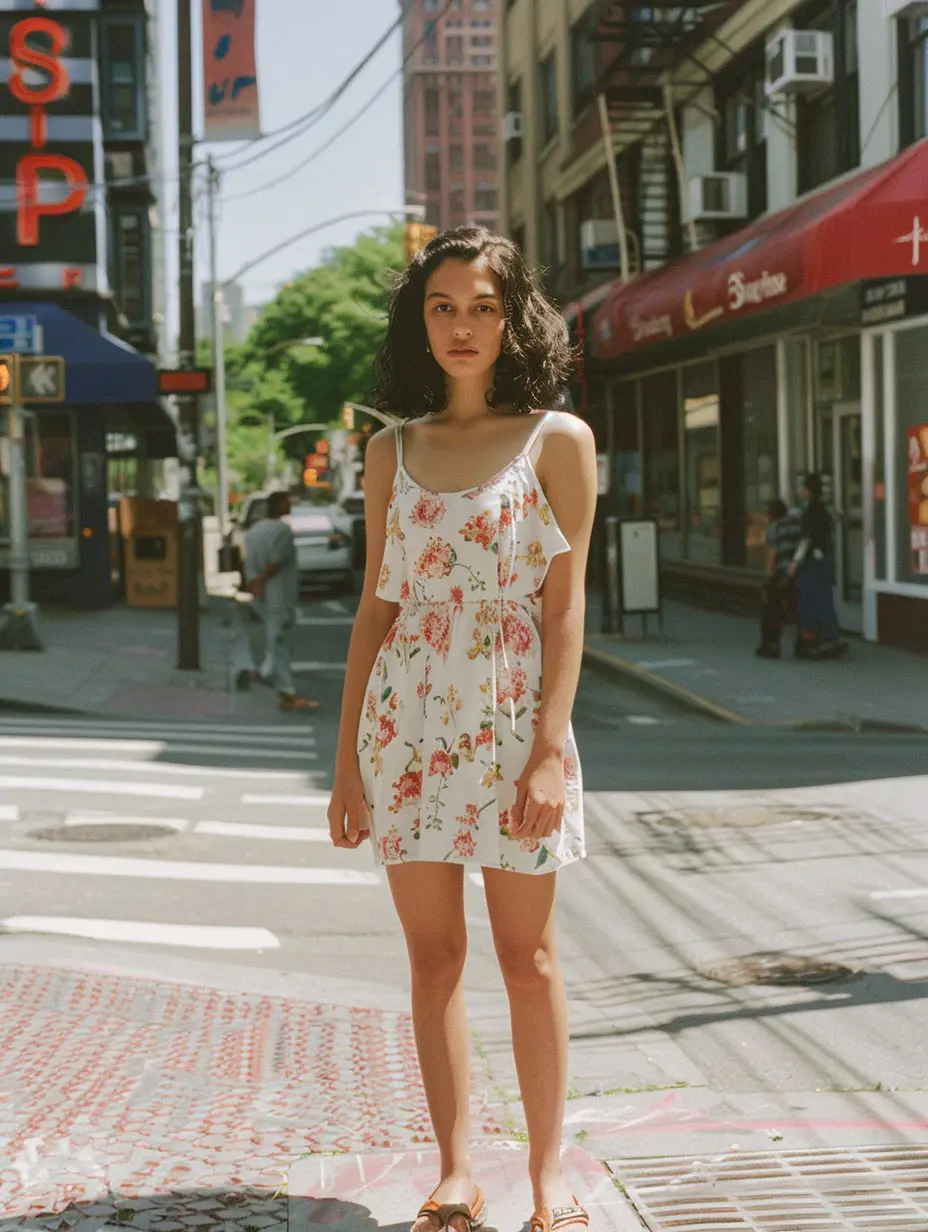
The 1990s brought the sundress back with a new sensibility: simpler, more minimal, and often deliberately unfinished in feeling. The decade's dominant dress style was the slip dress — a thin-strapped, bias-cut or straight-cut dress in satin, silk, or a satin-look fabric, worn close to the body and often over a T-shirt in a layering combination that defined the decade's casual aesthetic.
This was also the decade that made the floral mini sundress ubiquitous. The 1990s flower-print sundress — short, light, often with thin straps and a loose fit — became the default summer garment for a generation of young women, worn with chunky sandals or trainers and carrying a particular nostalgia that makes the style perennially revivable.
The boho aesthetic made a significant comeback in the mid-to-late 1990s, partly through television (the character of Phoebe in Friends became a cultural reference point for the floral, flowing, eclectic sundress aesthetic) and partly through the resurgence of vintage shopping and festival culture.
2000s & 2010sFestival Fashion and the Maxi Revival
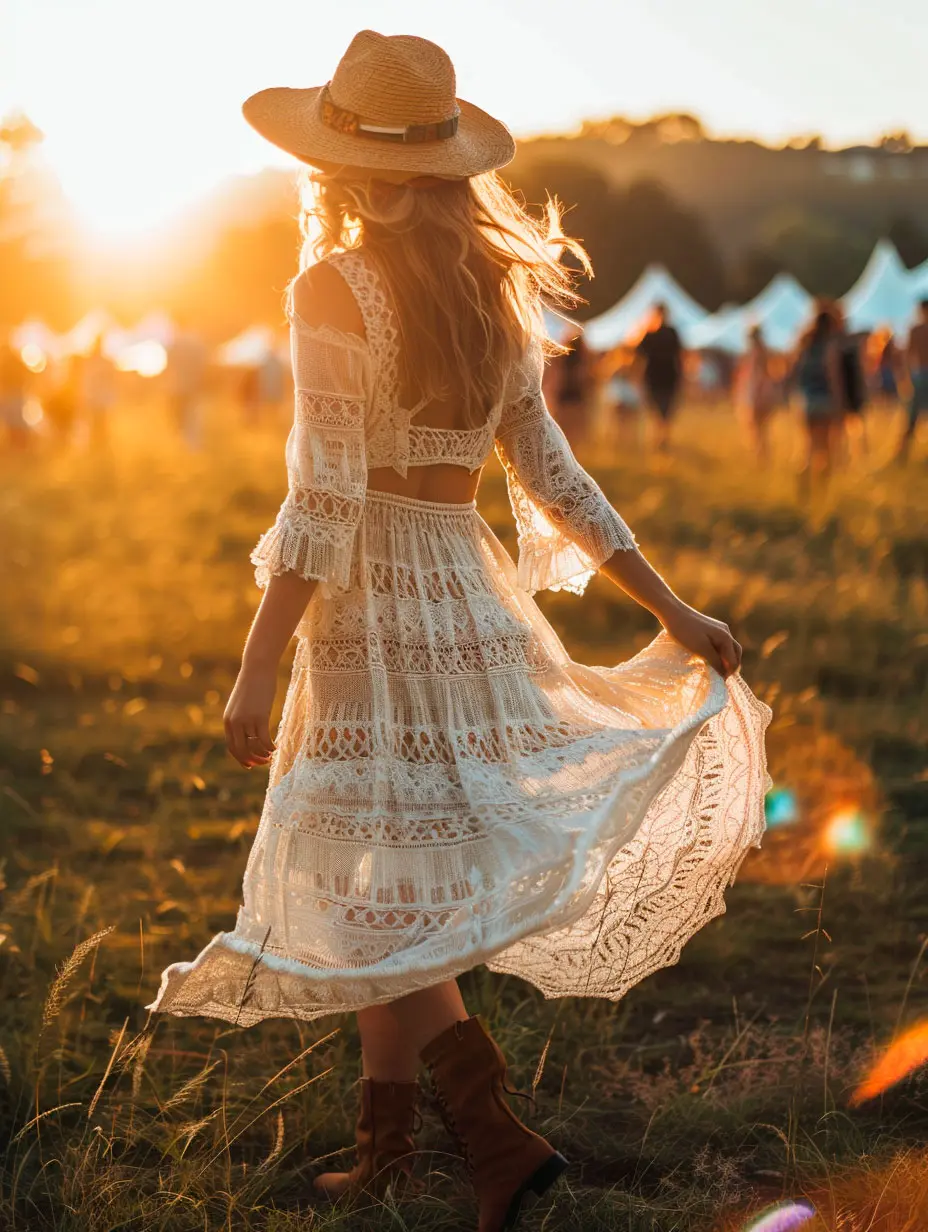
The early 2000s saw the sundress absorb the influences of both the bohemian revival and the rise of festival fashion as a mainstream aesthetic. Coachella, which began in 1999, became by the mid-2000s a calendar event as significant for fashion as for music — and the "festival sundress" became a genre of its own: maxi length or mini, often in crochet or embroidered cotton, with peasant-inspired details, worn with boots and a hat.
Celebrity influence shaped the decade significantly. Sienna Miller and Kate Moss became the faces of a boho-chic aesthetic that translated directly into sundress silhouettes: flowing, printed, layered, and deliberately casual. The maxi dress made a full mainstream comeback in this period, moving from festival fields to the high street and becoming perhaps the dominant summer dress silhouette of the 2010s.
TodayEverything at Once
The contemporary sundress is, perhaps more than any previous iteration, genuinely plural. There's no single dominant silhouette, no defining print or length. The 2020s home sewer or shopper can choose a 1950s-style full-skirted cotton sundress, a 1970s maxi in flowing viscose, a 1990s slip dress, or a simple modern shift — all of them equally current, all of them equally valid.
What has remained constant across all eight decades of the sundress's history is the underlying principle: lightness, ease, and the particular pleasure of wearing something that was designed for exactly the season you're in. The fabrics have changed, the silhouettes have evolved, the hemlines have risen and fallen, but the sundress is always, at its core, the same thing it was when Carolyn Schnurer first made one in the 1940s.
A dress that lets you be outside in the summer without wishing you were wearing something else.
Sew Your Own Piece of History
The beautiful thing about home sewing is that you can choose which era's sundress to make — and wear it for any occasion you choose. The 1950s full-skirted shape, the 1970s tiered maxi, the 1990s slip, the modern A-line — all of them are accessible projects with the right pattern.
At Fabrico, our women's dress patterns span the full range of summer silhouettes, from fitted party dresses to relaxed everyday shapes, each with a step-by-step video tutorial.
Frequently Asked Questions
When was the sundress invented?
The word "sundress" first appeared in print in 1937, but the modern sundress as we know it was developed in the mid-1940s by American sportswear designer Carolyn Schnurer. Its earliest ancestor was the "sun-back dress" of the late 1920s — a beach and resort garment that exposed the back to the sun.
Who invented the modern sundress?
Most fashion historians credit Carolyn Schnurer with creating the modern sundress in the mid-1940s. Her designs featured lightweight fabrics, soft silhouettes, racerback straps, and imaginative prints — and were intended to be worn without the corsets and girdles that women's fashion had previously required. Claire McCardell developed similar principles in the same period with her "Monastic Dress."
What is the difference between a sundress and a summer dress?
All sundresses are summer dresses, but not all summer dresses are sundresses. A sundress is specifically a light, sleeveless or strappy dress designed to expose the skin to warm weather — historically with a bare back or shoulders. A summer dress is any dress designed for warm weather and can include short sleeves, higher necklines, and more coverage.
What is a 1950s sundress?
A 1950s sundress is a feminine, structured silhouette with a fitted bodice, full skirt, sweetheart or scoop neckline, and a defined waist — usually in cotton or gingham. It evolved from Dior's New Look of 1947 and became the uniform of postwar leisure: beach holidays, garden parties, and resort weekends. Often sold as part of a matching sundress-and-jacket set.
What made the 1970s maxi dress so popular?
The 1970s maxi dress emerged from the counterculture and Woodstock-era aesthetic. Its floor-length, flowing silhouette in cotton gauze or crepe, with empire waists and tiered skirts, represented freedom from the structured femininity of previous decades. Yves Saint Laurent's 1976 boho couture collection brought the aesthetic to the runway, and high streets followed.
What is a slip dress?
A slip dress is a thin-strapped, bias-cut or straight-cut dress in satin, silk, or satin-look fabric, worn close to the body. It defined 1990s fashion and is often worn over a T-shirt as a layering piece. The style has been revived multiple times since and remains a contemporary summer staple.
Are sundresses still in fashion?
Yes. The contemporary sundress is more plural than ever — there's no single dominant silhouette. 1950s full-skirted shapes, 1970s maxis, 1990s slip dresses, and modern minimal shifts are all equally current. What unites them is the original principle: lightness, ease, and a garment designed for the season.
Who is Lilly Pulitzer and why is she important to sundress history?
Lilly Pulitzer was a Palm Beach socialite who began selling brightly printed shift dresses from a juice stand in the early 1960s. The bold tropical prints hid juice stains and the lightweight cotton suited the Florida heat. When Jackie Kennedy was photographed in one of the dresses in 1962, the brand became a national name and helped transform the sundress from a resort garment into a cultural icon.
Shop these patterns
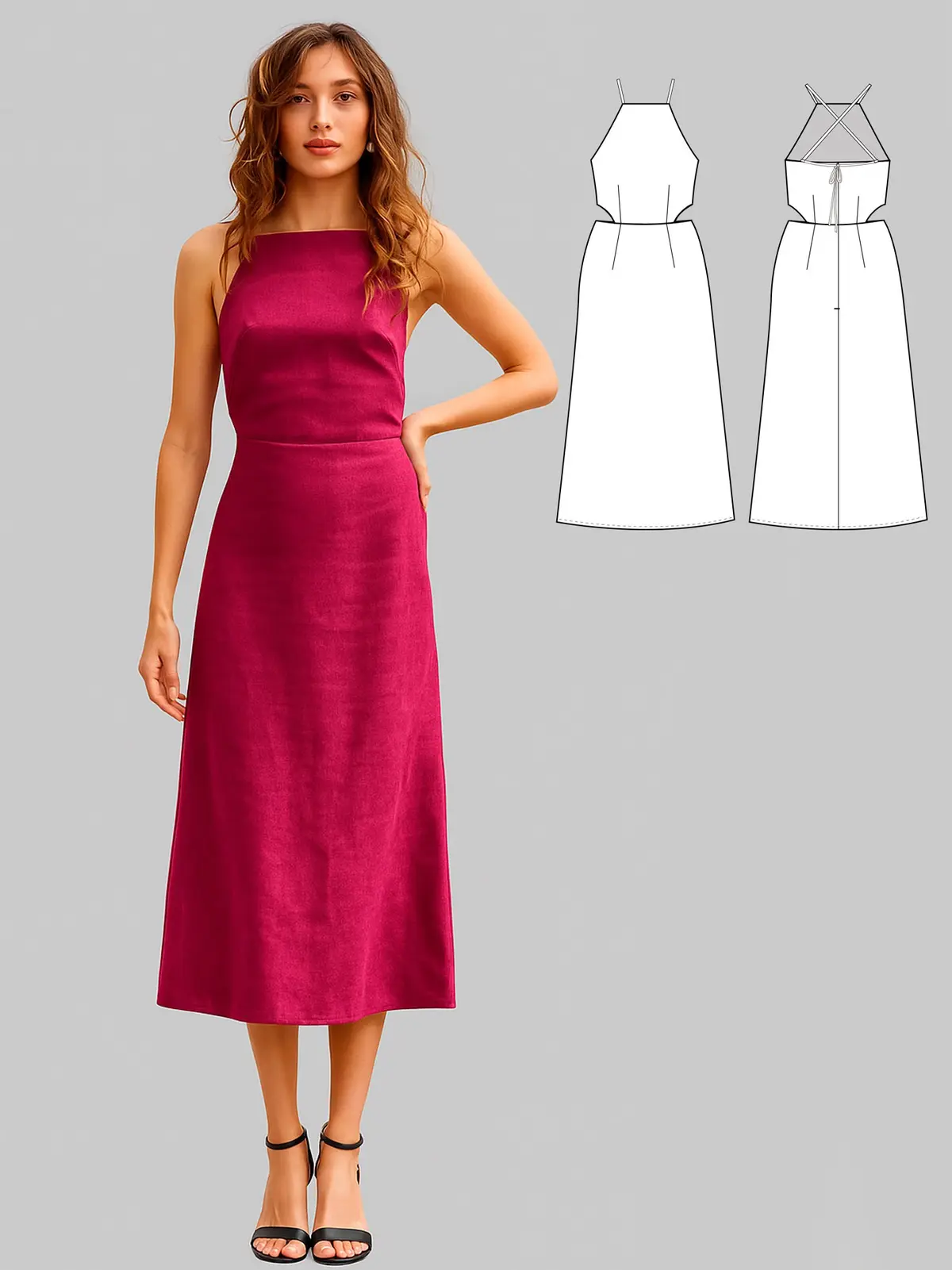 Sundress
 Muffin sundress
PDF pattern · Video tutorial
4,50 €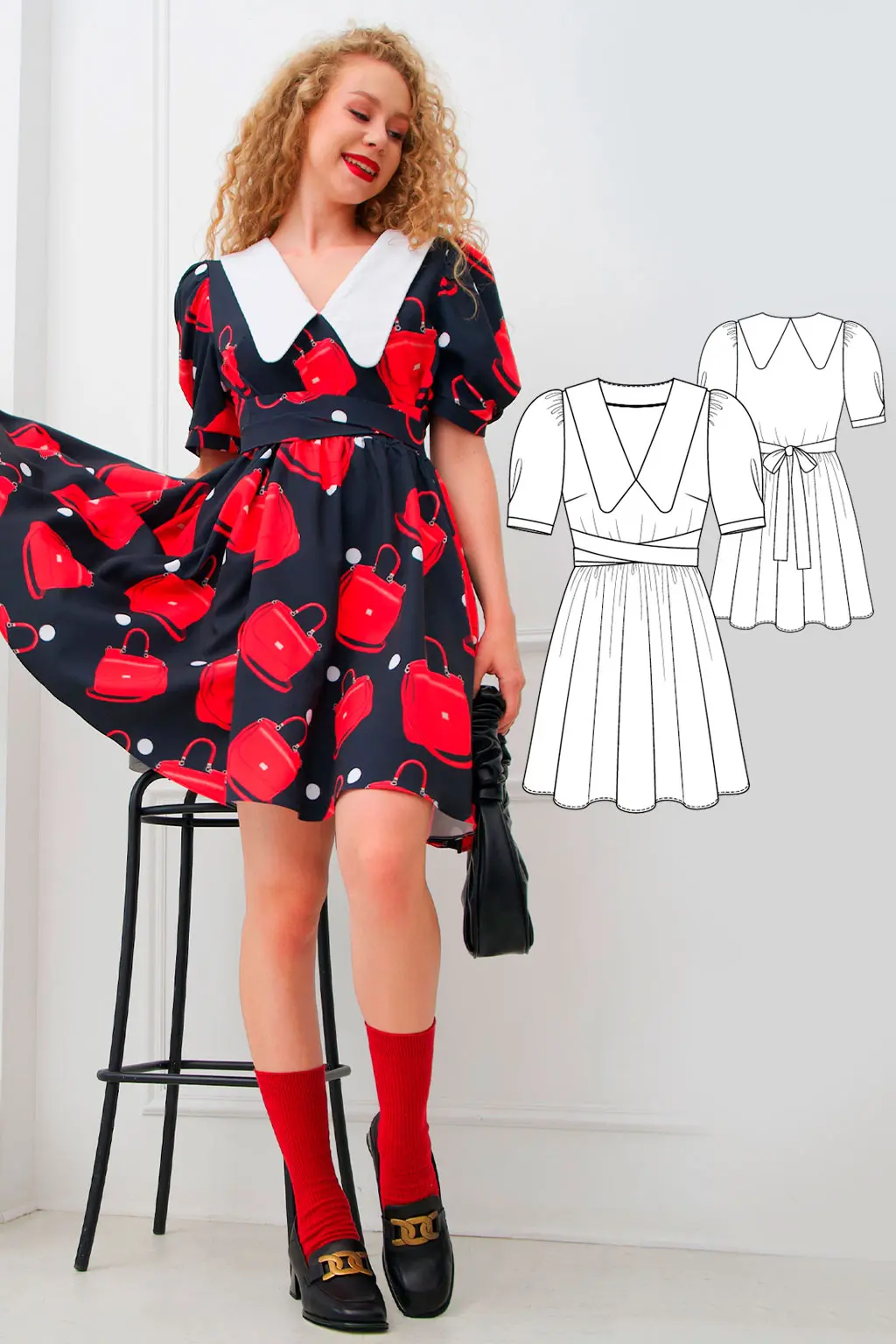 Belted
 Victoria V-neck dress
PDF pattern · Video tutorial
3,99 €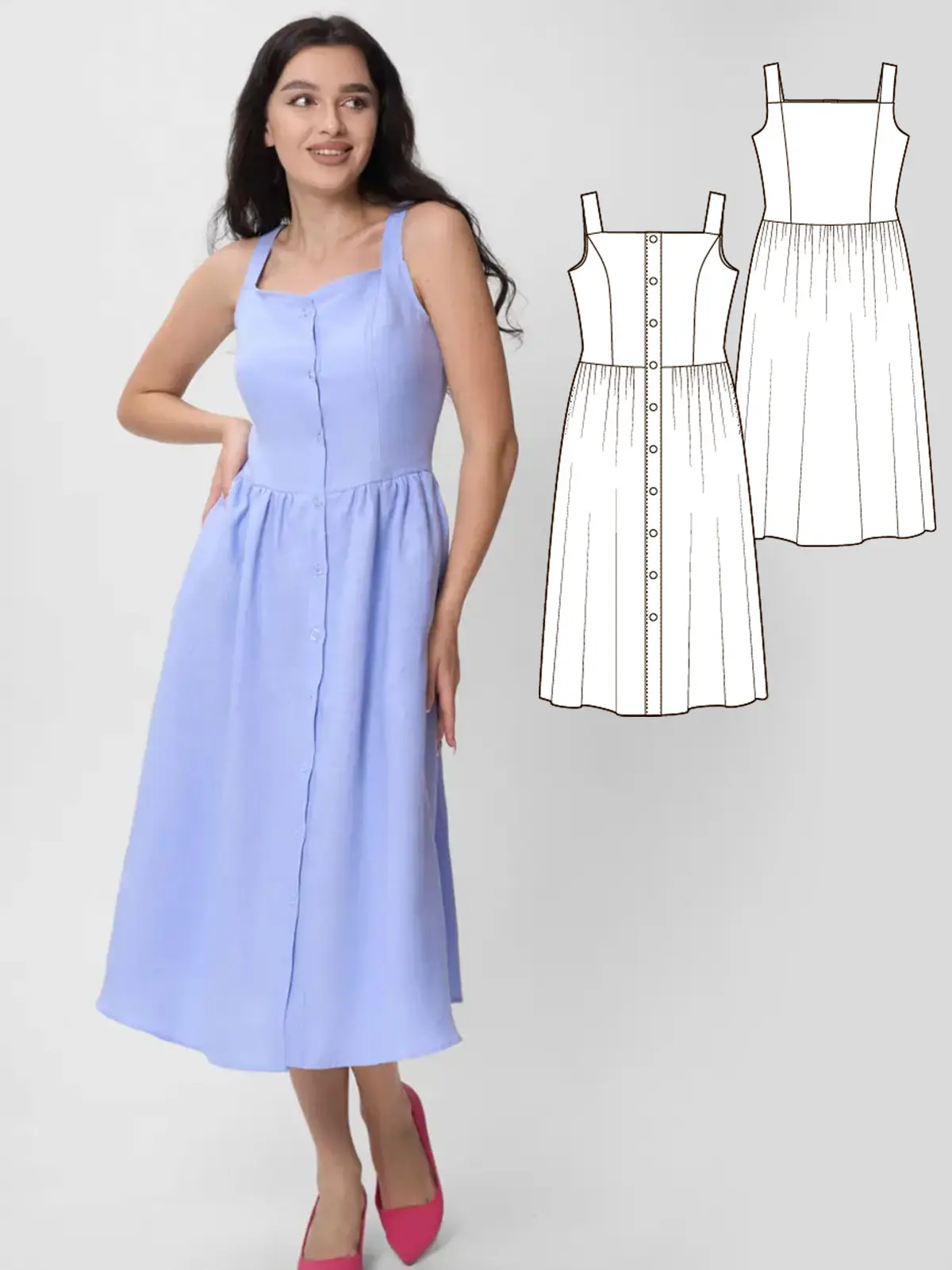 Cottage-core
 Florence dress
PDF pattern
3,99 €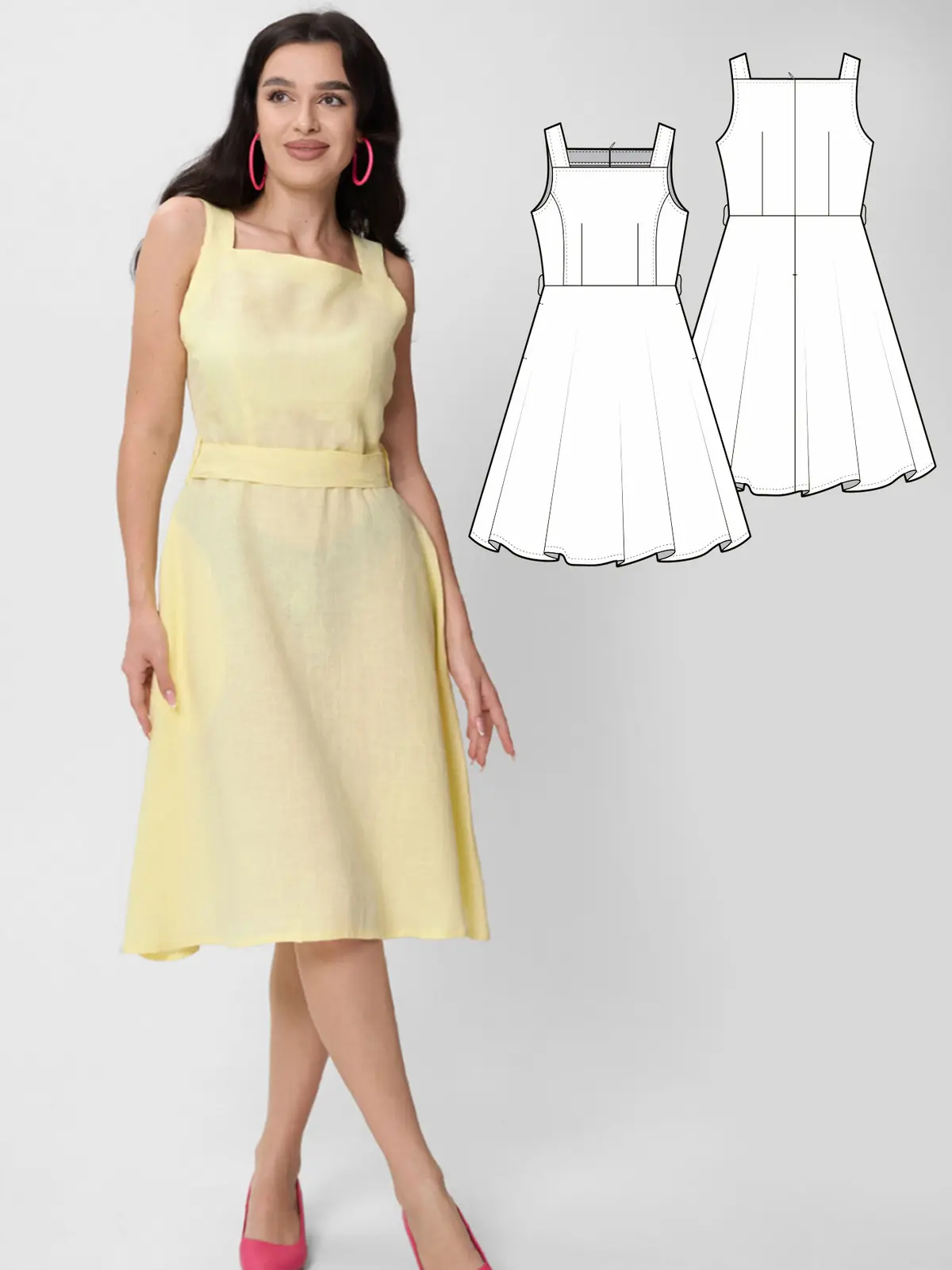 Resort
 Sardinia dress
PDF pattern · Video tutorial
3,99 €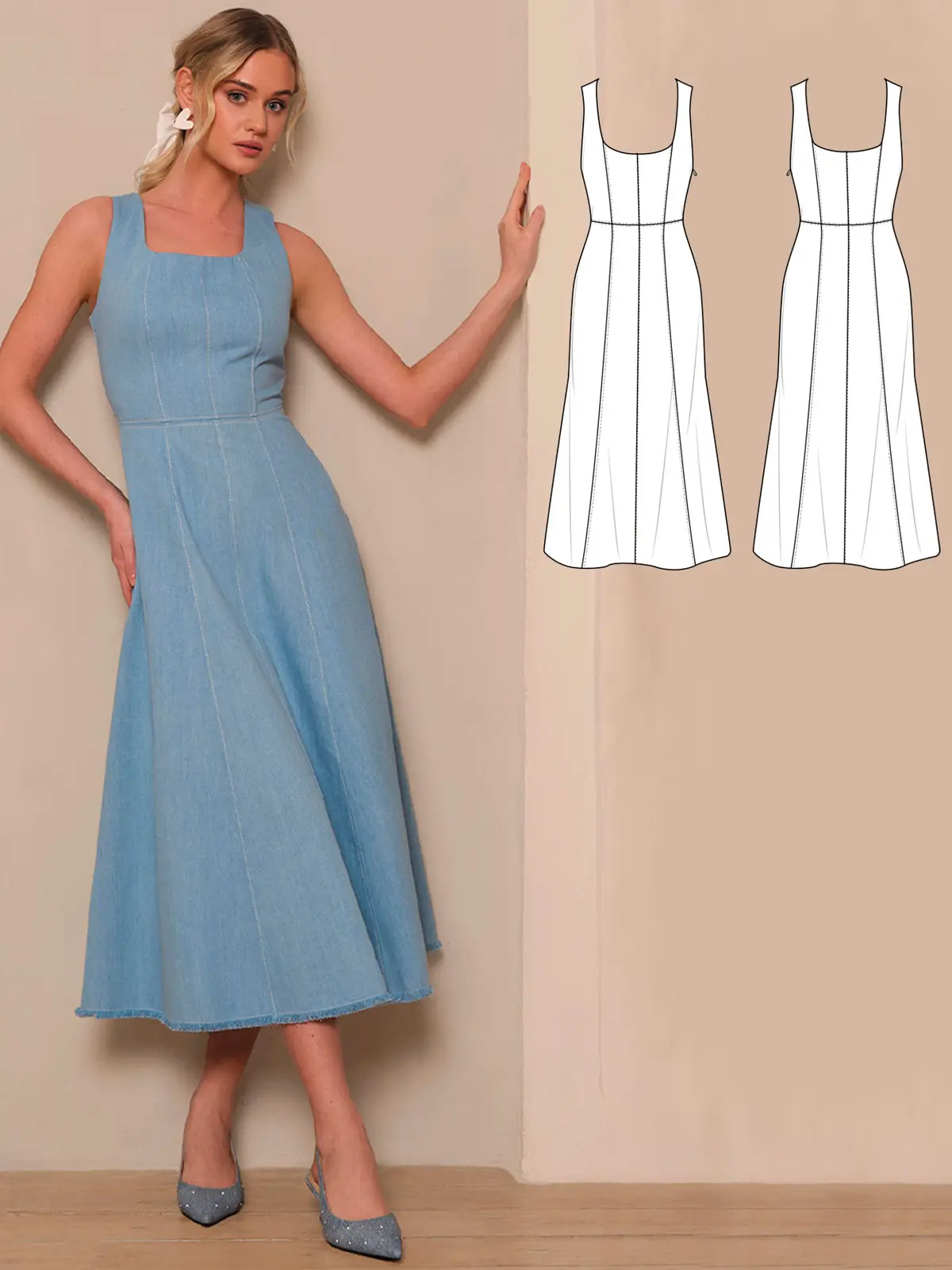 Everyday
 Margaret dress
PDF pattern · Video tutorial
3,99 €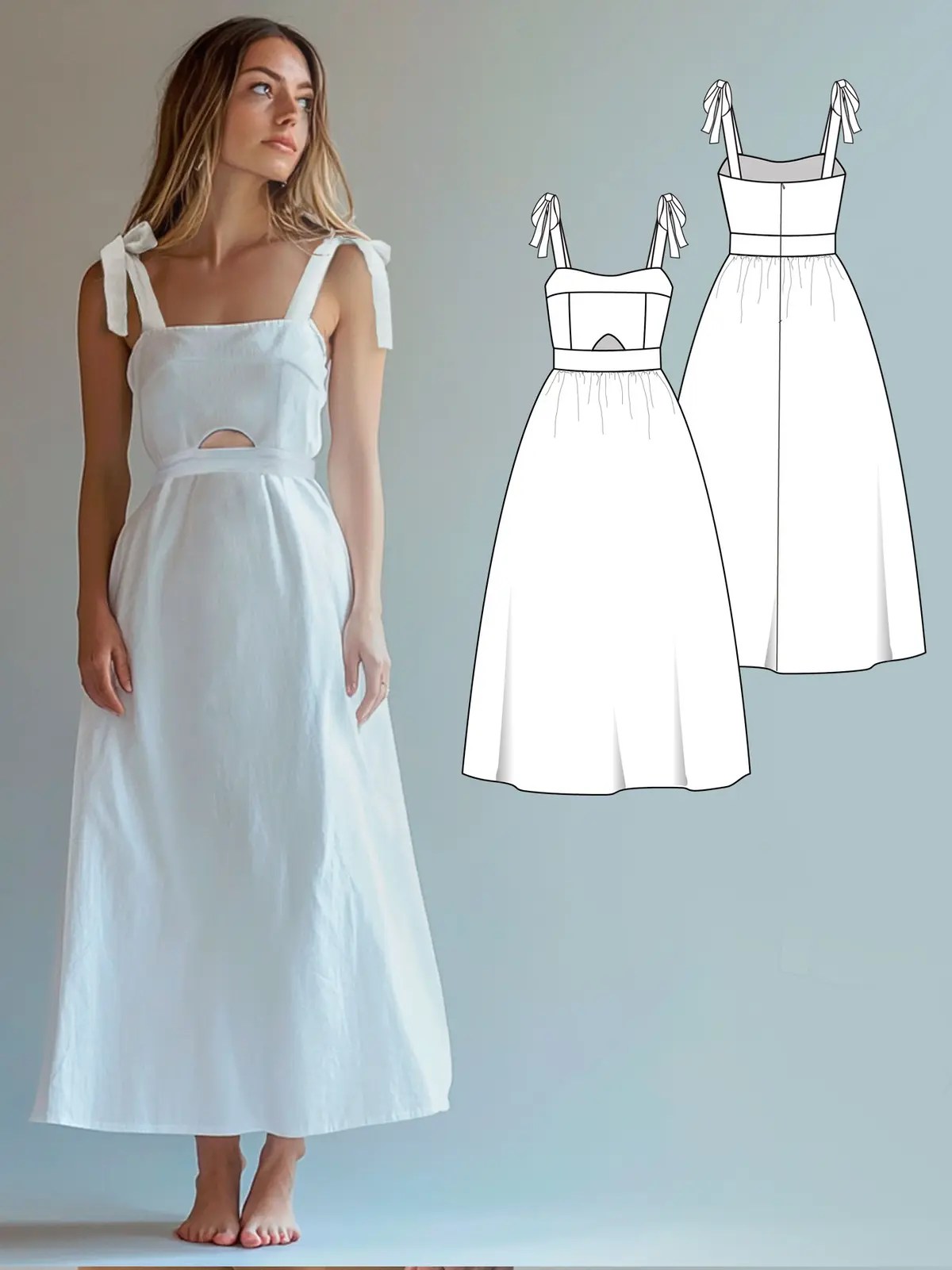 Everyday
 Vanilla dress
PDF pattern · Video tutorial
4,50 €→ Browse all dress patterns
Keep reading
 Fabric guide
 Why Choosing the Right Fabric Matters
Cotton, linen, viscose — every era of the sundress has its signature fabric. Here's how to pick yours.
Read more Sewing essentials
 Press to Impress
The ironing trick that instantly upgrades your sewing — the silent hero of every well-finished garment.
Read more How it works
 Behind the Pattern
What actually goes into the PDF that lands in your inbox — and why a well-graded pattern is worth more than its price tag.
Read more For beginners
 Thread, Click, Sew.
Free online sewing resources every beginner should know — courses, channels, and communities worth bookmarking.
Read more Community
 Beyond the Seam
From sewing alone to finding your creative community — where to look and what changes when you do.
Read more Sustainability
 From Tossed to Treasured
A quiet revolution in sewing rooms — turning fast-fashion castoffs into the wardrobe you actually want.
Read more