9 min read Sewing technique Fabric & colour
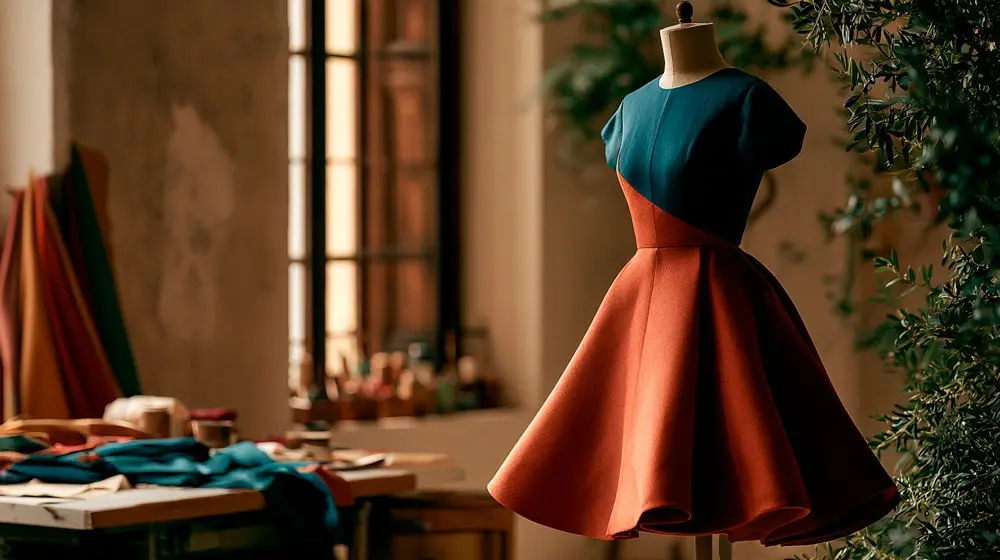
There's a moment in the fabric shop when you fall for two pieces of fabric simultaneously — a deep teal and a warm terracotta, a crisp white and a bold coral, a soft sage and a rich navy — and you think: these would be wonderful together. And then you think: but that would be complicated, wouldn't it?
It isn't. Colour blocking — the technique of combining two or more solid-coloured fabrics in a single garment — is one of the most satisfying things you can do as a home sewist, and it's considerably more straightforward than it looks. The visual impact is dramatic; the technique is not. And because you're sewing the garment yourself, you have complete control over exactly where each colour sits — which means you can place them precisely where they'll do the most flattering work.
The Quick TakeColour blocking is two solid colours in one garment, divided by a clean seam line. Choose colours by complementary, analogous, tonal, or dark-and-light relationship. Place the divide where it does the most flattering work — most commonly at the waist seam, which requires zero pattern modification. To add a new dividing line, cut the pattern piece and add seam allowance to both edges. The visual impact is dramatic; the technique is one extra seam.
ConceptWhat Colour Blocking Is (and What It Isn't)
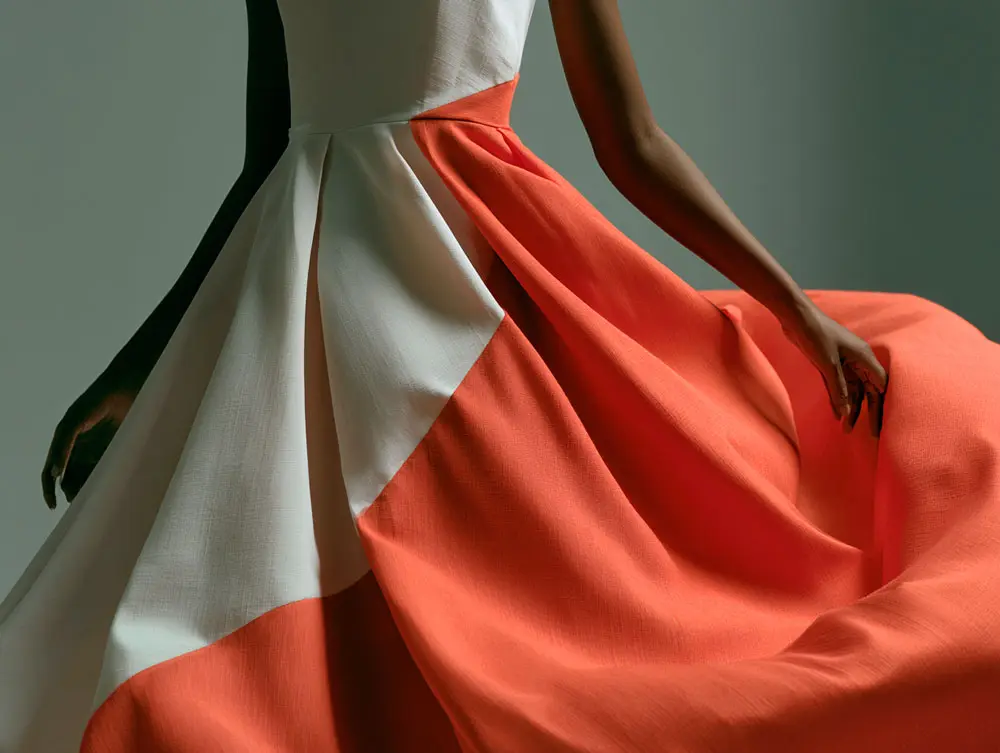
Colour blocking is simply using two or more fabrics in one garment, with the different colours separated by a clear seam line. In most cases, the garment is divided into two sections — bodice and skirt, upper body and lower body, front and back, sleeves and body — and each section is cut from a different colour of fabric.
It's worth distinguishing this from patchwork (where fabric pieces are irregular and the seam lines are part of the visual design) and from mixing prints (where the design is on the fabric rather than in the construction). Colour blocking uses solid or near-solid colours and makes the seam line itself a design feature — a clean, intentional division between two distinct colour areas.
The term became mainstream in fashion in the 1960s, associated with designers like Yves Saint Laurent — whose famous 1965 Mondrian dress was perhaps the most iconic colour-blocked garment in fashion history — and has been revisited in every decade since. In 2025 and 2026, colour blocking is very much in the mainstream, appearing in geometric dresses, panel tops, and the kind of simple, graphic two-tone looks that translate directly and beautifully from the runway to the home sewing table.
Four Approaches That Reliably Work
The colour combination is the most important decision in a colour-blocked garment — and the most personal. There's no single right answer, but there are four reliable approaches that produce consistently good results.
ComplementaryOpposite on the wheel
True blue and bright orange. Magenta and lime. Bold, energetic, the most visually dramatic. Use when the colour-blocking is the primary statement.
AnalogousNext to each other
Teal and sage. Coral and terracotta. Lavender and dusty rose. Clearly colour-blocked but not jarring — elegant rather than dramatic.
TonalTwo shades of the same colour
Navy and sky blue. Deep olive and pale sage. The subtlest approach — and the most forgiving for a first colour-blocking project, since tonal similarity makes any seam imperfection less visible.
Dark & lightThe figure-flattering classic
Black and white. Navy and cream. Dark teal and pale ivory. The clearest contrast and the most effective for using colour to shape and flatter the figure.
One practical check Before you buy, confirm both fabrics can be washed the same way. A hand-wash-only viscose plus a machine-washable cotton in one dress is inconvenient. Aim for compatible — ideally identical — care requirements.
Placement
Where to Place the Colour Divide
The dividing line between your two colours is where the visual magic happens — and it's also the design decision with the most direct effect on how the finished garment looks on the body.
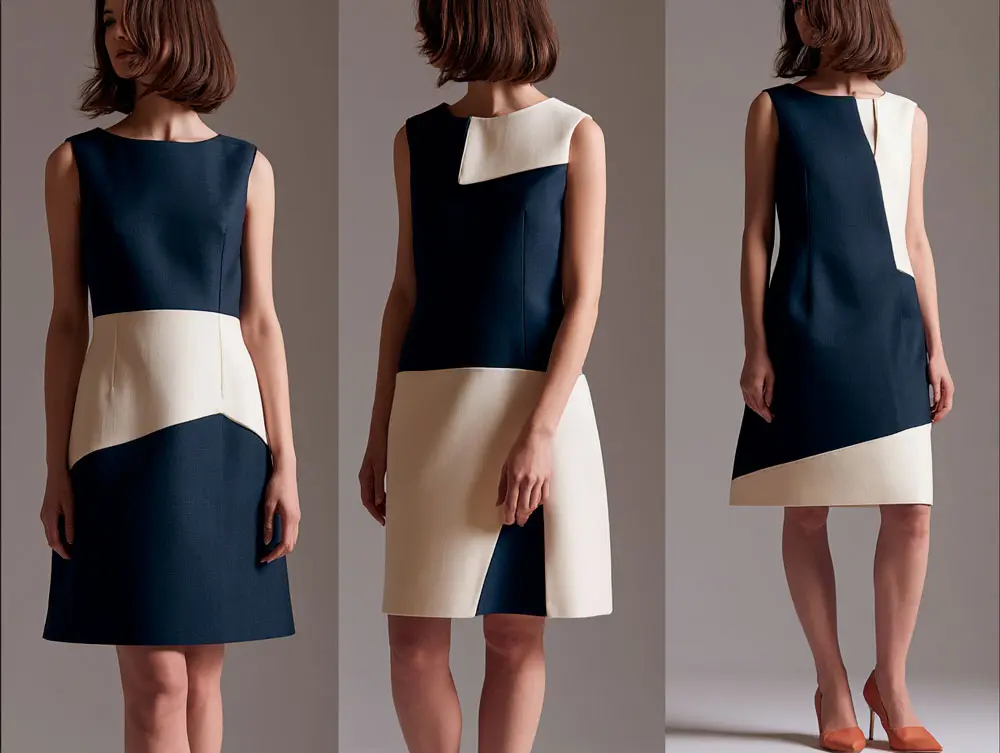
The most common dividing line is the waist seam — already present in most dress patterns. It requires no modification: cut the bodice from one fabric and the skirt from another. But there are several other places to put the line, each producing a different effect:
Four ways to divide a dressWaist seam
Classic divide — the easiest, no modification needed.
Shoulder yoke
Broadens shoulders, draws eye upward.
Side panels
Dark sides + light centre = narrower visual waist.
Hem band
10–20cm at the hem — the simplest and most elegant.
The visual logic of the waist divide: using the principles explored in our article on colour and figure, this is where colour-blocking becomes a figure-flattering tool:
- Lighter bodice, darker skirt: draws the eye upward, adds presence to the upper body, minimises the visual weight of the hips. Excellent for pear-shaped figures wanting to balance upper and lower halves.
- Darker bodice, lighter skirt: draws the eye downward, adds visual weight to the lower body. Good for inverted triangle figures, or for adding visual interest to a simpler lower-body silhouette.
- Same darkness, different hue: creates a colour change without strong visual weight shifting. The eye registers the two colours as equal rather than reading one as more prominent.
Modify the pattern
How to Colour-Block a Fabrico Pattern
The good news is that most dress patterns can be colour-blocked without any complex pattern modification — particularly if you're dividing at an existing seam.
Using existing seam lines is the easiest approach. If your chosen Fabrico pattern has a waist seam — bodice and skirt as separate pieces — you simply cut the bodice from Fabric A and the skirt from Fabric B. No modification required. The seam that joins them is already in the pattern; you're just using a different colour for each section.
Adding a new seam line (for more creative blocking, like a contrasting hem band on a one-piece skirt) is also straightforward — six steps:
Adding a contrasting hem band- Decide the depth. A hem band of 10–15cm is elegant and subtle; 20–25cm is more dramatic.
- Draw the new line. On your pattern piece, mark a horizontal line at this distance from the hem edge.
- Cut the pattern piece along the new line. You now have two separate pattern pieces: the main skirt body and the hem band.
- Add seam allowance to both edges — typically 1–1.5cm to the bottom edge of the main skirt body and to the top edge of the hem band. This is the step most beginners forget — without it, the finished piece will be shorter than the pattern intended.
- Cut from two fabrics: the main skirt body from Fabric A, the hem band from Fabric B.
- Sew, press, finish. Join the new seam, press it, then continue with the rest of the pattern instructions as usual.
This process works for any horizontal or vertical dividing line you want to add — bodice panels, contrasting yoke, side panels, anything.
Practice
The Practical Difference Between Sharp and Slightly Amateur
A few specific techniques produce the difference between a colour-blocked garment that looks crisp and intentional, and one that looks slightly off.
Five techniques for a clean result- Match fabric weights carefully. Two fabrics of similar weight — both cotton, both viscose — means the garment hangs evenly and behaves consistently. If you must combine different weights, put the lighter on top and the heavier on the bottom, where gravity works with the construction.
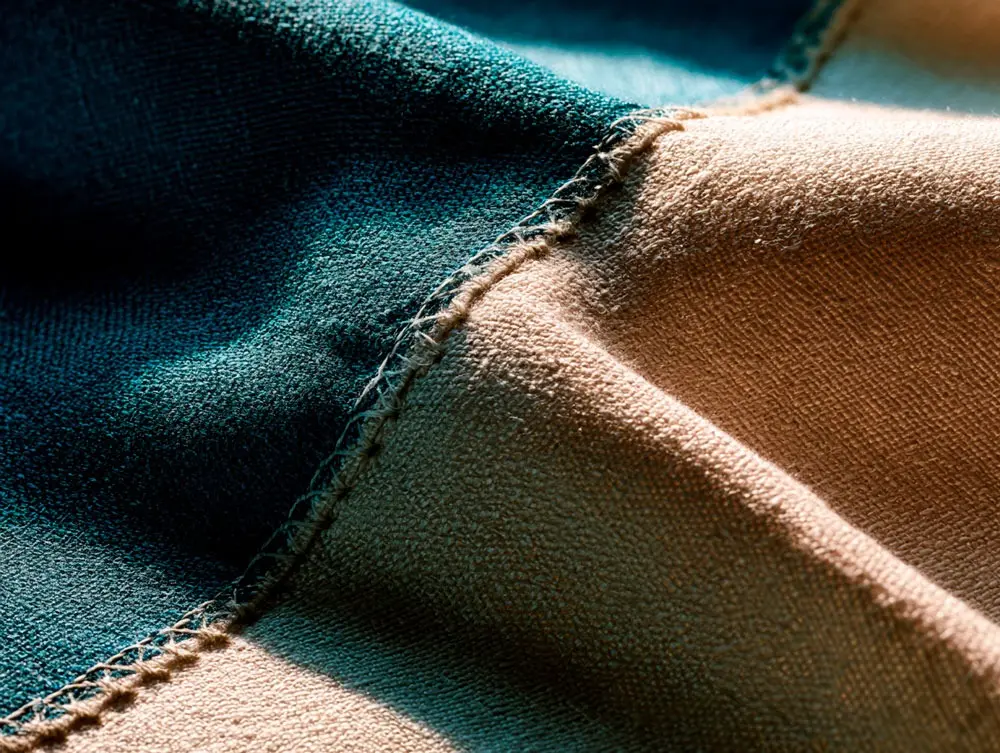
- Keep the seam line perfectly straight. A slightly wavy seam between two colour blocks is immediately visible — the contrast draws the eye to the boundary. Use a ruler to mark cutting and sewing lines, and sew slowly along the seam.
- Press the seam firmly and understitch. After sewing, press the seam open (or to one side, per the pattern). Understitching prevents the seam allowances from rolling to the right side and creating a visible ridge along the colour boundary.
- Match thread to each section. If the garment has topstitching, use thread that matches each fabric — switch thread when you move between blocks. Small detail, significant improvement.
- Wash carefully the first time. If you combine a dark and a light fabric in natural fibres, wash the finished garment alone the first time to check the darker fabric doesn't bleed onto the lighter one.
The Home-Sewing Advantage
One of the specific pleasures of sewing your own clothes is that you can colour-block things that don't exist in shops. The exact combination of deep teal and warm ivory in a bodice-and-skirt dress pattern you love. The precise placement of a contrasting hem band at a height that works for your proportions. The dark side panels on a dress silhouette that makes your waist look narrower — a commercial manufacturer would never produce this as a standard option, but you can sew it yourself in an afternoon.
Colour blocking looks like it requires expertise and produces results that feel genuinely personalised. The reality is one careful decision — where the colours divide — and one additional seam.
At Fabrico Any Fabrico dress pattern with a separate bodice and skirt can be colour-blocked immediately, using the existing waist seam as your dividing line — no pattern modification required. Each pattern includes a complete video tutorial covering construction and finishing, so you can sew with confidence whatever colours you choose.
Frequently Asked Questions
What is colour blocking in sewing?
Colour blocking is the technique of combining two or more solid-coloured fabrics in a single garment, with the different colours separated by a clear seam line. Most commonly the garment is divided into two sections — bodice and skirt, or upper body and lower body — and each section is cut from a different colour of fabric. It became mainstream in 1960s fashion through designers like Yves Saint Laurent and his 1965 Mondrian dress, and it returns to mainstream fashion regularly, including in 2025–26.
Is colour blocking hard to sew?
No — colour blocking is considerably more straightforward than it looks. If your pattern already has a waist seam (a separate bodice and skirt), you simply cut the bodice from one fabric and the skirt from another, with no pattern modification required at all. The seam that joins them is already in the pattern. Adding a new dividing line (like a contrasting hem band) requires one extra step — cutting the pattern piece in two and adding seam allowance to both new edges.
Which colours work best together for colour blocking?
There are four reliable approaches: complementary colours (opposite on the colour wheel — true blue and orange, magenta and lime) for high-contrast drama; analogous colours (next to each other — teal and sage, coral and terracotta) for harmony; tonal combinations (two shades of the same colour — navy and sky blue) for subtle sophistication; and dark-and-light pairings (black with white, navy with cream) for the most effective figure-flattering use. Tonal combinations are the most forgiving for a first project.
Where should the colour divide be on a dress?
The most common dividing line is the waist seam, because it's already a seam in most dress patterns. Beyond the waist: a yoke line at the shoulders draws the eye upward and broadens the shoulder line; vertical side panels (darker outside, lighter centre) make the waist look narrower; sleeves in a contrasting colour create a sportier effect; a contrasting hem band (10–20cm at the bottom) is the simplest possible colour-block. The dividing line determines the visual effect on the body, so place it deliberately.
Can I colour-block any sewing pattern?
Yes, with two approaches. If the pattern already has a seam where you want the colour change (a waist seam, a yoke, a hem facing), use that seam — no modification needed, just cut from two different fabrics. If you want to divide a pattern piece that has no existing seam, cut the pattern piece along your desired line, add a seam allowance (typically 1–1.5cm) to both new edges, and treat them as two separate pieces. The most common beginner mistake is forgetting to add the seam allowance — without it, the finished piece will be shorter than the pattern intended.
What's the difference between colour blocking and patchwork?
Colour blocking uses two or three solid-coloured fabric sections separated by clean, intentional seam lines as a design feature — the seam itself is part of the visual statement. Patchwork uses many smaller, often irregular fabric pieces joined together, where the abundance of seams and the variety of fabrics is the design. Colour blocking is graphic and architectural; patchwork is textural and crafted. Mixing prints is different again — there the design is on the fabric rather than in the construction.
Do the two fabrics need to be the same type?
Ideally yes — using two fabrics of similar weight and identical care requirements (both cotton, both viscose) means the garment hangs evenly, behaves consistently, and can be washed as one. If you combine fabrics of different weights, use the lighter fabric on top and the heavier on the bottom, where gravity works with the construction rather than against it. And check both can be washed the same way — a hand-wash viscose plus a machine-wash cotton in one dress is inconvenient.
Patterns to colour-block
 Bodice + skirt
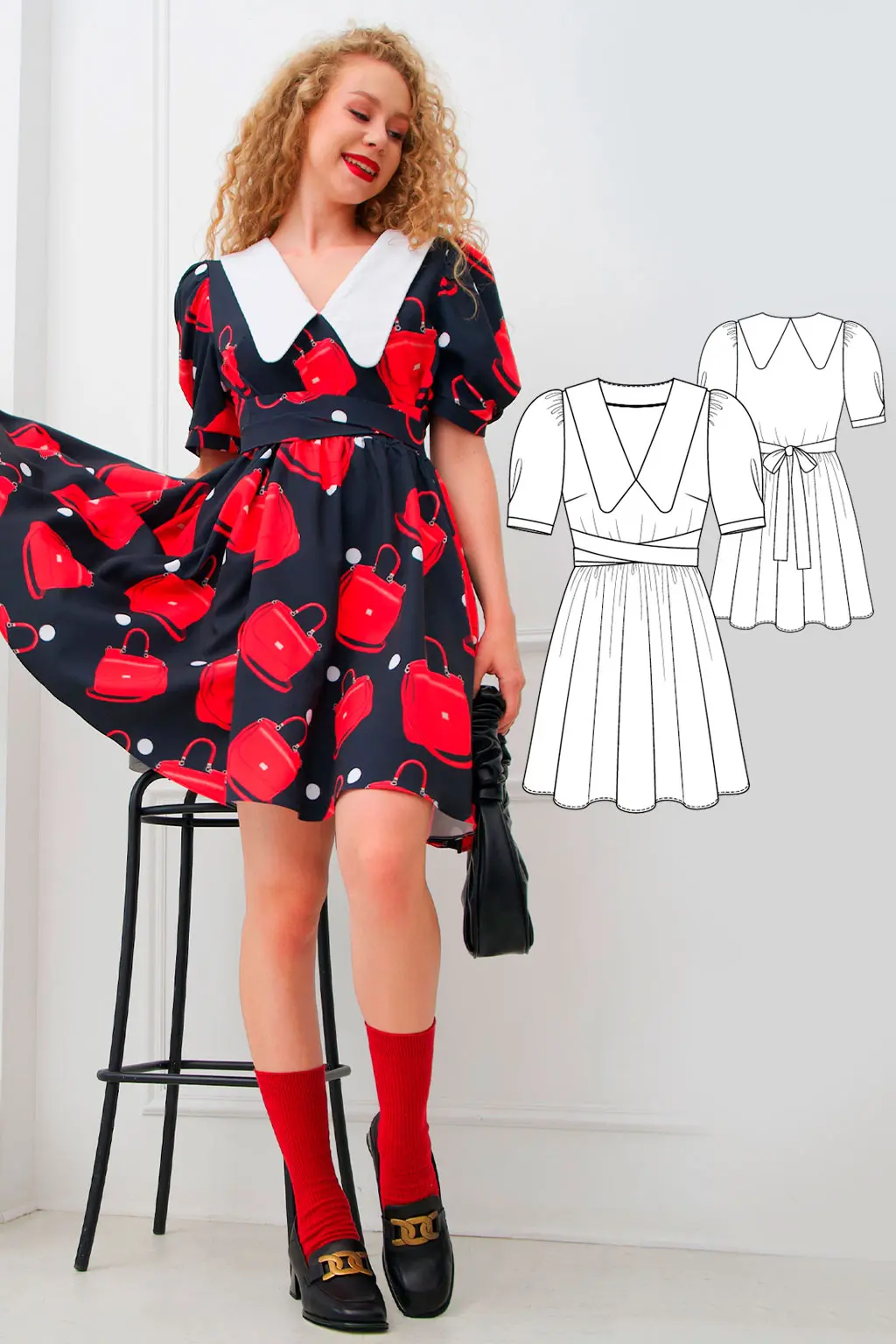
 Victoria V-neck dress
PDF pattern · Video tutorial
from 3,99 €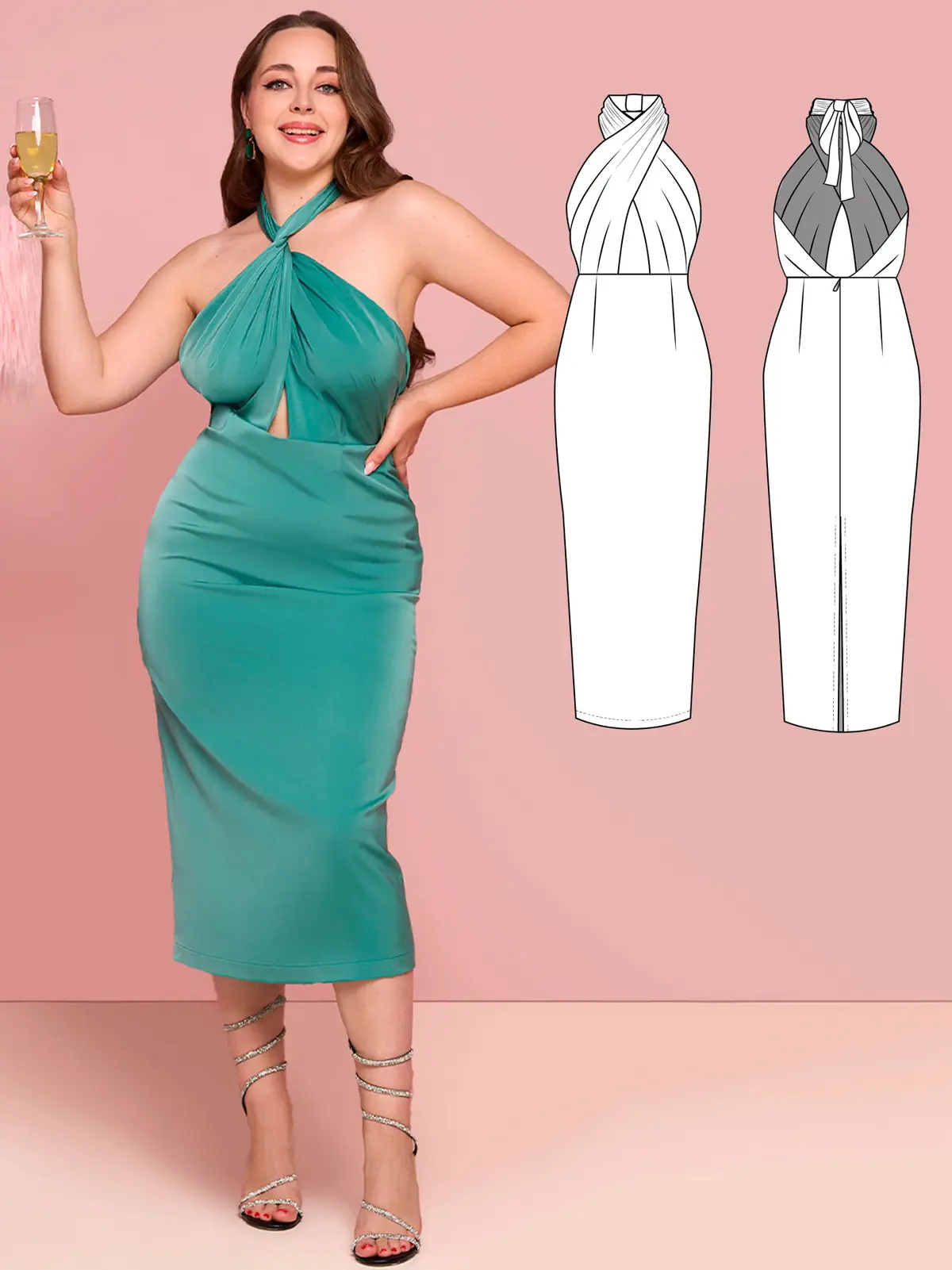 Bodice + skirt
 Barbara party dress
PDF pattern · Video tutorial
from 3,99 €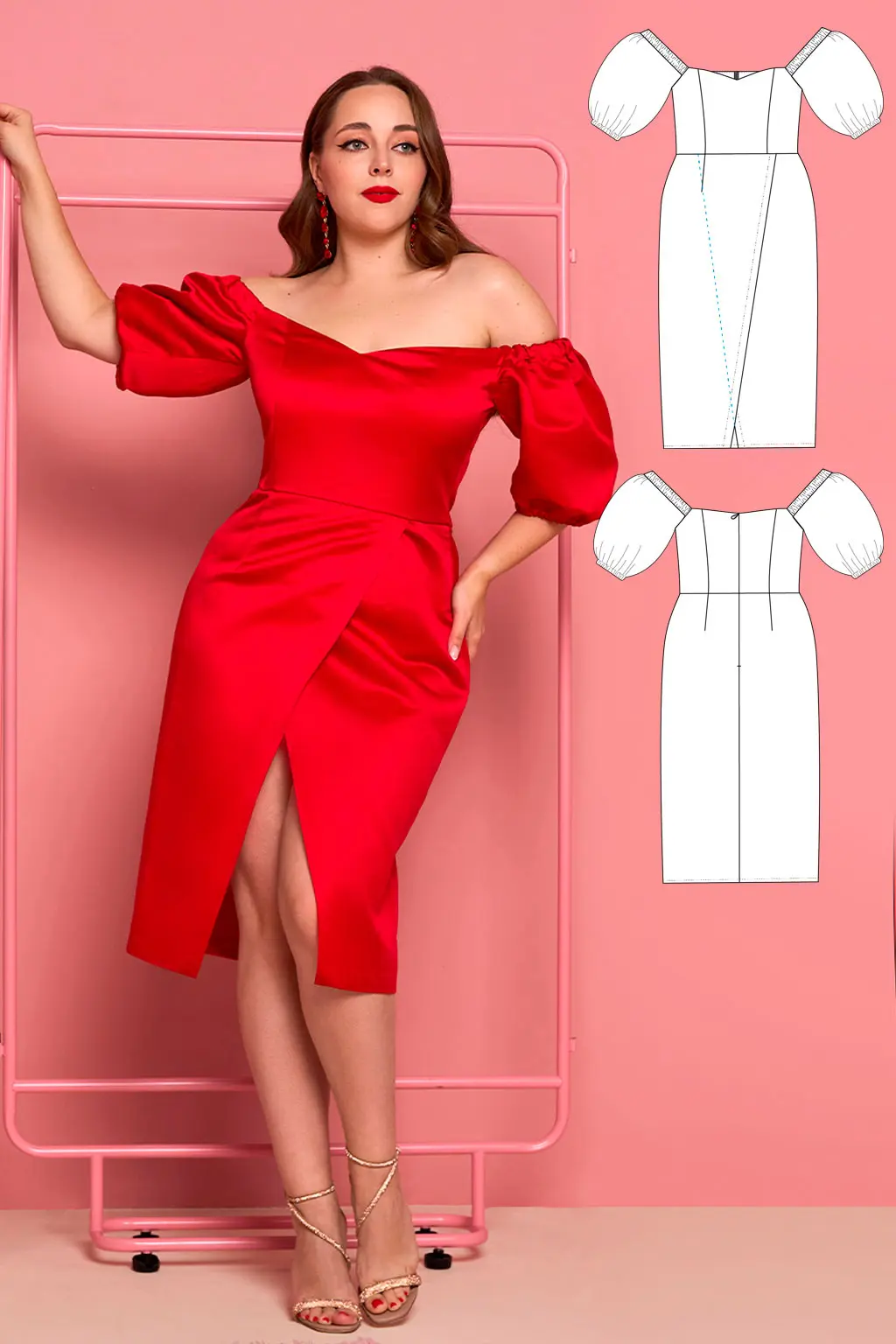 Wrap
Wrap Vivien party dress
PDF pattern · Video tutorial
from 4,50 €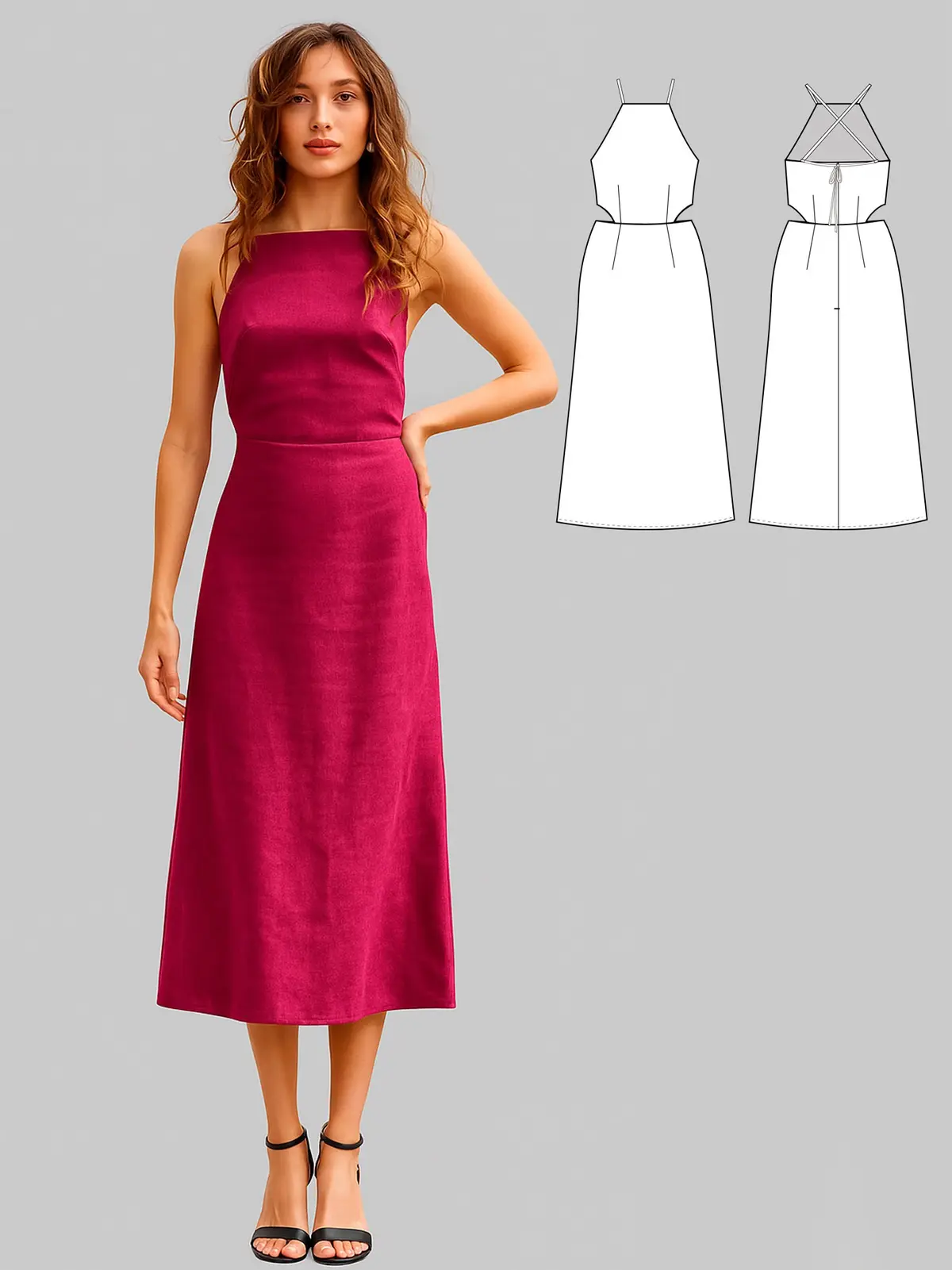 Bodice + skirt
 Muffin sundress
PDF pattern · Video tutorial
from 4,50 €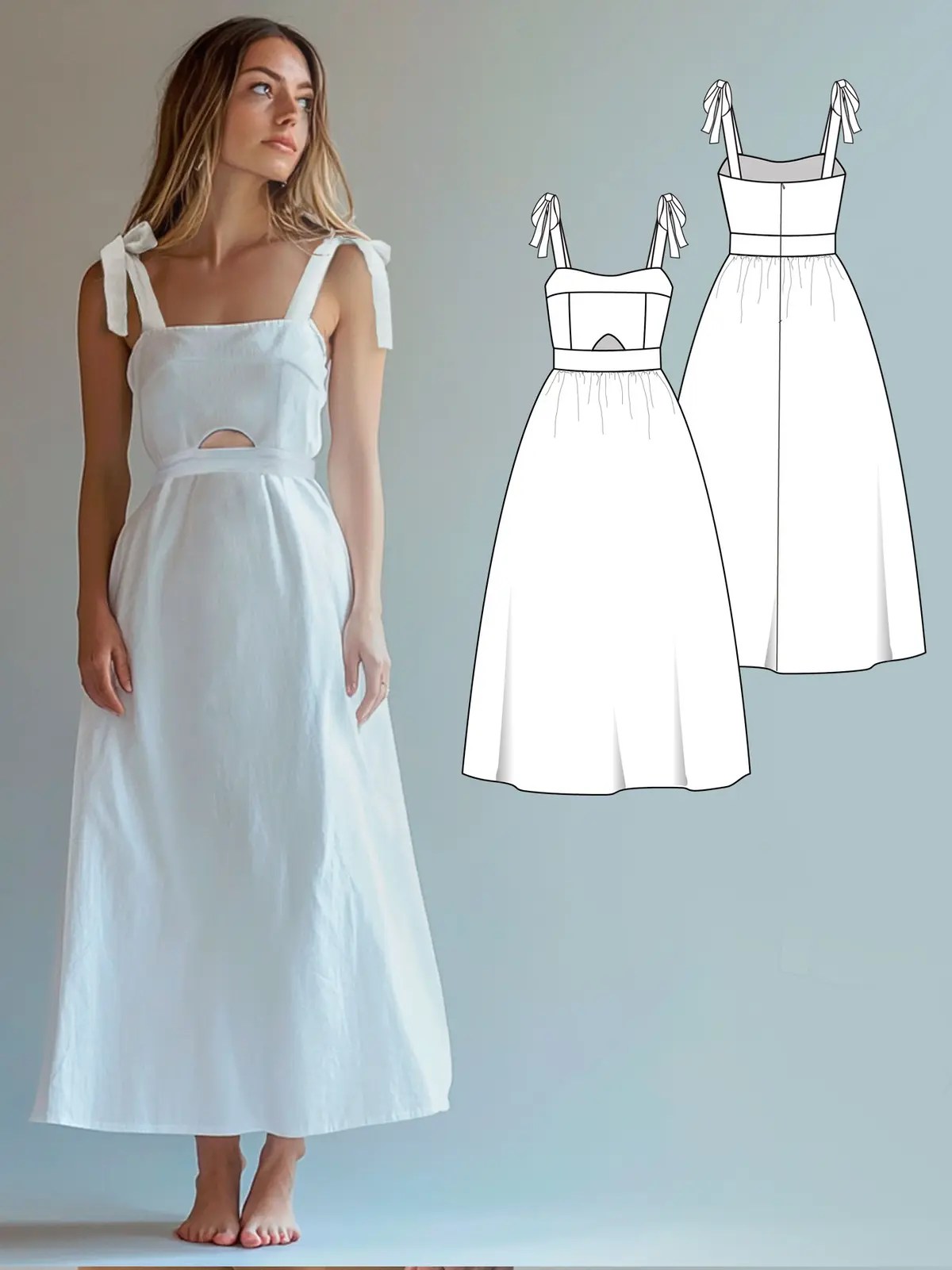 Day-to-night
 Vanilla sundress
PDF pattern · Video tutorial
from 4,50 €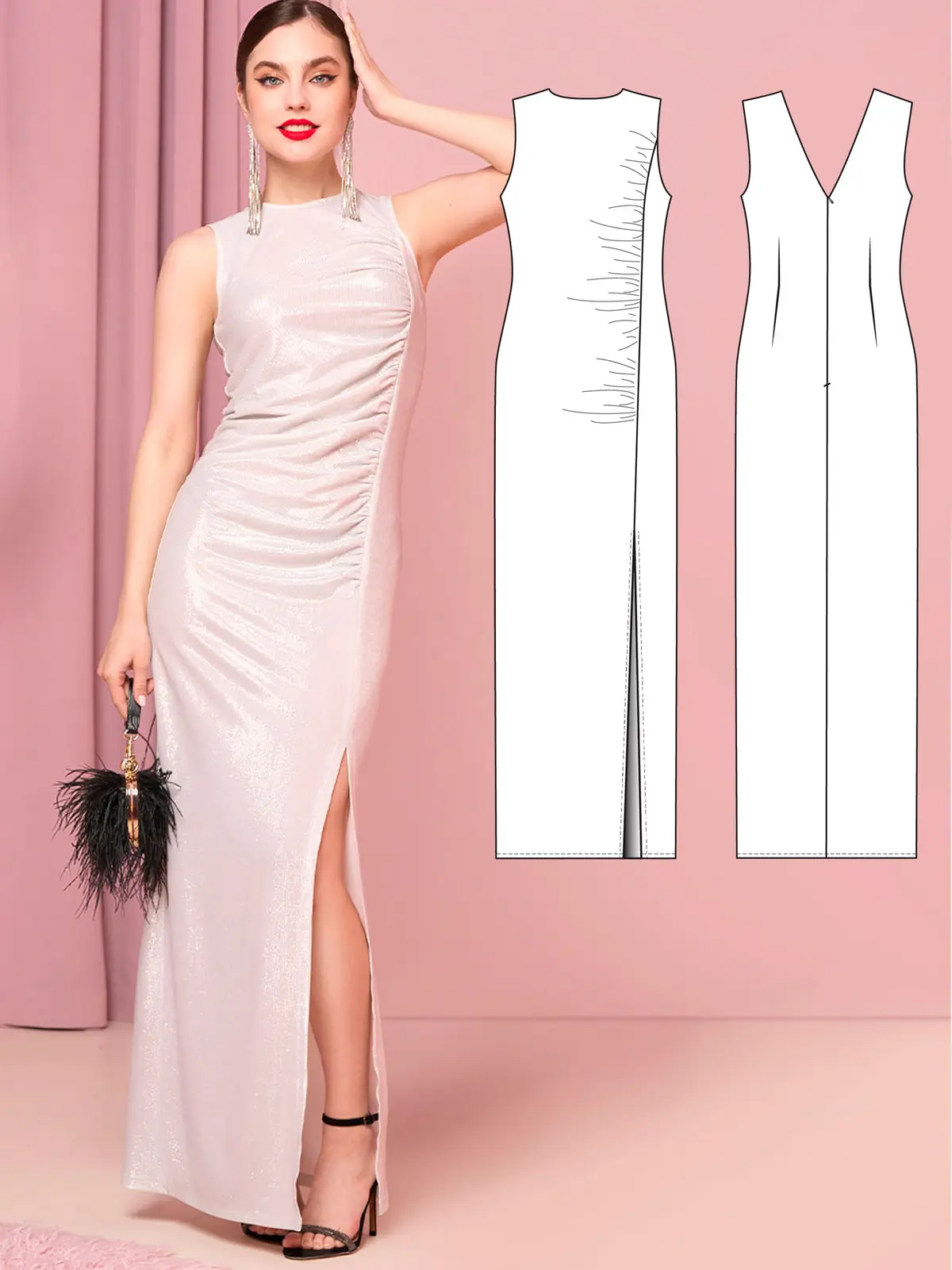 Evening
 Sharlize evening dress
PDF pattern · Video tutorial
from 3,99 €→ Browse all dress patterns
Keep reading
 Colour & style
 How to Choose Colours That Flatter Your Figure
Placement, undertone, contrast — the three dimensions of choosing a colour that genuinely flatters.
Read more Fabric guide
 The Best Prints and Patterns for a Summer Dress
Florals, stripes, polka dots, geometrics — what each does, what to avoid in the heat, and how to choose.
Read more Colour & heat
 The Best Colours to Wear in Hot Weather
Why white works, why black is more complicated than you think, and what the research says about colour and heat.
Read more Fabric guide
 Why Choosing the Right Fabric Matters
Two fabrics in one garment require compatible care, weight and behaviour — here's how to choose.
Read more Sewing essentials
 Press to Impress
A well-pressed seam between two colour blocks is the difference between sharp and slightly amateur.
Read more How it works
 Behind the Pattern
What actually goes into the PDF that lands in your inbox — and why a well-graded pattern is worth more than its price tag.
Read more