

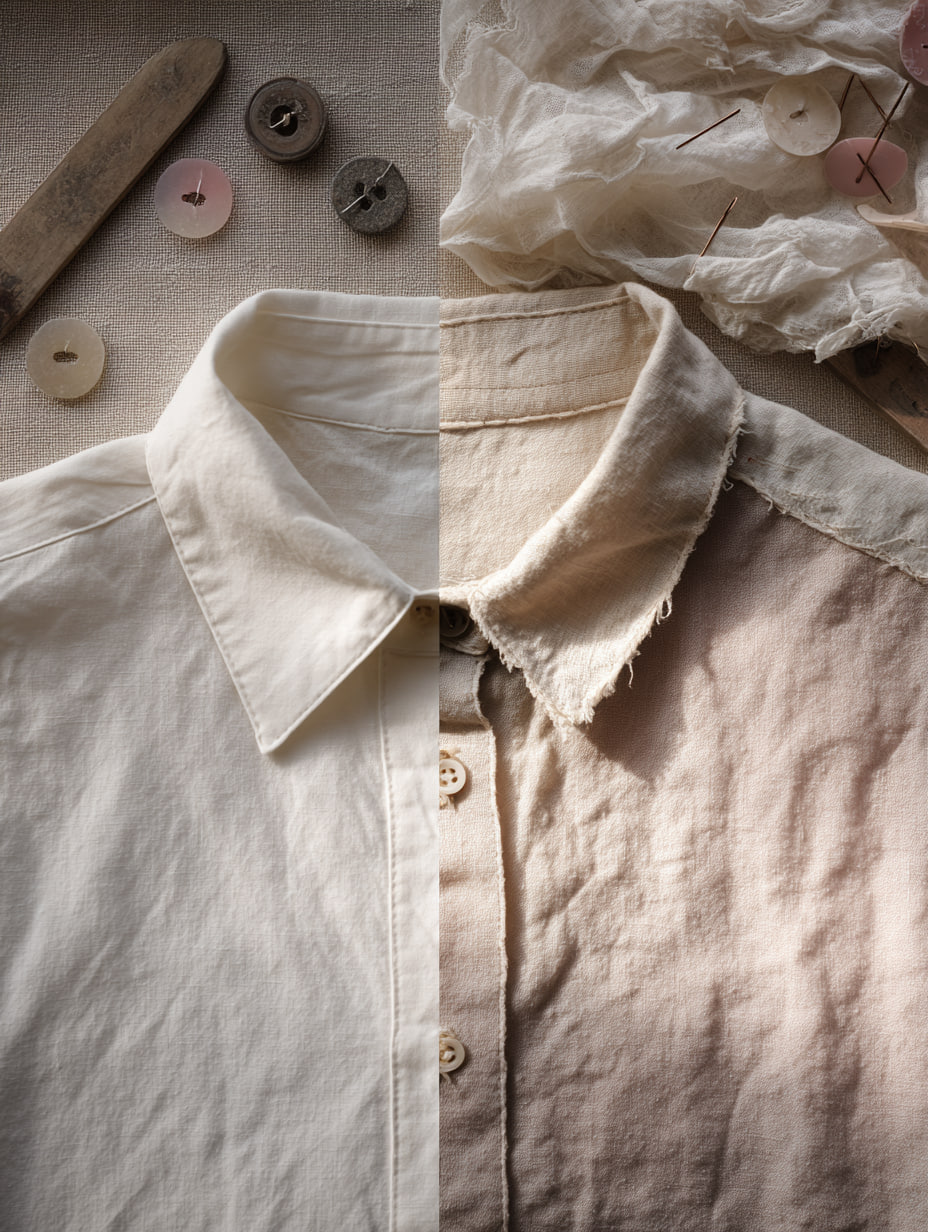


Stiff Lesson

Why Skipping Interfacing Can Sabotage Your Sewing Project

It happens to every beginner sewist at some point. You follow the pattern. You cut the fabric. You sew each seam with care. But when you turn your collar right side out, something’s off. It’s limp. It won’t hold shape. Your waistband rolls. Your button placket buckles. The whole garment looks… unfinished.

You go back to the pattern and realize: you skipped the interfacing. Interfacing is one of the most misunderstood — and most overlooked — elements of garment sewing. It’s not as exciting as choosing fabric. It doesn’t come in fun prints or textures. And to a new sewist, it can feel like an optional add-on rather than a vital ingredient. But here’s the truth: interfacing is the secret to structure. It’s what gives collars their crisp edge, buttonholes their strength, and waistbands their clean silhouette. Skip it, and your garment may never look (or wear) the way it should.

What Is Interfacing, Anyway?

Interfacing is a textile used to reinforce or stiffen fabric. It’s typically applied to specific sections of a garment — think collars, cuffs, waistbands, facings, or anywhere that needs extra body or support. It helps these areas maintain shape through wear, washing, and movement.

Interfacing comes in two main types:

✔ Fusible: Has a heat-activated adhesive on one side. Applied with an iron.

✔ Sew-in: Stitched directly into the garment, often used when heat might damage the fabric or for more delicate control.

It also comes in a range of weights — from featherlight to heavyweight — and structures, from flexible to rigid. Choosing the right one depends on your fabric and the part of the garment being supported.

Why Interfacing Matters

Imagine baking a cake without using a pan. The batter might still taste great, but it will spread out and lose shape. That’s your garment without interfacing — the flavor might be there, but the structure falls flat.

Without interfacing:

✔ Collars collapse or curl instead of standing neatly.

✔ Buttonholes stretch out or wrinkle with wear.

✔ Facings flip to the outside or won’t lie flat.

✔ Waistbands crumple and lose definition.

✔ Plackets pull or pucker under the weight of buttons.

These issues can make even a beautifully sewn garment look homemade in the wrong way — floppy, unpolished, and unstable.

The Most Common Beginner Mistake

Many new sewists see the word “interfacing” in a pattern and either skip it entirely or choose the wrong kind because they’re unsure what it means. Sometimes they don’t have it on hand. Sometimes they’re intimidated by the options. Sometimes they assume it’s not that important.But sewing without interfacing is like building furniture without screws — you may end up with something that resembles the final product, but it won’t function well, and it won’t last.

How to Choose the Right Interfacing

 1.Match Weight to Fabric

As a general rule, your interfacing should be equal in weight or slightly lighter than your main fabric. Too heavy, and it can create stiffness or distortion. Too light, and it won’t offer enough support.

2.Consider Drape and Purpose

 If the garment needs soft structure (like a blouse collar), choose lightweight fusible. For something that needs sturdier shaping (like a coat lapel or bag), go for mid- to heavy-weight options.

3.Test First

Always fuse a small swatch of interfacing to a scrap of your main fabric before committing. Some fusibles can change the texture, drape, or even the color of delicate fabrics.

4.Don’t Use Stretch Interfacing on Wovens(or vice versa)

Match the fabric type. For knits, use stretch interfacing so the fabric can still move. For wovens, use stable interfacing that will hold structure.

5. When in Doubt, Ask or Research

Most pattern instructions recommend a specific type. If not, don’t guess — check online, ask in a sewing group, or look up interfacing guides by fabric type.

How to Apply It Properly

Fusible interfacing requires a hot, dry iron and a pressing cloth (to protect both fabric and iron). Use a firm, flat surface — not an ironing board cover with too much give. Press, don’t slide, and hold for 10–15 seconds per area. Let it cool fully before sewing to prevent separation. Sew-in interfacing should be basted or pinned in place before attaching to your garment, with smooth, wrinkle-free application.

Embrace the Invisible

You won’t see interfacing in your finished garment — and that’s kind of the point. It works behind the scenes to support the visible parts of your make. And when it’s done right, you won’t notice it at all. You’ll just see clean lines, confident curves, and buttonholes that never sag. So don’t skip it. Don’t fear it. Get to know interfacing, and you’ll take your garments from “homemade” to “handmade” — with polish, structure, and staying power.

Want some more? Here...