
Never Sew the Wrong Size Again

Demystifying Pattern Sizing and Body Measurements

If you’ve ever sewn a garment using your usual store size—only to end up with something that fits like a tent or barely zips—you’re not alone. For many sewists, choosing the correct pattern size is one of the most confusing steps in the sewing journey. The culprit? A widespread misconception: pattern sizing is not the same as ready-to-wear sizing.
To save time, fabric, and frustration, understanding how body measurements and pattern sizing truly work is essential. With a few measuring tips and a new perspective on numbers, you’ll never sew the wrong size again.

The Big Disconnect: Store Sizes vs. Pattern Sizes

In ready-to-wear (RTW) fashion, sizes are often inconsistent. You might wear a size 10 in one brand and a 6 in another. RTW garments are designed based on marketing strategies and target demographics—not necessarily on real, proportional body shapes. Pattern sizing, on the other hand, is based on actual body measurements, and tends to follow older, more standardized sizing systems that haven’t shifted with modern vanity sizing. So if you wear a size 8 in stores, don’t be surprised if your correct pattern size is a 12, 14, or even 16. This is not a mistake—it’s just a different system.

Know Thyself: Measuring Correctly

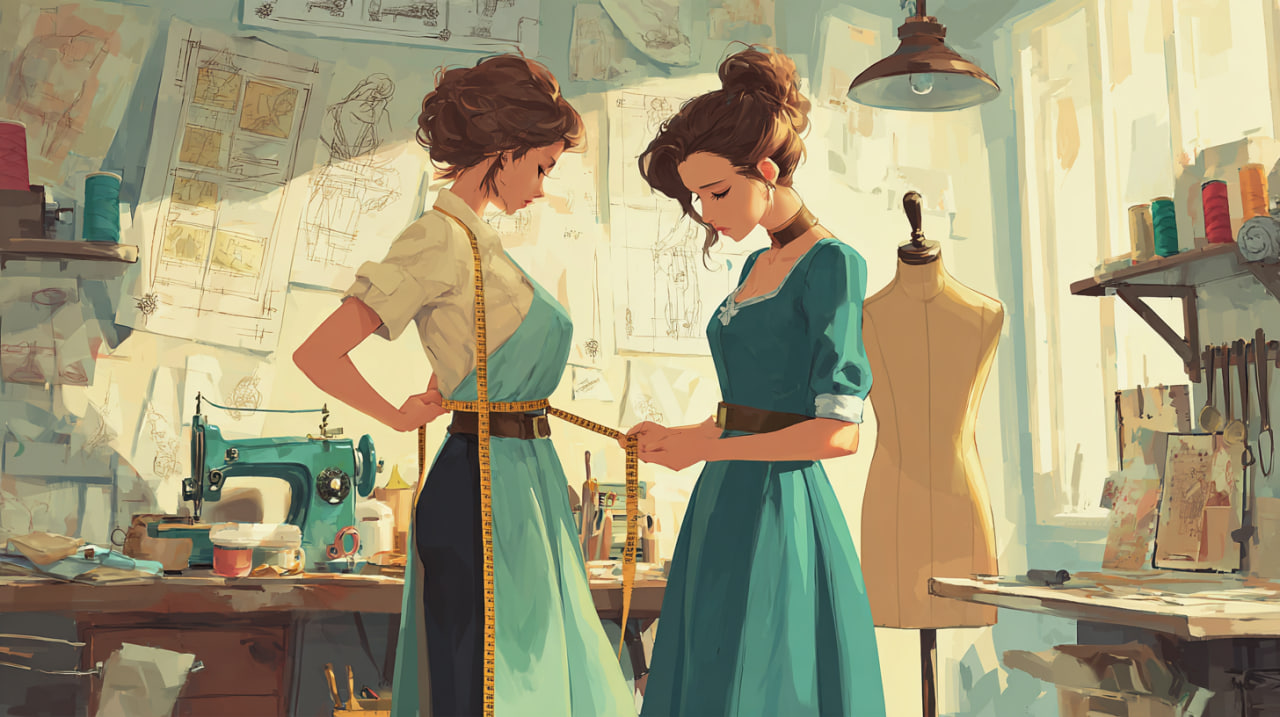
To get the right fit, it all begins with accurate measurements. You only need a flexible tape measure, a mirror, and ideally a friend or dress form for precision.

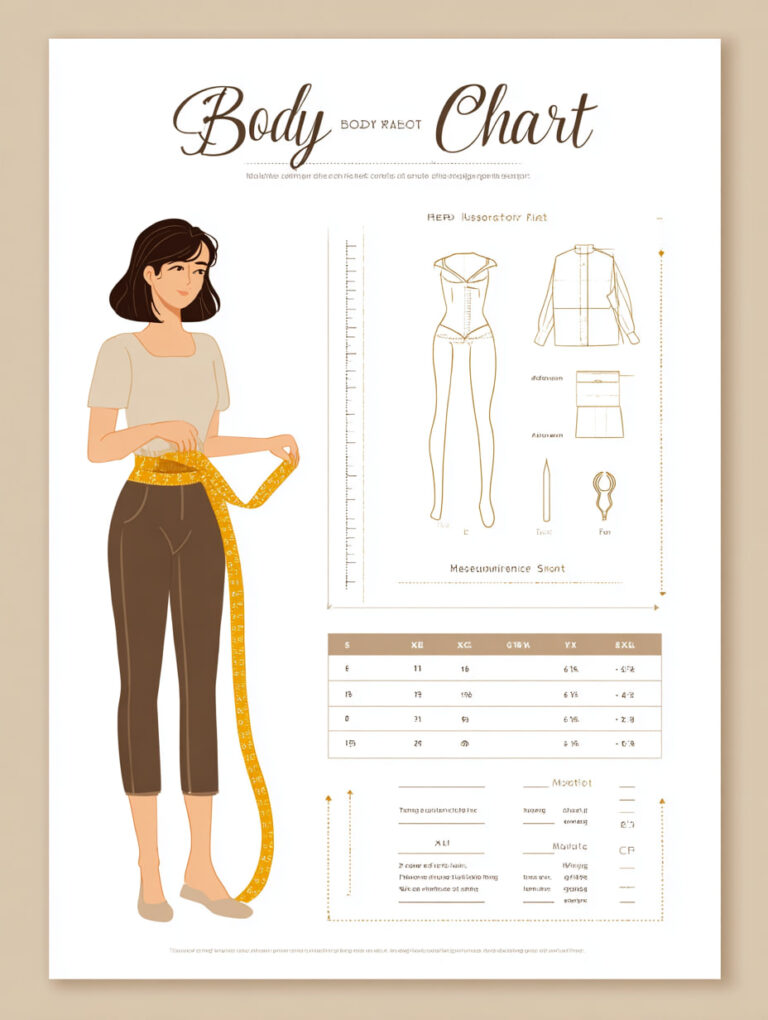
Here are the three core body measurements used in most patterns:

  • Bust – Measure around the fullest part of your bust, keeping the tape level across your back.
  • Waist – Find your natural waist (not where your jeans sit), usually the narrowest part of your torso.
  • Hips – Measure around the fullest part of your hips and buttocks.

Always measure over well-fitting undergarments or the type of clothes you’ll wear underneath the finished piece.

Pro tip: write your measurements down and recheck every few months. Our bodies change more than we realize.

Know Thyself: Measuring Correctly

To get the right fit, it all begins with accurate measurements. You only need a flexible tape measure, a mirror, and ideally a friend or dress form for precision.

Here are the three core body measurements used in most patterns:

  • Bust – Measure around the fullest part of your bust, keeping the tape level across your back.
  • Waist – Find your natural waist (not where your jeans sit), usually the narrowest part of your torso.
  • Hips – Measure around the fullest part of your hips and buttocks.

Always measure over well-fitting undergarments or the type of clothes you’ll wear underneath the finished piece.
Pro tip: write your measurements down and recheck every few months. Our bodies change more than we realize.

Reading the Pattern Chart (And Not Just the Envelope)

Once you’ve got your numbers, compare them to the body measurement chart—usually printed on the back of the pattern envelope or included in a PDF download.
Ignore the ready-to-wear size numbers. Focus only on the measurements.
Many patterns also list finished garment measurements, which show how much ease (extra room) is built into the design. A close-fitting dress might have only 1–2 inches of ease, while a loose tunic could have 4–6 inches or more.
Choosing based on finished measurements is a helpful strategy when you’re between sizes or prefer more (or less) ease than the pattern allows.

The Myth of the “Perfect Size”

Many sewists get hung up trying to find one magic number. In reality, few people fit neatly into a single pattern size. Most of us are a combination—bust in one size, waist in another, hips in yet another.
That’s where
blending sizes comes in. Most modern patterns include multi-size layers, allowing you to trace or digitally blend from, say, a size 12 bust to a size 14 waist and size 16 hips.
If you’re sewing with PDF patterns, use the “layers” function in Adobe Reader to turn on only the sizes you need for a clearer view while tracing or cutting.

The Muslin: Your Secret Weapon

Want to be 100% sure before cutting into your good fabric? Sew a muslin, or test garment, in a similar fabric. This quick trial run allows you to tweak fit, spot errors, and avoid costly mistakes.

Yes, it’s one more step—but it can save you hours in alterations later.

Final Sizing Tips

  • Big 4 patterns (Simplicity, McCall’s, Butterick, Vogue) tend to run with more ease than indie patterns. Always check finished garment measurements.
  • Indie designers often use more modern sizing charts and include detailed measurement guides—take advantage of these!
  • Make pattern adjustments as needed: a full bust adjustment (FBA), swayback alteration, or grading between sizes can completely change how a garment fits.
  • Don’t size up “just in case.” You can always sew with larger seam allowances, but extra fabric in the wrong place is much harder to fix.

Conclusion: Your Size Is Just a Starting Point

Sewing your own clothes is one of the most empowering creative skills you can learn—but it requires a mindset shift. Forget everything you know about store sizes. Pattern sizing is about your body, not a label. By measuring carefully, reading size charts critically, and adjusting your patterns to match your unique shape, you can confidently sew clothes that fit beautifully—without the guesswork. Sew smart, measure often, and let the tape measure be your guide. Because when it comes to handmade clothing, the perfect fit starts with knowing your numbers.

Want some more? Here...

Press to Impress

The Ironing Trick That Instantly Upgrades Your Sewing
There’s a silent hero in every well-sewn garment, and it’s not the machine, the fabric, or even the hands that stitched it. It’s the iron. While it may seem mundane compared to the thrill of cutting fabric or the satisfaction of topstitching, pressing is one of the most powerful tools in your sewing arsenal. And yet,it’s often skipped or rushed, especially by beginners eager to see a project come together.

Read more

Pajamas as Outerwear

Pajamas as Outerwear: The Rise of Relaxed Luxury in Fashion

Pajamas have long been associated with comfort, relaxation, and bedtime rituals.

Read more