6.Reuse and Recycle Notions
Buying new thread, zippers, buttons, and interfacing for every project adds up. Try:
✔ Buying zippers in bulk from discount shops or online
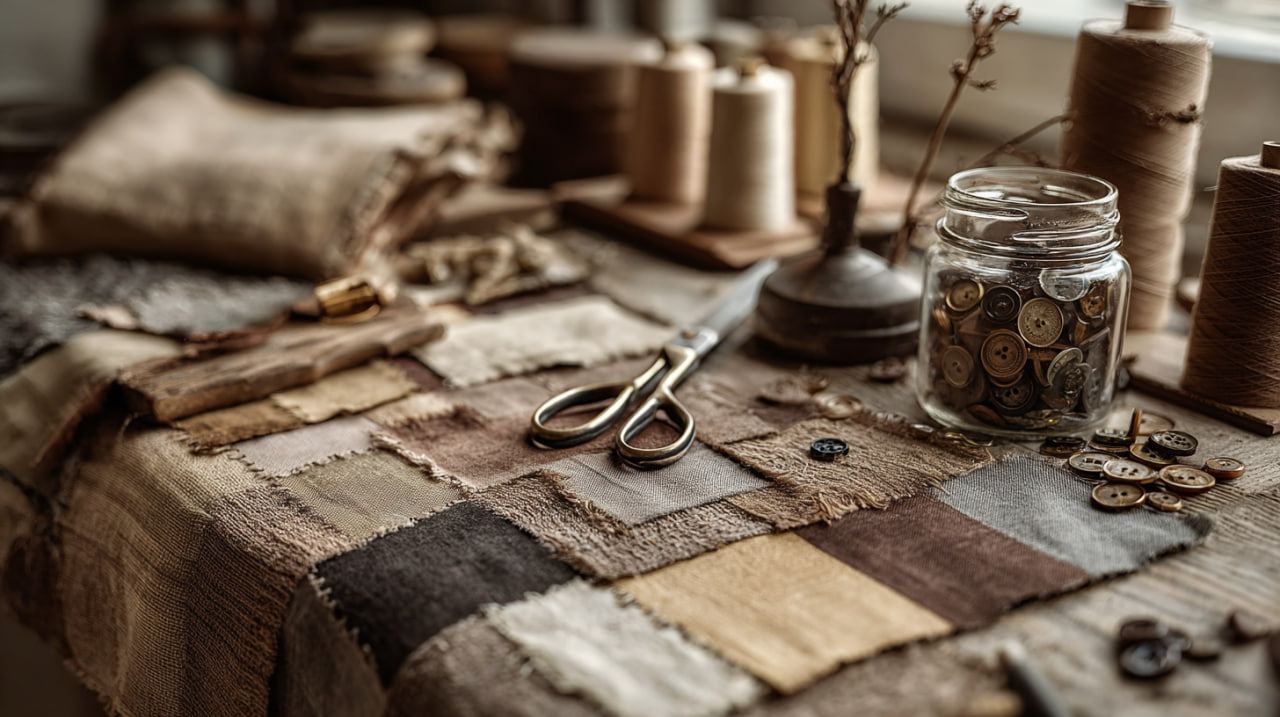
✔ Saving buttons from old garments
✔ Reusing interfacing from thrifted garments or packaging
✔ Keeping thread tails and trims for basting, marking, or hand-finishing practice
You can also check secondhand shops or estate sales for boxes of vintage notions — often pennies on the dollar.
7. Invest Wisely in Tools
Yes, some tools make sewing easier — but you don’t need every gadget on the shelf.
Start with:
✔ Sharp scissors
✔ Seam ripper
✔ Measuring tape
✔ Pins and clips
✔ Iron and pressing surface
Skip the specialty rulers, automatic needle threaders, or pricey organizers until you know you need them. Often, dollar store or hardware versions work just as well.
8. Plan Your Projects
Impulse sewing can lead to wasted fabric and half-finished garments. A little planning goes a long way.
✔ Shop with a project in mind
✔ Cut carefully to minimize waste
✔ Save fabric offcuts for smaller projects
✔ Make a muslin only when necessary (and reuse them if possible)
A little strategy ensures that what you buy — and sew — actually gets used and loved.
Sew More, Spend Less
Sewing doesn’t have to be a luxury. With a resourceful eye, a bit of time, and a few creative tweaks, you can build skills, fill your closet, and enjoy the process — all without breaking the bank. Because in the end, it’s not about how much you spend. It’s about what you make — and the joy of making it.