11 min read Sewing guide Swimwear sewing

The swimsuit is one of those garments that most sewists think about making at some point — and then file under "too complicated" without quite being sure what the complication is. The result is that home-sewn swimwear remains far less common than home-sewn dresses, despite the fact that the basic construction of a one-piece swimsuit or a bikini bottom is in many ways simpler than a structured dress.
The complications that put people off are real, but they are specific and manageable. This article explains what makes swimwear sewing genuinely different from dressmaking, what you need to do it successfully, and how to approach your first swimsuit project in a way that is likely to produce a result you will actually wear.
The Short AnswerYes, you can sew your own swimsuit. The key differences from dressmaking: four-way stretch fabric (not woven), negative ease (cut smaller than your measurements), swimwear elastic (not standard polyester), and stretch stitches (never a straight stitch). A bikini bottom is the best first project — very few seams, small fabric requirement, teaches all the key techniques.
How Swimwear Sewing Differs from Dressmaking
Understanding the differences between sewing swimwear and sewing a summer dress is the foundation of a successful first project. There are four meaningful differences:
1The fabric
Swimwear is sewn from four-way stretch fabric with significant spandex or Lycra content — entirely different from the woven cottons, linens, and viscoses used for most dresses. Stretch fabric requires different needles, different stitches, and different handling techniques than woven fabric.
2Negative ease
Dresses are typically sewn with positive ease — larger than your measurements. Swimwear is sewn with negative ease — the swimsuit is cut smaller than your body measurements because it needs to stretch to fit and stay in place when you are in the water. Getting the ease right is critical for a swimsuit that stays put rather than floating away from your body.
3Swimwear elastic
All swimwear edges — leg openings, necklines, armholes, waistbands — are finished with elastic. This elastic must be swimwear-specific (rubber elastic or cotton/rubber blend designed to resist chlorine, salt, and sun). Standard polyester elastic will degrade rapidly in the water and sun.
4Lining
Most swimsuits require a lining — particularly in the body and gusset area — for both modesty (light-coloured swimwear fabric is often semi-transparent when wet) and comfort. The lining must also be a four-way stretch fabric compatible with the outer fabric.
None of these differences makes swimwear impossible for a beginner. They make swimwear different, and knowing they exist before you start means you will not be surprised by them.
What you need
Fabric, Notions, and Equipment
Outer fabricFour-way stretch swimwear fabric
At least 40% stretch in all four directions. Primary fibre will be polyester (better chlorine resistance) or nylon (softer). Both are suitable for home sewing. The fabric must stretch in all directions — without four-way stretch, the suit cannot hug the body correctly or accommodate swimming movement.
LiningSwimwear lining fabric
A thin, four-way stretch fabric sold specifically as swimwear lining — typically available in white, black, and nude. Lighter and thinner than the outer fabric, designed to feel comfortable against the skin. The stretch percentage should be compatible with the outer fabric — if the lining is significantly less stretchy, the outer fabric may sag when worn.
EssentialSwimwear elastic
The most commonly overlooked detail by first-time swimwear sewists. Standard polyester elastic degrades within a few wears in chlorine, salt water, and sunscreen — it loses elasticity, becomes brittle, and fails. Use rubber elastic or cotton/rubber blend elastic specifically designed for swimwear. 8–10mm for leg openings and necklines; 15–25mm for waistbands.
Needles & threadBallpoint needle + polyester thread
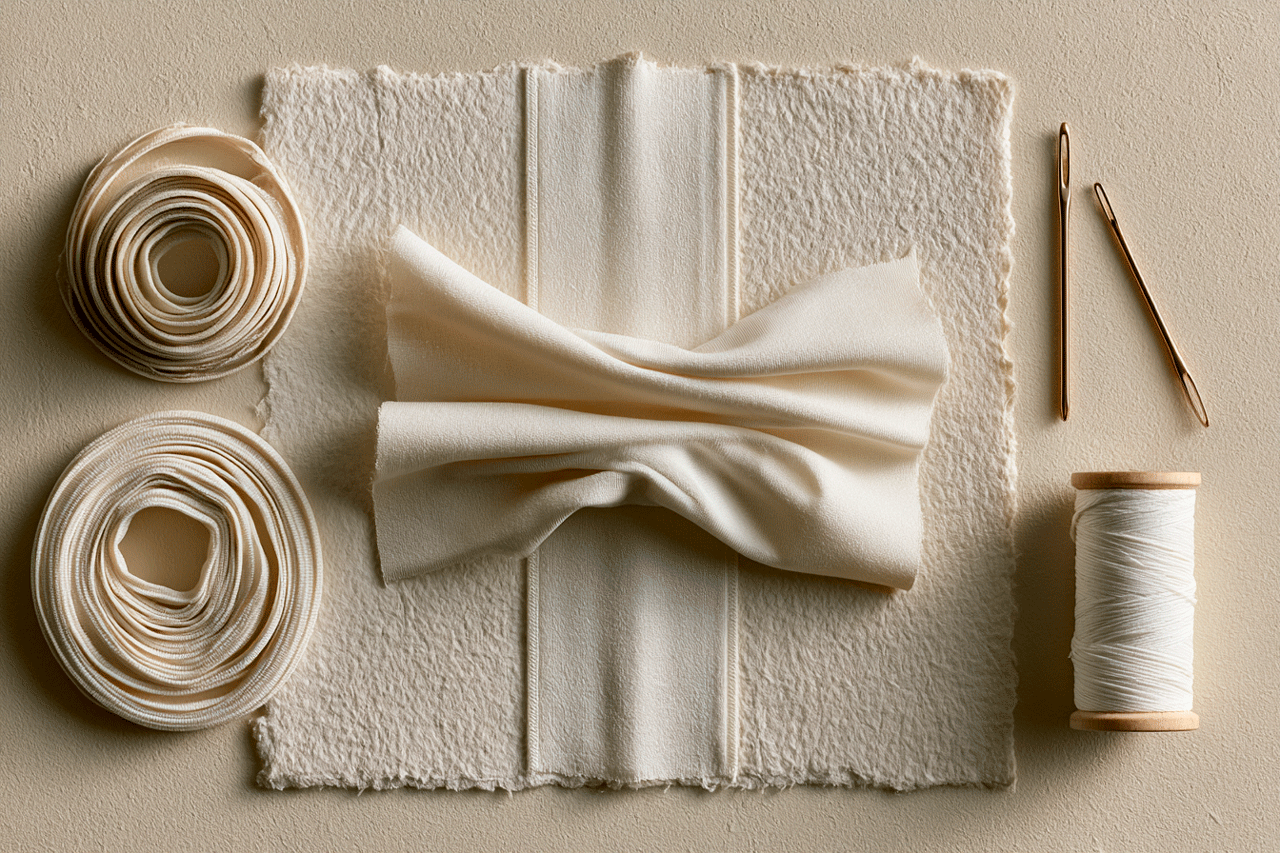
A ballpoint or stretch needle pushes between fabric threads without breaking them — unlike a standard sharp needle, which cuts through the weave and risks skipped stitches and laddering. Replace the needle after every project. Use polyester thread: better stretch than cotton, resists water and chlorine, less likely to degrade with repeated washing.
The most important rule
Which Stitches to Use
This is the most important technical difference between sewing swimwear and sewing a woven dress. Do not use a straight stitch on swimwear fabric. A straight stitch does not stretch, and when you put on a swimsuit sewn with straight stitches and stretch the fabric, the stitches will break.
All seams in swimwear must be sewn with a stitch that stretches along with the fabric.
Three options — any will work- Zigzag stitch — the most accessible option for a standard sewing machine. A medium zigzag (approximately 3mm wide, 2mm long for seams; 5mm wide, 1.5mm long for mock serging at edges) stretches with the fabric and produces serviceable, durable seams. Test your specific settings on a scrap before beginning.
- Three-step zigzag (multi-step zigzag) — a wider, flatter stitch that distributes tension more evenly than a standard zigzag. Makes three small stitches for each direction change rather than one, producing a more durable finish — increasingly preferred for swimwear and particularly useful for elastic application.
- Four-thread overlock (serger) — the most professional finish and the fastest for assembling seams. If you have access to an overlocker and are comfortable using it, a four-thread overlock stitch is ideal for swimwear seams. If not, the zigzag options above are entirely adequate.
Test before you sew Every machine and every fabric is different. Before starting on your actual swimsuit, sew several seams on fabric scraps, stretch the test seam firmly in all directions, and check that the stitches do not break or pull. Adjust your settings until the test seam stretches and recovers without stitching failure.
Sizing
The Pattern and Negative Ease
Swimwear patterns are designed specifically for the negative ease required — the finished garment will be smaller than your body measurements, not larger. Choose your swimwear pattern size based on your body measurements, not your usual clothing size, and trust the pattern's size chart rather than assuming your usual size applies.
A general guide for negative ease: the finished swimsuit measurements should be 8–15% smaller than your body measurements for circumference measurements (bust, waist, hip). This is what makes the suit fit and stay in place in the water.
For a first swimwear project, choose a pattern with simple lines:
- A bikini bottom is the simplest swimwear project of all — essentially two pieces of fabric with elastic, no complex construction. An excellent first project.
- A one-piece swimsuit with no underwire and a relatively simple neckline is the next step up.
- Avoid patterns with cups, underwires, or very complex styling for a first project.

Step by step
A Simple One-Piece: Construction Sequence
For a simple one-piece swimsuit, the construction sequence is:
Six steps to a finished swimsuit- Cut all pieces — outer fabric and lining. Mark notches carefully: these alignment marks are critical in stretch fabric because you cannot see through the layers as easily as with woven fabric.
- Baste outer fabric and lining together. Pin or clip outer and lining pieces together with wrong sides facing, and run a zigzag basting stitch around all edges at about 5mm from the raw edge. From this point, outer fabric and lining are treated as a single piece.
- Sew the side seams and shoulder seams using zigzag or overlock stitch.
- Apply elastic to the leg openings. Cut elastic 10% shorter than the leg opening measurement. Divide both the elastic and the leg opening into four equal sections and mark. Pin at the quarter-marks, stretching the elastic evenly between them. Zigzag stitch while stretching. Fold the elastic to the inside and topstitch.
- Apply elastic to the neckline and armholes in the same way.
- Try on before finishing any final details — stretch fabric is forgiving, and a fitting at this stage is the easiest opportunity to make adjustments.
This is a simplified overview — a specific pattern will include detailed steps for its particular design. Follow the pattern instructions rather than a generic sequence.
The Things Most Likely to Go Wrong
Five common problems — and how to prevent themBroken seams when stretching
Almost always caused by using the wrong stitch (straight stitch rather than zigzag) or the wrong needle (standard rather than ballpoint). Switch stitch and needle before starting — not after the seams fail.
Elastic that crinkles after a few wears
Caused by using standard polyester elastic rather than swimwear rubber elastic. Replace with the correct elastic before starting the project.
Suit that won't stay in place in the water
Caused by insufficient negative ease — the suit is cut too large relative to your body measurements. Check the pattern's ease recommendations and size down if you are between sizes.
Outer fabric sagging away from lining
Caused by a significant mismatch in the stretch percentage of outer and lining fabrics. Both should have compatible stretch percentages — within 5–10% of each other.
Skipped stitches
Usually caused by a dull or standard needle. Replace with a new ballpoint or stretch needle. This is the easiest fix in swimwear sewing — a fresh needle resolves most skipped-stitch problems immediately.
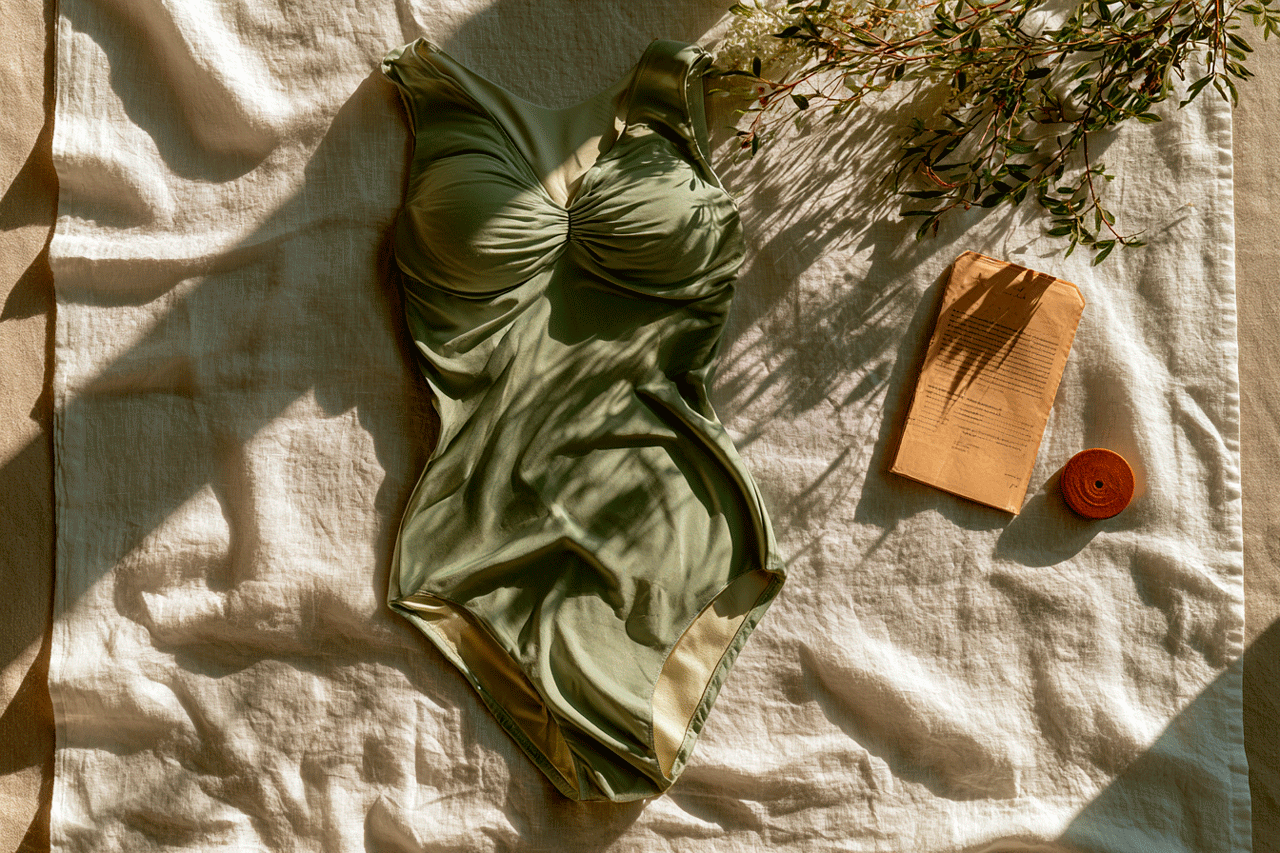
Is Swimwear the Right Project for Your Stage?
Swimwear sewing has a genuinely different learning curve from woven dressmaking. If you have never sewn stretch fabric of any kind, a swimsuit may produce some frustration on a first attempt — not because it is impossibly difficult, but because the fabric and techniques require a period of adjustment.
If you have some experience sewing stretch fabric — jersey dresses, T-shirts, fitted knit garments — swimwear will feel like a natural extension. The techniques are the same; the stakes feel higher because the garment is worn in a very public way on a very personal area of the body.
If you are a beginner who is specifically motivated to sew a swimsuit, a bikini bottom is the most accessible first swimwear project: very few seams, a small amount of fabric, and it teaches all the key techniques (stretch stitching, elastic application) in the smallest possible project. A successful bikini bottom can be completed in an afternoon and gives you the confidence and skills to attempt a more complex suit.
At Fabrico Fabrico's current pattern collection focuses on woven summer garments — dresses, jumpsuits, and tops — rather than swimwear. If you are building your complete summer wardrobe from scratch, start with a Fabrico dress pattern to develop your sewing confidence and enjoy some beginner-friendly successes before tackling the different techniques of swimwear.
Frequently Asked Questions
Can a beginner sew their own swimsuit?
Yes — but swimwear sewing has a genuinely different learning curve from woven dressmaking. If you have never sewn stretch fabric, a swimsuit may produce some frustration on a first attempt, not because it is impossibly difficult but because the fabric and techniques require adjustment. A bikini bottom is the most accessible first swimwear project: very few seams, a small amount of fabric, and it teaches all the key techniques in the smallest possible project. A successful bikini bottom can be completed in an afternoon.
What fabric do you use to sew a swimsuit?
Swimwear is sewn from four-way stretch fabric — fabric that stretches in all four directions — with a significant spandex or Lycra content. The primary fibre will be either polyester (better chlorine resistance) or nylon (softer). The fabric must have at least 40% stretch in all four directions. Most swimsuits also require a swimwear lining fabric — thin, four-way stretch, in white, black, or nude.
What elastic do you use for swimwear?
Swimwear elastic — not standard polyester elastic, which will degrade rapidly when exposed to chlorine, salt water, and sunscreen. Swimwear elastic is either rubber elastic (a natural rubber core covered with a knit or woven outer layer) or a cotton/rubber blend. Both types are designed to resist the chemicals and conditions of swimming. 8–10mm for leg openings and necklines; 15–25mm for waistbands.
What stitch do you use to sew swimwear?
Never use a straight stitch on swimwear fabric — it does not stretch and will break when you put on the swimsuit. All seams must be sewn with a stitch that stretches with the fabric: a zigzag stitch (3mm wide, 2mm long), a three-step zigzag (wider and more even), or a four-thread overlock on a serger. Test your stitch settings on a scrap before beginning and stretch the test seam firmly to check it holds.
What needle do you use for swimwear fabric?
A ballpoint or stretch needle. Unlike a standard sharp needle, which cuts through threads in the fabric weave, a ballpoint needle pushes between the threads without breaking them. Using a standard needle on swimwear fabric risks skipped stitches, laddering, and eventually seam failure. Replace the needle after every project.
What is negative ease in swimwear?
Negative ease means the swimsuit is cut smaller than your body measurements — typically 8–15% smaller in circumference measurements. This is the opposite of dressmaking, where garments are usually cut larger than body measurements. Swimwear needs negative ease because the suit must stretch to fit and stay in place when you are in the water. Choose your swimwear pattern size from the pattern's size chart based on your body measurements, not your usual clothing size.
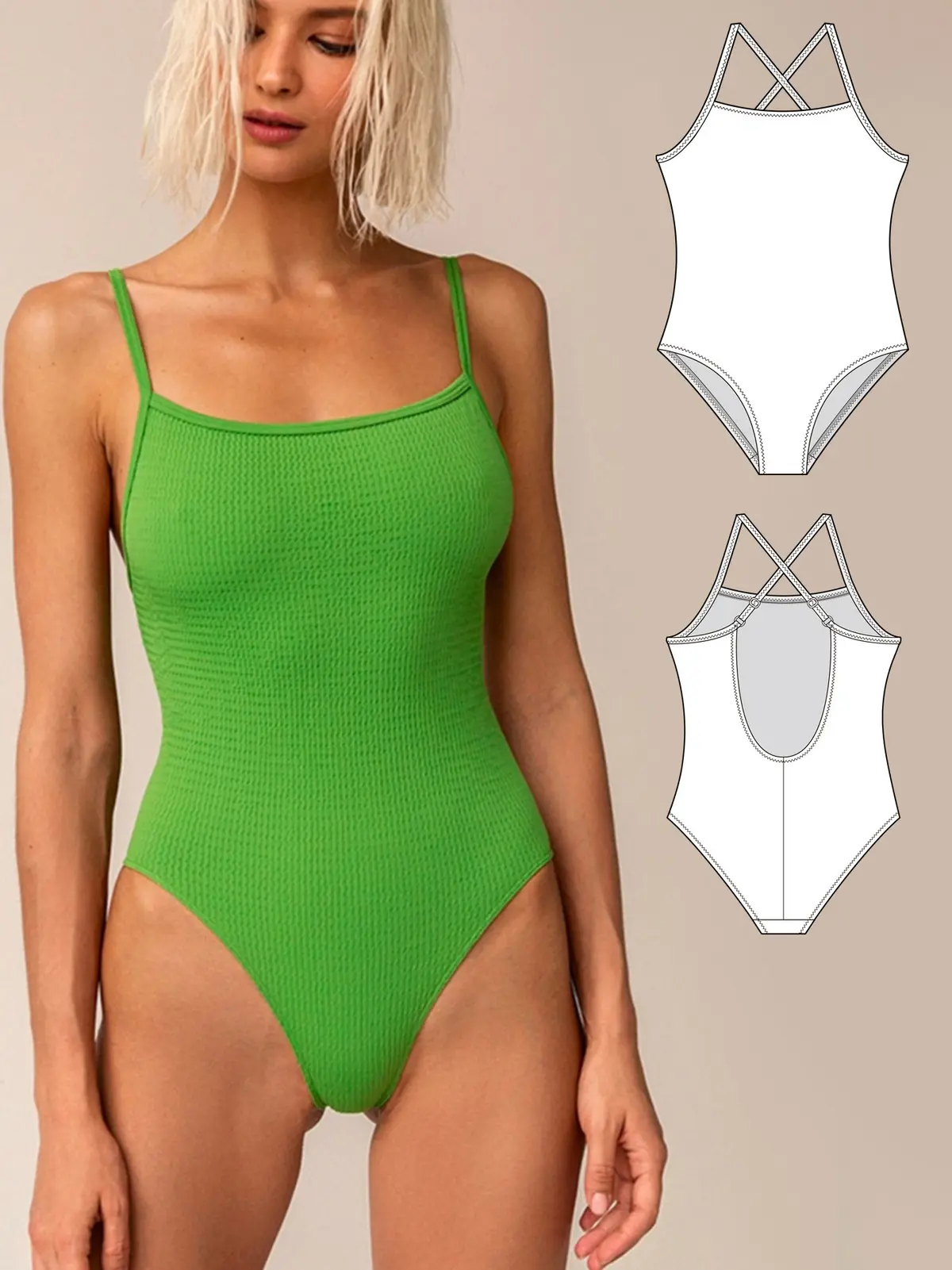
Sew your own swimsuit
 Swimwear
 Arizona swimsuit
PDF pattern · Video tutorial
from 3,99 €→ Browse swimwear patterns
Keep reading
 Fashion history
 The History of the Swimsuit
From Victorian bathing machines to the 1946 bikini — two centuries of the most regulated garment in fashion history.
Read more Sewing essentials
 How to Pre-Wash Your Fabric Before Sewing
The step most beginners skip — and the one most consistently regretted. A complete guide.
Read more Fabric guide
 The Best Fabrics for Hot Weather
What works in real summer heat — and how to choose at the fabric shop.
Read more Sewing guide
 How to Sew Your First Summer Dress
A complete beginner's guide to sewing a summer dress from a pattern — before you tackle swimwear.
Read more Sewing essentials
 Press to Impress
The pressing technique that makes a handmade garment look professional.
Read more Fabric guide
 What Is Viscose and Why Do Patterns Call for It
The semi-synthetic fabric that drapes like silk — and why it needs specific sewing techniques.
Read more